

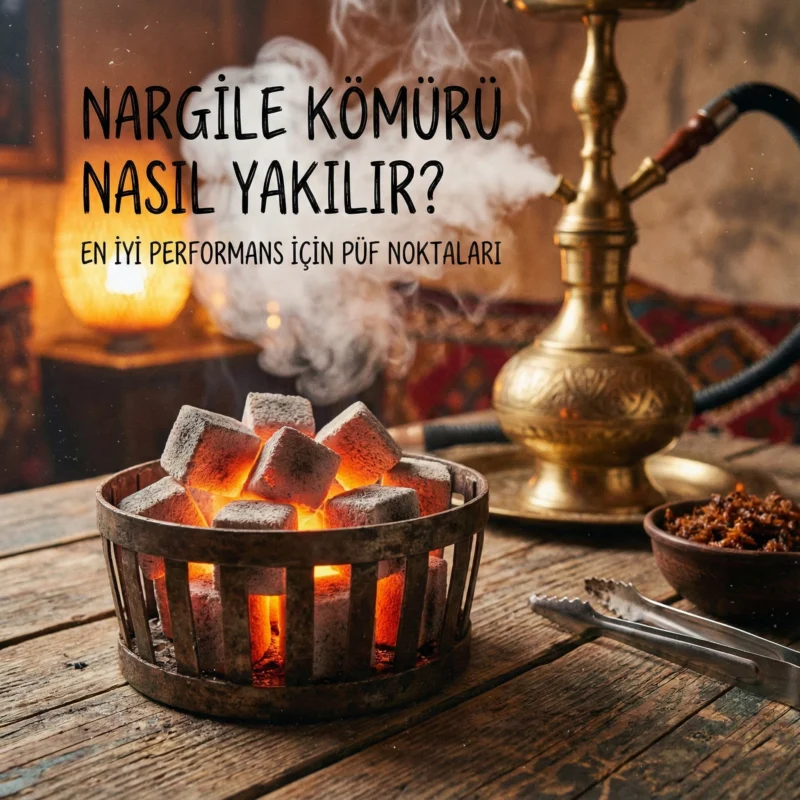
A Guide to Hookah Charcoal: What Really Determines Flavor, Smoke, and Session Length?
The hookah experience can sometimes change completely because of a small detail. The same tobacco, the same bowl, the same water level—but suddenly the smoke is sparse, the taste is bitter, and it burns your throat. Most of the time, the reason is hookah charcoal It's a matter of choice. Coal is like the engine of a hookah; if it doesn't provide the right amount of heat, everything goes off the rails.
The most common problems are familiar: a bitter taste, the coals going out too quickly, excess ash blocking the airflow, and the odor produced while burning. Most people searching for “yt shisha nargile charcoal” are looking for a solution to exactly these problems.
In this article, we’ll break down the different types of tobacco without confusing you, discuss how to choose the right size, and walk you through the step-by-step process of managing your smoking session to ensure a smooth burn without a bitter taste.
What is hookah charcoal, what are its types, and what are the differences between them?
Hookah charcoal is the fuel that heats the tobacco to produce vapor and aroma. The key point here is this: You don’t want to burn the tobacco—you want to heat it. The charcoal’s job is precisely to do this in a balanced way.
There are several main types of charcoal on the market, and each one is suited to a different user. Think about it this way: Is it a quiet session at home, or extended smoking in a crowded setting? This distinction is key when choosing charcoal.
Let's simplify the overall picture:
- Coconut shell (natural cube): The safest and most balanced option for home users, flavor-focused drinkers, and beginners.
- Oak and similar wood charcoals: It produces intense heat and lasts a long time; due to the need for control and the difficulty in lighting it, it is best suited for more experienced smokers.
- Marabu (woody, hard texture): It’s a popular choice in cafes; it burns for a long time and produces high heat, but if not managed properly, it can quickly “scorch” the tobacco.
- Fast-burning (compressed, highly flammable): It seems practical, but it can leave a smell and runs out quickly; it makes sense for short, quick uses.
Don't just go by rote when making a choice; consider these 4 criteria:
Smell ((Does it bother you when it's burning?), ash ((is it too little or too much?), heat ((Is it rising quickly?), burn time ((Does it burn out halfway through the session?). These four points clearly illustrate the difference between “good coal” and “troublesome coal.”
Why is coconut shell charcoal (natural) the most popular choice?
Natural coconut charcoal is the easiest way to drink clean water. Its biggest advantage is generally odorless . The ash content is also often lower, which means the holes in the foil clog more slowly and the airflow remains more stable.
Another advantage is that its temperature is more balanced It’s the way it burns. The smoke doesn’t flare up suddenly and then die down; it burns more steadily. The session also tends to last longer, reducing the need to change the charcoal frequently.
There’s one small drawback: Natural charcoal takes a while to catch fire. If you’re impatient and add the charcoal before it’s fully heated, it will immediately develop a “burnt” taste. The golden rule here is simple: Do not use before it is fully heated. Every surface of the coal should be charred; there should be no black areas left on top.
If you'd like to explore the different types and options of natural coal, Choosing the Best Charcoal for Smoking a Hookah That page is a good place to start.
Oak, Marabu, and quick-burning (compressed) charcoal: When do they make sense?
Oak and Marabu-style coals provide intense heat. They’re advantageous during long sessions and are especially convenient for those who don’t want to deal with “coal monitoring” in crowded settings. But if control is poor, that intense heat can backfire; the tobacco becomes bitter, and the aroma is lost.
There are also some points to keep in mind: Some types of wood charcoal are harder to light, while others may spark when first lit. For this reason, it’s important to choose a safe place to burn them.
Quick-burning coals, on the other hand, seem convenient; they catch fire easily with a lighter. However, they may not last very long and can give off an odor while burning. For someone with a sensitive sense of smell, this odor can ruin the start of the session.
If you're just starting out, the safest advice is clear: bituminous coal, Good ventilation and, if possible, a charcoal grill. This way, the heat will be more stable, and the risk of a bitter taste will be reduced.
How to Choose the Right Hookah Charcoal: Size, Heat Management, and Chamber Compatibility
Choosing coal isn’t just a matter of “natural or not.” Size and density change the nature of the session. When you put different-sized cubes in the same bowl, it can feel as if you’re using a different set.
There are some concrete signs you can quickly check for when making a purchase:
- Density and weight: Coal that feels “empty” in your hand burns out quickly and may produce more ash.
- Breaking and Cracking: If it pours out of the package like powder, it is prone to spilling during transport and storage.
- Ash content: Less ash means better airflow, which results in a cleaner taste.
- Expected burn time: Are you aiming for a short session or a long one? Choosing the right size will depend on that.
The balance in the bowl is also important. If you put too much coal in a small bowl, the heat will be too intense for the tobacco. Conversely, if you use small pieces of coal in a large bowl, they won’t burn properly, and the smoke will be weak. This is where heat management comes into play; the number of pieces of coal, their placement, and how often they’re turned all work together.
If you'd like to see a size example, the dimensions of the cube are clearly specified Coco Pearls 26mm Hookah Charcoal It's easier to choose among products like these.
2627 mm, 28 mm, and 28 mm coal: Which one provides better heat?
It would be a mistake to interpret “bigger is better” as the rule regarding size. A more accurate statement is: Size, how it generates heat changes.
- 26mm: It heats up faster, and the temperature rises quickly. It is easy to control in small and medium-sized chambers.
- 27mm: It's a middle-of-the-road option for those looking for balance—it's neither too aggressive nor too slow.
- 28mm: It tends to burn longer, extending the session. It works well in large containers and during long sessions.
If you’re using an HMD (coal manager), choosing a size smaller than usual can improve control, since the heat tends to stay more “contained.” If you’re using foil, it’s easier to fine-tune the heat by shifting the coals to the side. Here’s a practical tip: If the heat rises too much in the first 10 minutes, instead of reducing the coals, first change your location.
How can you tell by the ash, smell, and burn time? Quick tests at home
You don’t need a lab to understand coal. Simple observations reveal a lot. As good coal burns, its ash appears “finer” and doesn’t pile up excessively. If ash builds up too quickly, the foil holes or HMD air channels will clog faster. The result is clear: Airflow decreases, and the taste is compromised.
The smell also serves as an early warning sign. If the coal emits a sharp odor as it burns, there is a high likelihood that it will need to be moved during the session. Another sign is the disintegration of the coal’s embers; if the edges are crumbling and cracks are widening, performance will decline midway through the session.
This is where storage comes into play. If coal absorbs moisture, it burns poorly, produces more smoke, and disrupts the heat balance. Keep the package sealed and, if possible, store it in a dry cabinet.
How do you light hookah charcoal and manage it throughout a session? (Without a bitter taste)
Burning coal properly is just as important as choosing good coal. The biggest mistake is rushing and putting half-black coal into the firebox. That’s a surefire way to end up with a bitter taste.
An easy-to-follow routine:
- Place the coal on a non-flammable surface and clear the area around it.
- Ventilate the room; open the window.
- Place the charcoal in the charcoal grill or on the stove.
- Flip it when the first side is browned.
- Wait until all surfaces are browned (make sure there are no uncooked spots).
- Start with 2 or 3 pieces of coal in the hopper.
- Monitor the heat for the first 5 minutes; if necessary, move the coals to the side.
- When ash builds up, give it a light shake to allow air to flow through.
Simple but effective. This setup preserves the flavor and makes the session more stable.
Charcoal grill, stove, and lighter: Which is the best way to light a fire?
The most stable method for natural charcoal is generally a charcoal grill. The heat is distributed more evenly in all directions. It can also be burned on a stove, but it must be placed directly over the burner; on some stoves, the charcoal may absorb heat from only one side and burn unevenly.
The duration varies depending on the type of coal and the device's power, but the goal is the same: completely charred. If a black surface remains on the charcoal, that “raw” part will have a bad taste throughout the session.
A brief list of security measures:
- Use a fire-resistant floor.
- Keep away from children and pets.
- Keep the window open; do not burn indoors.
Session control: How much coal, when to turn it, and when to reduce it?
The best way for beginners to get started is often 2 coal. If the smoke is light, increase it to 3. But if you taste bitterness, don’t panic; first set one piece of charcoal aside, then slide the coals to the edge of the chamber. The heat will drop immediately, and the flavor will improve.
Turning the coal is another small but effective step. If one side is constantly facing down, that side will turn to ash more quickly. Turning it every 10 to 15 minutes helps distribute the heat evenly. When ash builds up too much, giving it a light shake also improves airflow.
People who have long sessions tend to buy charcoal in bulk. When considering packaged options for this type of use, it’s important to take storage conditions more seriously.
Conclusion: Good coal means a good session
The choice and use of hookah charcoal determine the flavor. Four clear points are enough to keep in mind:
- Natural coal It generally has a cleaner taste and less odor.
- Correct dimension, It refers to tank compatibility and temperature control.
- Coal hot coals Using it without [something] is the main reason for the pain.
- Small throughout the session temperature settings ((setting aside, turning, shaking off the ashes) makes a difference.
Next time, try a small experiment: Start with the same tobacco and two coals, adjust the heat using the position, and once the flavor is right, gradually change the size and number of coals. The best session is the one that works best for your setup.

Write a reply