
Why Brass Hookahs Tarnish and How to Care for Them

Summarize this article with AI
Discover the key points with your preferred tool.
The title, article link and text context are sent to your chosen tool.
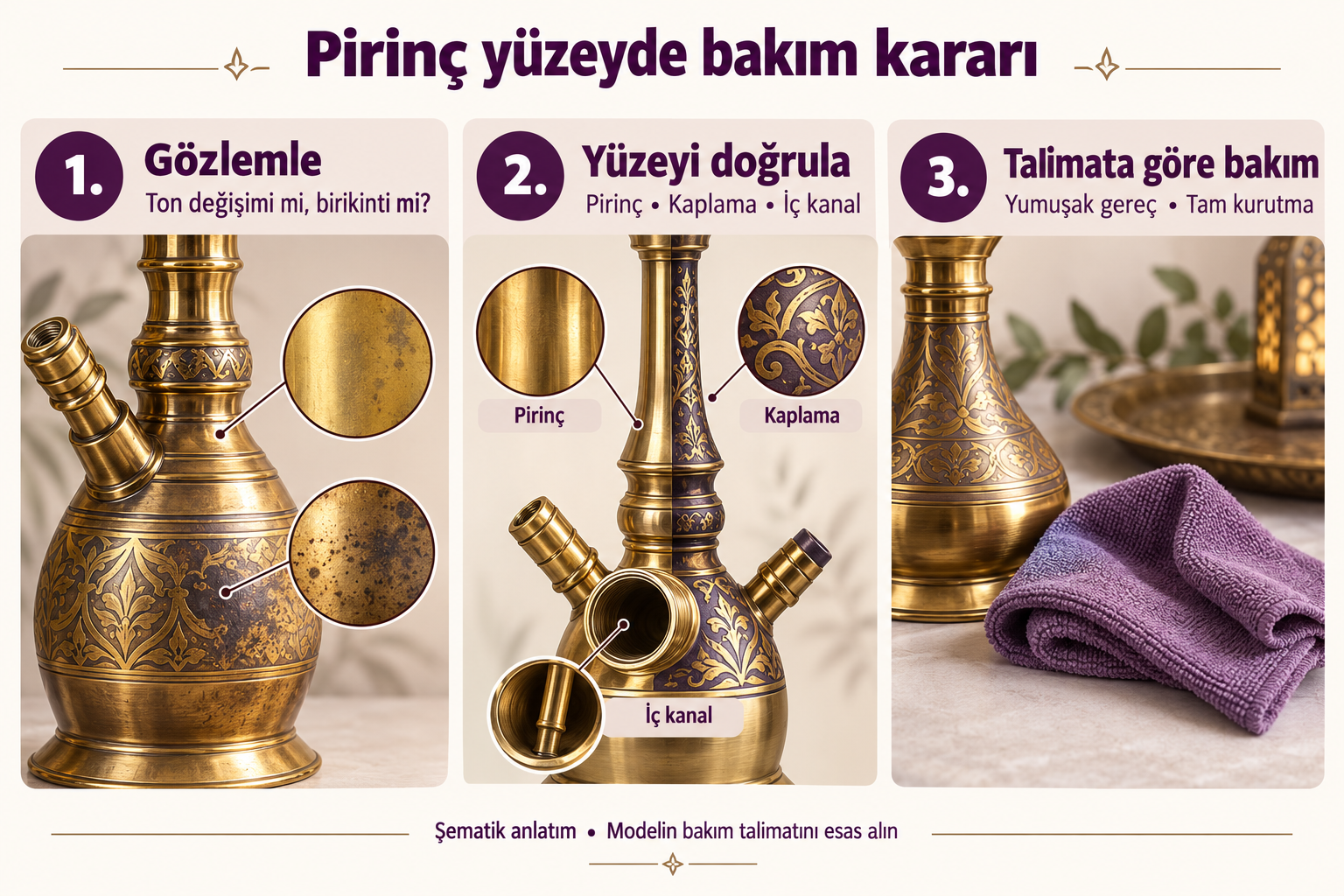
When you notice tarnishing on a brass hookah, the first step is to identify which part has changed and how, rather than polish the surface. An even change in the exterior body’s tone, dirt caught between engravings, and a peeling coating do not call for the same care decisions. This guide offers a sequence of checks you can use when examining the exterior of a brass coffeehouse hookah set.
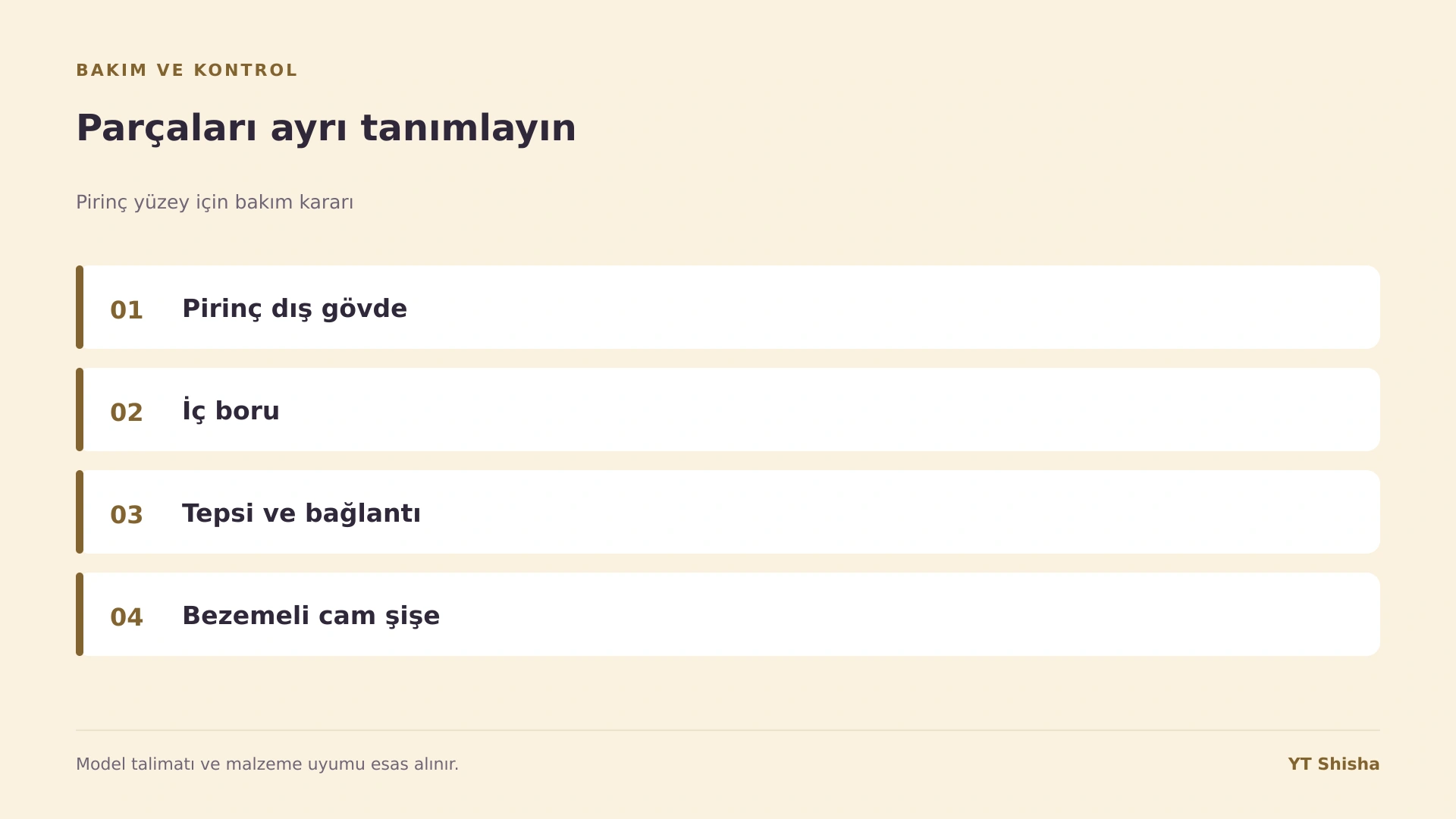
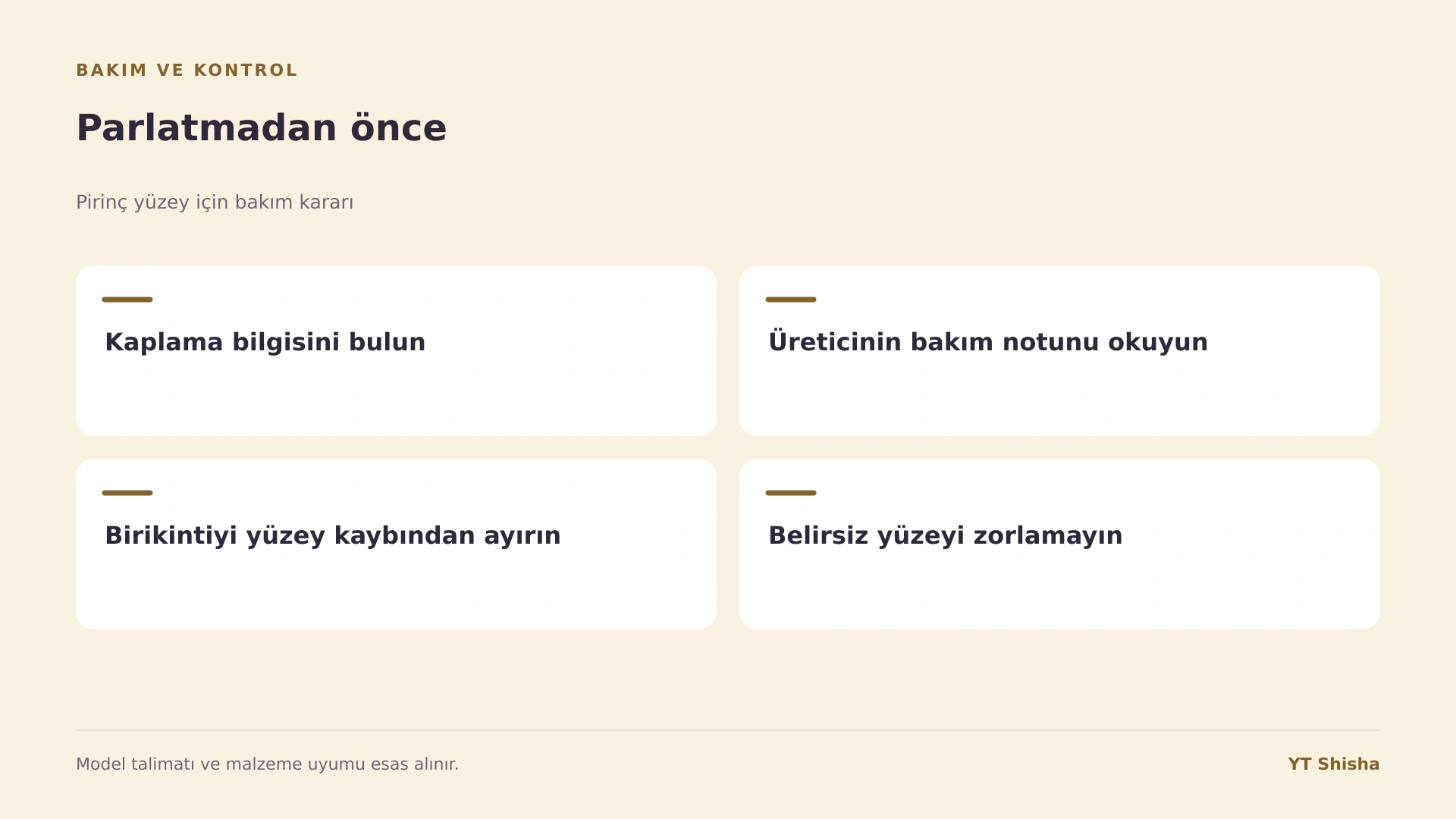
To the model's material and surface information brass Turkish café hookah sets Start by finding your own product among them. Assess the body, internal tube, tray, and connection parts separately; do not apply a maintenance note written for a single part to the entire set.
Why does a brass hookah tarnish?
Brass is an alloy containing copper. The surface exposed to the environment may change tone over time. However, calling every dark area in a photo patina does not provide an accurate diagnosis. First, record the appearance, texture, and location of the change.
Canadian Conservation Institute's brass and copper care note, treats cleaning and polishing as separate processes: polishing can remove material from the surface, and repeated applications can diminish fine details. Constantly rubbing an ornamented piece simply to make it look shinier is therefore not a good starting point.
First identify which surface you are treating
- Surface confirmed to be brass: Read the manufacturer's cleaning and, if applicable, polishing instructions for this surface.
- Colored or protective-coated section: Follow the coating’s care information. Do not assume a polish sold for brass is also suitable for the coating.
- Part made from an unknown material: Do not try to identify the surface by scraping, scratching, or testing it with chemicals. Request information using the product code and a clear photo.
- Inner tube and connections: The exterior body's color does not establish these parts' materials. Do not apply exterior polish to the inner channel.
Protecting the decoration takes priority in engraved and gilded areas. For these parts in the engraved brass hookah care guide you can use the area-by-area checklist.
Pre-maintenance inspection chart based on appearance
| Observation | Information to record | Next step |
|---|---|---|
| Even darkening on the outer body | When it started and whether the surface is coated | Confirm the surface instructions; decide on polishing afterward. |
| Buildup between the engravings | Where the buildup is, and whether it is dry dust or sticky residue | Limit cleaning to the soft tool permitted in the product care instructions. |
| Color Lifting or Peeling | Close-up photos and products that came into contact | Stop rubbing and seek support about the surface finish. |
| Persistent residue, pitting, or significant wear in the inner channel | The part's model information and cleaning history | Request an assessment before using the part again. |
This table does not identify the material; it makes your support request more specific. CCI’s note on brass deterioration also explains that some acidic or alkaline cleaners and leftover polish residues can cause problems. Verify the instructions for the specific surface instead of applying an online recipe to every brass part.
Examples from the catalog: HOOKAH and Classic 67
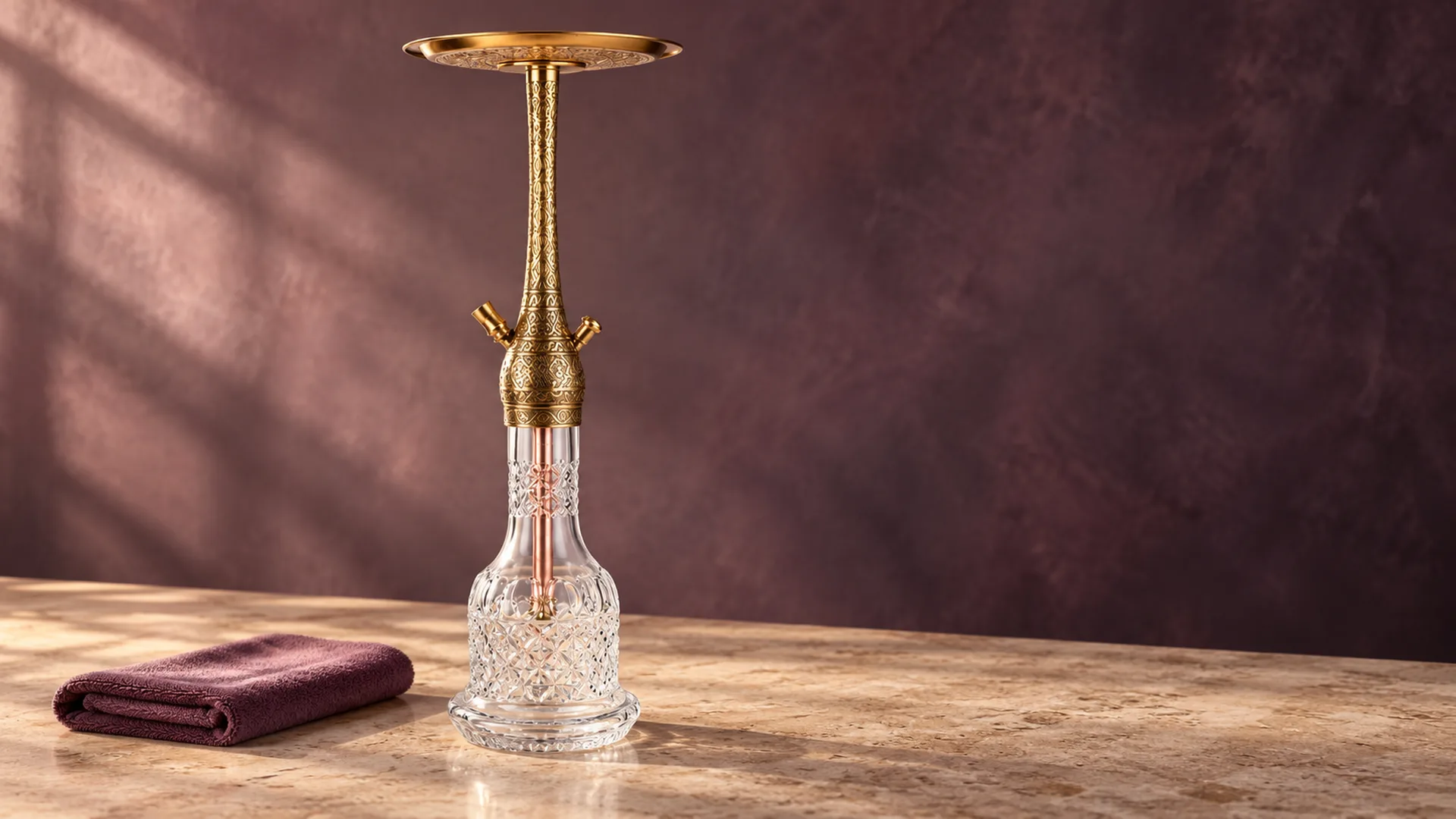
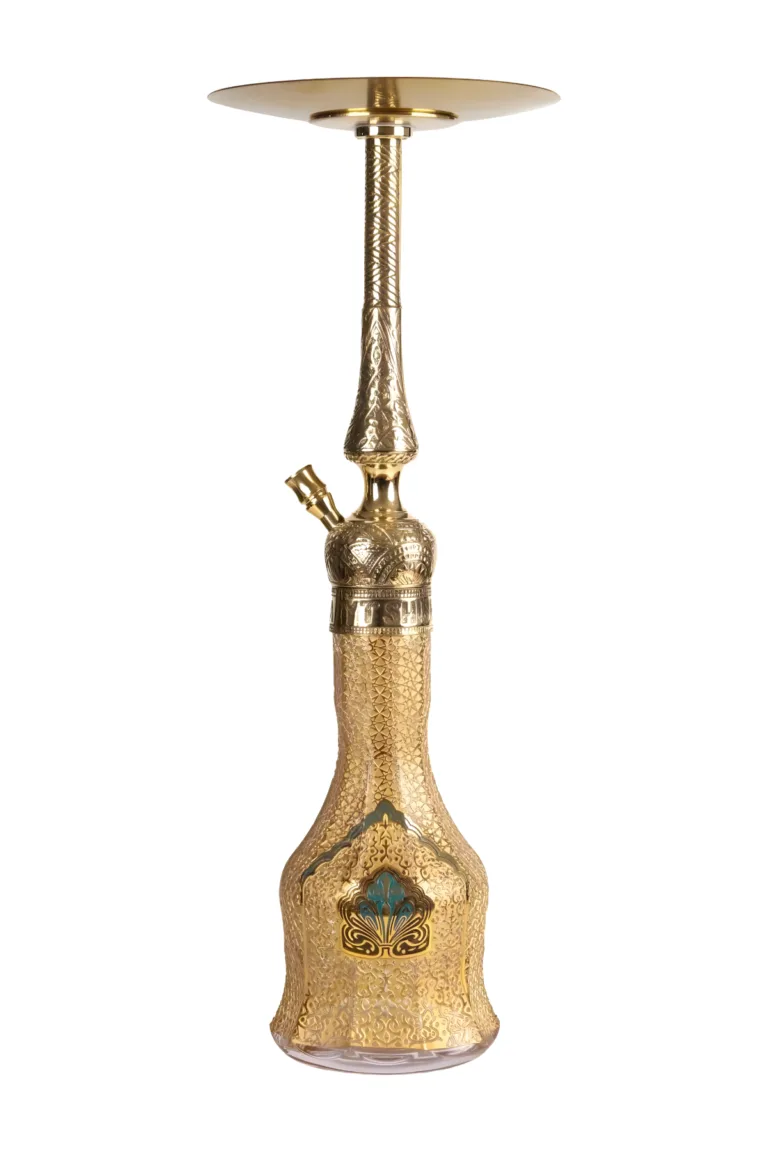
HOOKAH Threaded Kahveci Hookah Set its description lists the brass body and cut-glass base as separate components. It also makes sense to list the metal body and patterned glass separately in the maintenance plan. The notes for this model recommend a soft cloth for the brass exterior and avoiding stiff brushes and abrasive sponges on the base decorations.
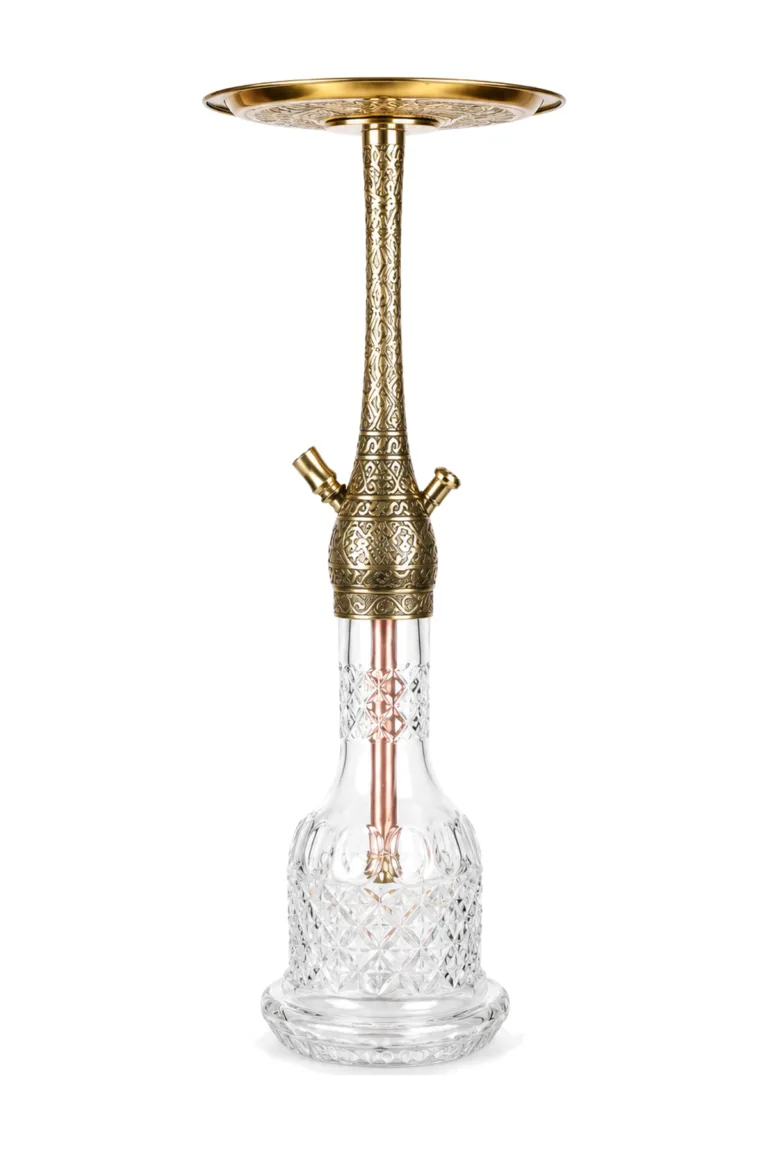
YT Classic 67 Gold the description also lists the brass body and patterned glass base separately. Check each section's notes on its own product page rather than treating the body engraving and base decoration as the same care area.
One product example does not show that all Kahveci sets have the same connection, coating, or removable parts. Add your own model’s page to your maintenance record.
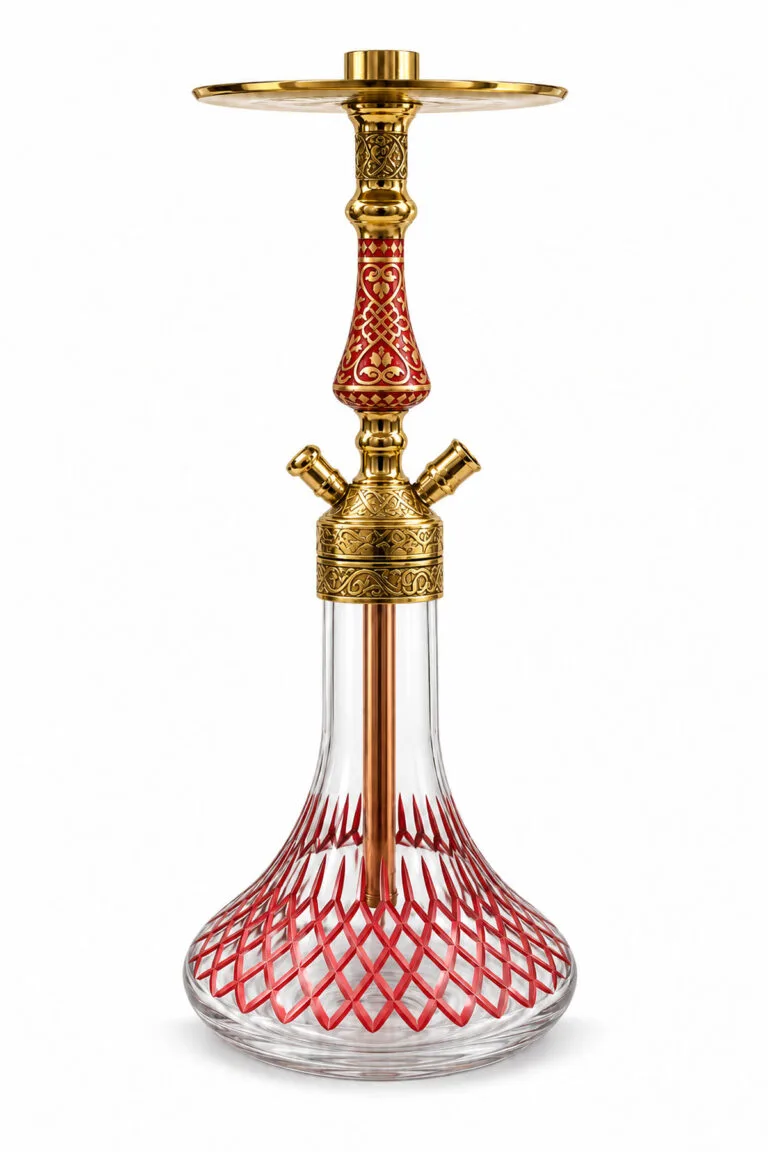
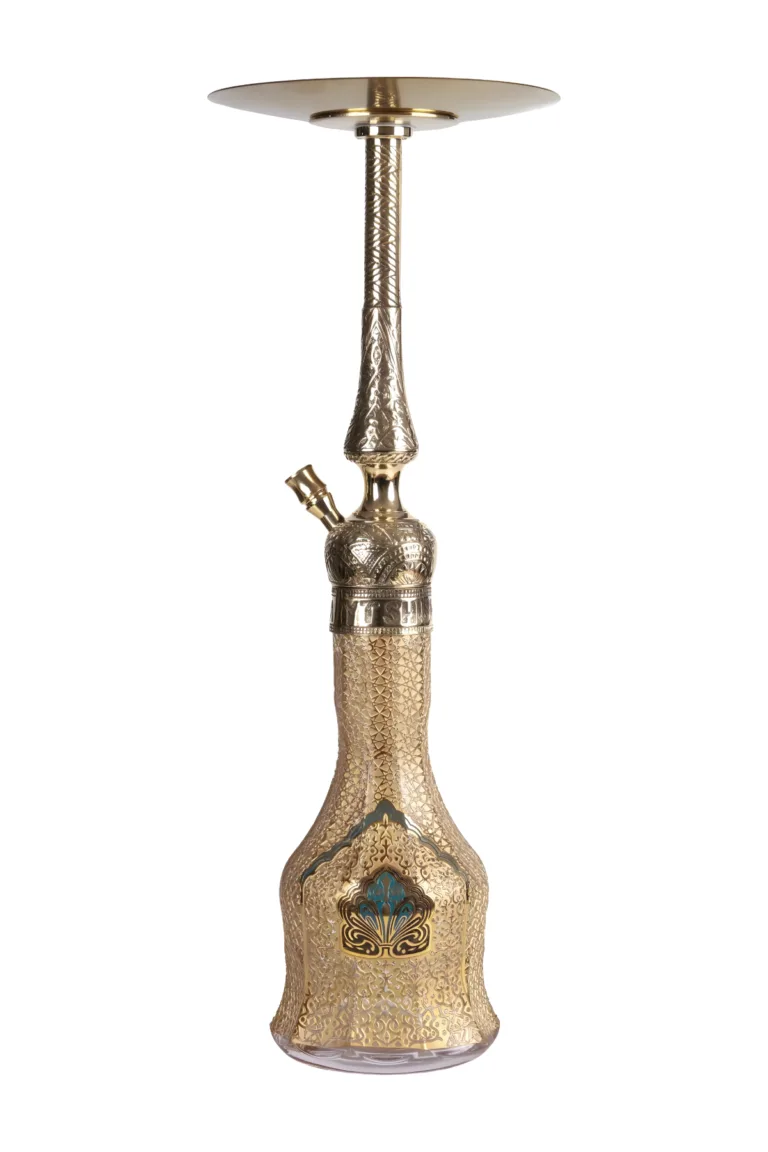
Records and storage arrangements that simplify the next maintenance
- Once the set has cooled completely, separate the parts as the model permits; keep small connectors in a separate container.
- Thoroughly rinse the sections cleaned according to product instructions and dry them completely.
- Support the glass and heavy metal sections separately so they cannot strike each other.
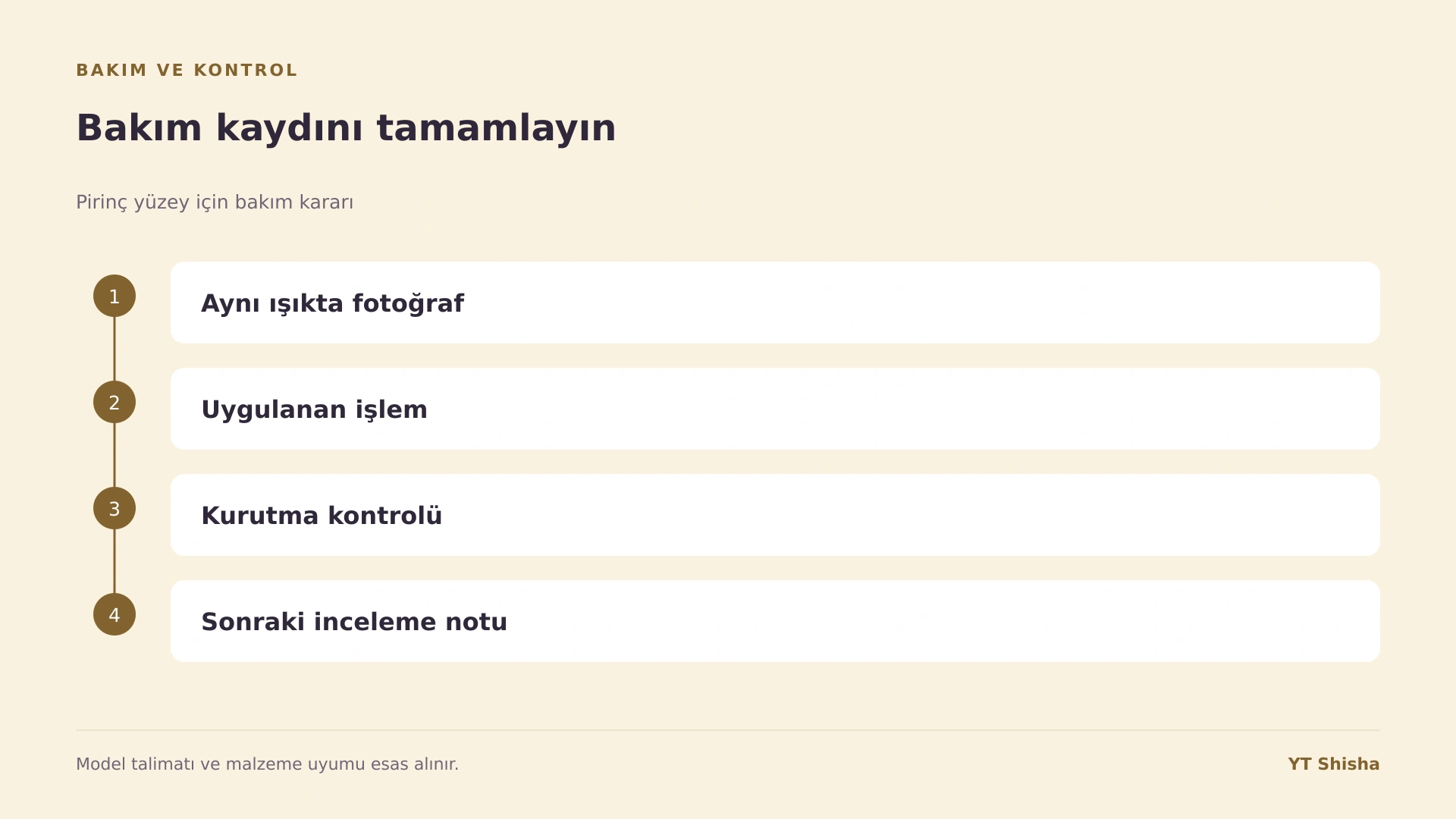
- Record the model name, care performed, date, and any noticeable surface changes in a brief note.
- If there is a new change, compare it with an earlier photo taken under the same lighting.
If there is a problem with the connection, rather than trying to solve it by tightening the body harder, grommets and replacement parts verify the information for the model.
Frequently asked questions
Does every darkened area on brass need to be removed?
First, determine how the change relates to the surface type. The preference to preserve appearance and the need for cleaning are assessed separately; a consistent change in tone does not automatically call for aggressive polishing.
Can I use lemon, vinegar, or metal polish?
Do not apply a mixture unless the product's surface and coating instructions explicitly approve it. In particular, do not choose the same method for the inner channel and decorative exterior surface.
What information should I send when requesting support?
The model name, location of the change, close-up and overall photos, cleaner name, and application time make assessment easier.