

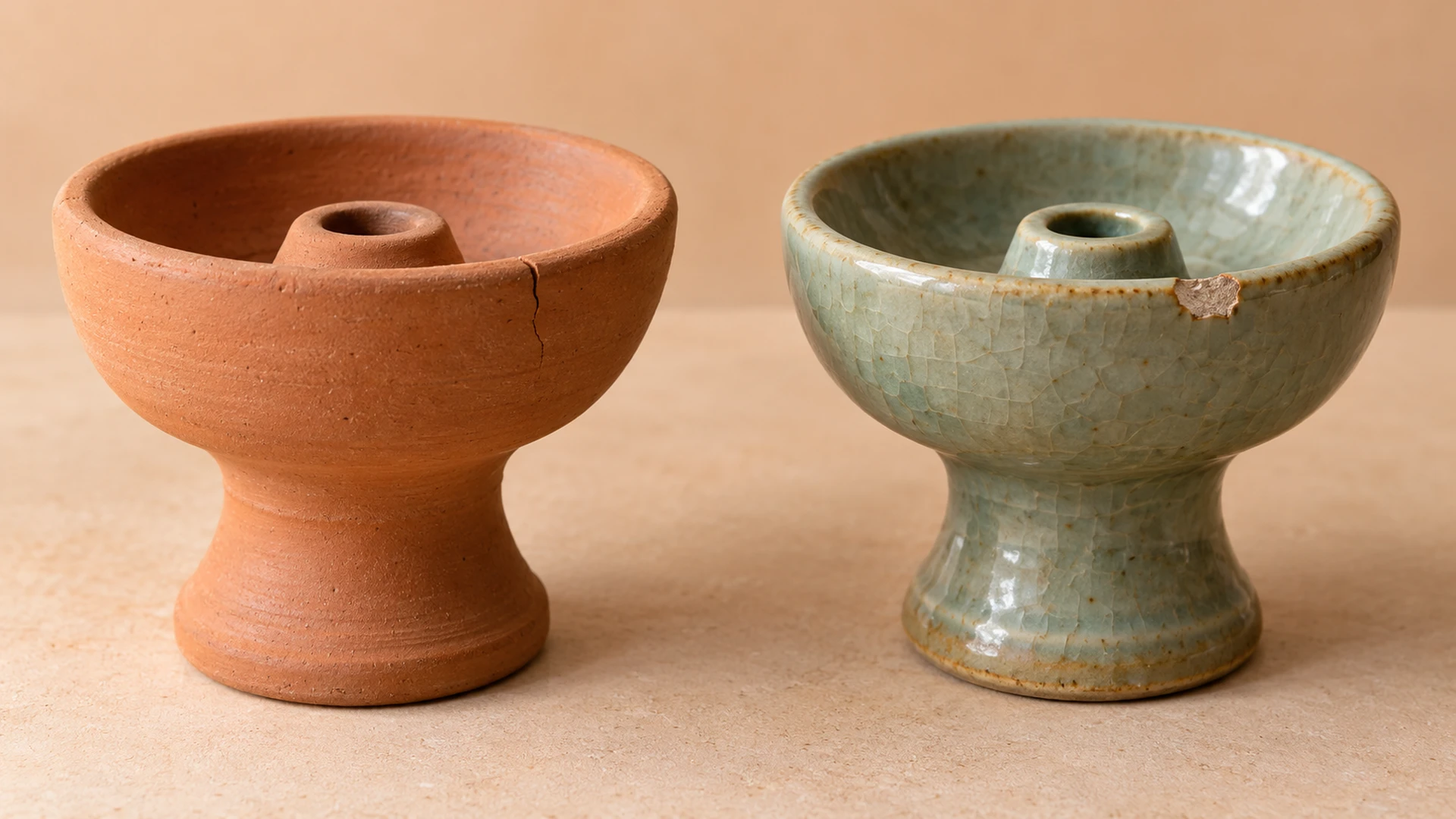




How to assess cracks and glaze flaking in a ceramic bowl

Summarize this article with AI
Discover the key points with your preferred tool.
The title, article link and text context are sent to your chosen tool.
If you notice cracks, chips, or flaking glaze on a ceramic bowl, separate the part and photograph its condition. A surface stain and material loss are not the same thing. Do not test a crack by heating it or fill a gap in the glaze with household paint or adhesive. Whether a part of unknown composition and history is suitable for reuse cannot be determined by appearance alone. It should be assessed using the manufacturer's material and care information.
Distinguish the ceramic body from the glaze layer
The shiny layer visible on the surface of a ceramic piece may be glaze. The appearance and care limits of the body underneath and the surface layer are not the same. A difference in color at one spot may simply be a stain, or it may be an area where the glaze is missing or the surface has changed. Do not scrape the piece to find out. Document the location and boundaries of the gap observed during visual inspection.
Some surfaces may have fine, web-like lines. Do not assume the lines are a normal design feature without knowing how the manufacturer describes them. Conversely, do not claim that all parts are equally damaged based on a single photo. The model’s material description, manufacturing characteristics, and the history of the current finding should be assessed together. If there is uncertainty, set the part aside without using it.

Why staining and surface loss are confused
The glaze around a dark area may appear intact. However, scraping away residue with a hard tool is not an appropriate way to find out what is underneath. A metal tip or abrasive sponge may affect the surface itself. A new scratch then becomes difficult to distinguish from the original finding. First assess whether damage is suspected, then decide on cleaning.
If the surface has flaking, a sharp edge, or a noticeable gouge, do not treat it as just a color issue. Scrubbing the same area over and over will not restore missing material. The goal of maintenance is not to make every mark disappear. Ask the manufacturer which procedures are permitted for the part in its current condition. If the instructions only give general washing directions, specifically ask about cracks or glaze loss.
Do not test with heat or attempt home repairs
Heating a questionable part to test its strength is not a reliable home inspection. Likewise, holding a hot part under cold water to see whether a crack opens is not recommended. Do not apply loads or heat to make an unknown defect more apparent. The goal of observation is to record the finding without changing its current condition, rather than enlarging it. This is why photographs and the history of work performed matter.
Covering the surface with household glue, filler, or paint does not make it suitable either. Whether these products adhere to ceramic and whether the part is suitable for its contact and temperature conditions are separate questions. A decorative repair cannot be assumed to authorize functional use. When assessing a previously repaired part, specifically mention if the material used is unknown; a hidden earlier repair may change the maintenance method.
The decision to clean comes after assessing structural integrity
If the part's manufacturer confirms that maintenance is possible, use only the specified method. Do not treat unglazed, decorated, or previously repaired surfaces like standard kitchen ceramics. Prolonged soaking, dishwasher cleaning, or soaking in chemicals requires separate permission. A method's working on another ceramic item does not prove it is suitable for your part.
Color remaining after gentle care is not, by itself, a reason to repeat the process. Inspect the surface again under the same lighting. Stop if you see new lines, lifting, or separating material. Do not focus on whiteness or shine when evaluating the result. The integrity of the ceramic, preservation of its surface, and removal of any applied products are matters that need to be clarified first. Keep the questionable part separate from the others.
Verify the part's care information with the right source
Two parts that look alike are not necessarily suitable for the same care method. One may have paint on its outer surface while the other is uncoated. An added ring at a connection, hidden adhesive, or an inner layer that cannot be removed may also affect which method is appropriate. Do not decide based only on a photo, color, or the general name of the product range. Identify the specific model of the part and its production series, if available.
Look for the cleaning section in the user manual. Check whether it clearly states which sections can be separated, whether water contact is permitted, which cleaners may be used and how to dry the part. If a sentence refers only to the body, do not extend that permission to the hose, glass or decorated section. If the explanation is incomplete, set the part aside and request written information instead of guessing.
Include the model name, a photograph of the entire part and a close-up of the problem with your request for information. Also explain any previous treatment. Instead of simply asking how to clean it, ask specific questions such as whether this surface can be submerged, whether the connection should be disassembled and which products should be avoided. Keep the reply with the part's care notes.
Inspect visually without damaging the surface
No aggressive treatment is needed during inspection. Put the part on a stable surface, provide adequate light, and look from different angles. Do not scrape the surface to reveal a hidden detail. Testing with a fingernail, needle, or metal tip may create a new mark and make it harder afterward to distinguish which marks were originally present.
Photograph the entire part first, then the affected area. Using only an extreme close-up may make the mark’s location unclear. If a size reference is needed, hold a ruler nearby without touching the part. Do not feel the part by hand if breakage or sharp edges are suspected. Set up a calm work area where checking one section does not put stress on others.
Write observations separately from interpretations. Instead of declaring “definitely rust,” use a description such as “orange spot”; instead of “definitely mold,” use “dark area on the inner wall.” Add whether the change was noticed before or after cleaning. This does not minimize the problem. It conveys observed findings more clearly than a hasty diagnosis for an accurate assessment.
Follow the label when choosing a cleaner
Not every household cleaner is suitable for every part. A product that works on bathroom surfaces should not automatically be used on metal, decorated glass, or inside a hose. First read the part manufacturer’s instructions, then the cleaner’s intended applications. The two must be compatible. Reducing the quantity or shortening the exposure time is not a reliable solution for an application not described on the label.
Do not combine cleaners. If you think one product has not worked, do not pour a second product into the same container. In particular, bleach must not be mixed with other cleaners. Do not work in a container whose previous product is unknown. Do not transfer cleaning products to beverage bottles; keeping the original label visible helps prevent misuse and confusion.
Do not start if you cannot provide the ventilation and protective measures required by the label. Stop instead of trying stronger products on an unidentified stain. Reduced odor, lighter color, or a shiny surface alone does not prove the process is appropriate. Assess material compatibility, the ability to remove residue, and the part’s integrity before appearance.
A care record makes the next decision easier
Keeping a record does not require a long form. A few sentences with the model name, the part inspected, the date and the changes observed are enough. Take before-and-after photographs from the same angle. Images taken under different lighting can exaggerate or understate color changes. Use a plain image showing surface detail instead of filters that make the photograph more attractive.
If you treated the part, record the exact name of the product used, which section it touched and how it was applied according to the manufacturer's instructions. If you waited for support without doing anything, record that too. This helps anyone inspecting it later distinguish a new problem from an old mark. If several people perform maintenance, keeping the record in a shared location where everyone can find it is useful.
At the next inspection, do not look only at the final photograph. Consider whether the affected area has expanded, whether similar marks have appeared elsewhere and whether the part encountered moisture in storage. These notes do not replace a technical diagnosis; they make the information request more specific. When needed, you can provide the manufacturer with an organized record clearly showing what was done instead of trying to recall the entire history.
A Light-Colored Spot Is Not Always Dirt
For example, imagine seeing a small, light-colored spot on a dark glazed surface. You may not be able to determine at home whether it is residue, a scratch, or missing glaze. Take photos from different angles instead of scraping it with a metal tip. Record any recent drops, impacts, or cleaning. Show the area around the spot as well; a close-up alone can hide which part of the piece is being examined. If the manufacturer's response permits cleaning, confirm that it also addresses the suspected damage. Receiving only general washing instructions does not mean the observed surface change has been judged insignificant.

Frequently asked questions
Is a small glaze crack always insignificant
No. Without model information, it is impossible to determine whether the appearance is a manufacturing characteristic or a later change. A small size does not mean it is insignificant. Send the manufacturer an overall photo of the part, the location of the line, and when it was noticed. If necessary, set the part aside until the assessment is complete.
Is scraping buildup with a knife appropriate
Experimenting with hard, sharp tools can add new marks to the surface. It can also conceal or worsen existing damage. Do not use a tool the manufacturer has not approved. For an area that cannot be cleaned with a soft tool, ask whether the mark is a stain or a change in the material instead of immediately switching to a harder tool.
Can I use the repaired part in the same way again
A repair alone does not provide such authorization. The suitability of the adhesive and filler, the part's former strength, and contact conditions must be evaluated separately. Even a professional decorative repair does not constitute proof of functional suitability. If you do not know the history of a repair, clearly tell the manufacturer about this uncertainty.