

Hookah Guide 2025: Culture, Setup, and Health Risks
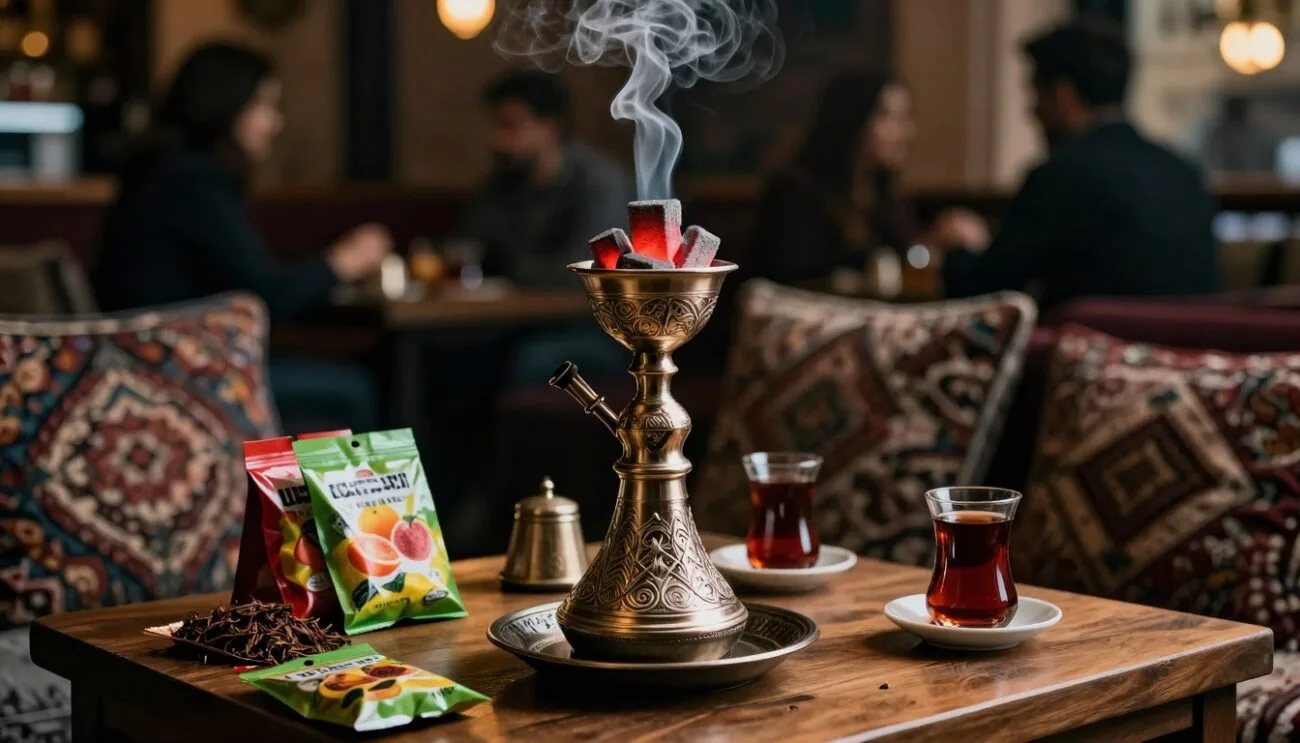
The crackling of the coal, the fragrant smoke, and long conversations—in short, hookah. Originating centuries ago in the Middle East and South Asia, the hookah has become a quiet yet powerful part of social life in Turkey and around the world today. Whether in cafes, on terraces, at the beach, or during get-togethers with friends at home, for many people, the hookah is a source of pleasure that keeps the conversation going.
It has a rich history that spans from the palace and mansion culture of the Ottoman era to today’s modern hookah cafes. For some, it’s simply the taste of flavored tobacco; for others, it’s a hobby in its own right—a ritual involving preparation and presentation. Those who want to set up their own setup at home are now placing greater importance on preparation, maintenance, and equipment selection.
In this guide, we cover everything from the history of the hookah to how to enjoy it, from hookah etiquette at cafes and at home to health risks and the proper hookah set and you'll find every detail—right down to the choice of tobacco—explained clearly and simply.
The Origins of the Hookah: Its History, Culture, and Evolution to the Present Day
Understanding the hookah means understanding not just a tobacco-smoking device, but a centuries-old tradition and a culture of conversation. This tradition, whose origins stretch from the Indian subcontinent to the region of Iran, took on a new identity with the Ottomans and evolved into the form we know today in Turkey.
Below, you’ll find a step-by-step look at the brief history of this journey, its connection to social life in Turkey, and the new trends that will make the hookah appealing to young people in 2025.
A Brief History of the Hookah: From India to the Ottoman Empire
The history of the hookah begins around the 16th century in India and the surrounding regions. Simple water pipe devices made in India using coconut shells and bamboo stalks gradually spread to Iran and the surrounding areas. As tobacco spread across the world, these devices were adapted for smoking tobacco, and gradually the ancestor of today’s hookah emerged. For basic information on the hookah, if you’d like The "hookah" article on Wikipedia You can also take a look at it.
Thanks to cultural exchange along trade routes, through migration, and between royal courts, the hookah quickly made its way to Ottoman territories. In the 17th and 18th centuries, the hookah gained acceptance first in palaces and mansions in Ottoman cities, particularly in Istanbul. Heavy, ornate glass bodies, engraved hoses, It ensures that the hookah is associated with status and grandeur.
Over time, the hookah evolved from being merely a pastime of the elite into a pleasure accessible to the general public in coffeehouses. Hookah lounges became gathering places for long conversations, political discussions, and young people with a passion for literature. The foundation of the hookah culture we still see in Turkey today was laid during this Ottoman period.
Turkish Hookah Culture: Tea Houses, Cafes, and the Home Environment
In Turkey, the hookah is not just a tobacco product smoked on its own; it’s often an excuse for conversation. Especially for the older generation, the hookah is a natural extension of the culture of reading rooms and coffeehouses. In these places—where people read newspapers, the sound of backgammon echoes, and tea is always on the table—the sight of a hookah smoldering slowly in the corner is a very familiar one. If you’re curious about the historical role of reading rooms, This article about coffeehouse culture It offers a beautiful frame.
Today, in major cities, modern hookah cafes have joined the ranks of traditional coffeehouses. With spacious seating areas, dim lighting, background music, and dozens of flavor options on the menu, hookah has become a staple of evening get-togethers. For many people:
- Getting together with friends and having long, leisurely conversations,
- Relaxing with a cup of tea, coffee, or a cold drink,
- To gradually let go of the day's stress,
It has become one of the most familiar routes.
The habit of smoking hookah at home has also increased in recent years. Those who want to recreate the atmosphere and flavor they experience in cafes at home are setting up their own hookah sets and creating a small “home corner.” A hookah table set up on a balcony or in a corner of the living room can become the centerpiece of game nights, sports-watching evenings, and gatherings with friends.
At this point, the hookah often becomes a “ritual.” Preparing the tobacco, lighting the charcoal, adjusting the water level, and passing around the hoses are all seen as a calm yet thoughtful way of hosting guests.
2025’Hookah Trends: Flavors, Designs, and Young People
2025’As hookah has gained popularity, it has taken on a whole new dimension, especially among young people. The flavor options, which used to consist of just a few classic tobaccos, have now transformed into a veritable “menu” featuring fruity, sweet, spicy, and blended flavors. From melon, watermelon, mint, blueberry, and gum to blends with a hint of latte, there are dozens of options to suit every palate. If you’re curious about this variety, This article, which compiles the different types of hookah tobacco It can give you an up-to-date idea.
Several key trends are shaping the next generation of hookah culture:
- Variety of aromas: Blended flavors are much more popular than single flavors. Fruit-and-mint combinations, in particular, stand out because people enjoy their cool and light taste.
- Modern Designs: Alongside classic, large-bodied sets, more minimalist, stylish, and portable hookahs have become popular. Materials such as plexiglass, stainless steel, and frosted glass are gaining prominence.
- Portability: Small-sized hookah bowls, sets with carrying cases, and disposable hoses make it easy to take your hookah with you to your home, summer house, on vacation, and to friends’ homes.
- The Impact of Social Media: Hookahs are visually appealing, especially on Instagram and TikTok. Colorful glass pipes, LED-lit bases, and thick clouds of smoke frequently appear in photos and videos.
In short, for young people, the hookah is not just about “smoking tobacco,” but also:
- Setting the scene,
- Creating photos and videos,
- Spending time in a group,
It has become a means to an end.
On the other hand, in parallel with this popularity, restrictions and regulations targeting hookah cafes have also increased in some cities. Rules regarding the use of tobacco products in enclosed spaces, licensing requirements, and age restrictions have begun to tighten. Health effects and the legal framework will be addressed much more clearly and in greater detail in the following sections of this guide. What you need to know here is that, alongside its cultural and social appeal, hookah has become an increasingly debated topic.
How Does a Hookah Work? Its Parts, How It Works, and Basic Terms
In this section, let’s think of the hookah not as a “magical smoke machine,” but as a simple contraption. Once you get to know its parts, you’ll automatically understand how it works.
Basic Parts of a Hookah: Bowl, Hose, Bottle, Strainer, and More
When you look at a hookah set, you’ll actually see a few basic parts that complement each other. Let’s take a look at each one.
- Bowl (head): This is the upper part where the tobacco is packed. It can be made of ceramic, clay, or glass. You pack the tobacco inside so that it’s slightly puffed up, then cover the top with foil or a heating device. The more carefully the bowl is prepared, the more balanced the smoke will be.
- Foil or heating assembly (coil / HMD): In the traditional method, aluminum foil is used; holes are punched in it, and the charcoal is placed on top of the foil. In newer heating systems, however, the charcoal is placed inside a metal device, and the heat is transferred to the tobacco in a controlled manner.
- Coal: The primary heat source that heats the tobacco without burning it. There are natural options (such as coconut shells) and fast-burning coals. High-quality coal slightly reduces the risk of odor and headaches. If you’re curious about different types of charcoal and other equipment, you can find a summary list on the hookah supplies pages.
- Body: This is the metal section through which the smoke from the bowl travels downward toward the water. It connects to the bowl at the top and to the bottle at the bottom. The tube running through the body is the main path the smoke follows.
- Bottle (glass body): The base where water is poured. It can be made of glass, acrylic, or crystal. It provides weight and stability, and the smoke cools slightly as it passes through the water.
- Strainer / Plug / Grommets: Rubber or silicone spacers that ensure a tight seal at the joints between the bowl and the stem, the stem and the bottle, and the stem and the mouthpiece. If air escapes, the smoke becomes weak and the draw is compromised.
- Hose: The flexible hose you use to inhale the smoke. It can be made of leather, silicone, or disposable plastic. A clean and wide interior ensures a comfortable draw.
- Mouthpiece: A small piece that attaches to the end of a water pipe. There are disposable plastic and washable models. Essential for hygiene during shared use.
When these parts are put together, they form a “system where smoke passes through water” that actually works very simply.
How Is Hookah Smoke Formed? The Basic Mechanism
You can think of a hookah as having a heat source at the top, tobacco in the middle, water at the bottom, and a path for the smoke to travel through. The process works roughly like this:
- The coal glows and generates heat. But the goal isn't to burn the tobacco like a fire; it's to heat it, as if baking it in an oven, to produce smoke.
- The tobacco in the pipe, heated by the embers, It heats up without burning. At this point, the flavorings, glycerin, and nicotine inside are released, and this mixture takes the form of smoke.
- When you pull on the stem, the airflow through the bowl changes. Hot air passes through the tobacco and travels down the inner tube of the pipe.
- Smoke rises from the tip of the bottle enters the water in the form of bubbles. As it passes through the water, the smoke both cools down and softens slightly. Most people think this means it’s been “filtered,” but passing through water doesn’t completely clean the smoke. If you’d like more technical information about the composition of tobacco smoke, you can check out this article that explains the properties of tobacco smoke.
- The smoke, which has cooled and become relatively mild, rises from the water's surface, is drawn upward through the hose, and reaches your mouth as you breathe in.
In short, the way a hookah works is this: “The charcoal burns the tobacco, the smoke passes through the water, and from there it reaches you through the hose.” It works like a simple stove chimney, except that a water-filled bottle and a hose are added to the system.
Common Terms in Hookah: Double Apple, Head, Setup, and Others
When you look at the menu at a café or watch a hookah video, you’ll often come across unfamiliar words. Let’s briefly break down the most common ones.
- Shisha: The name given to the hookah in English-speaking countries. Some people also use it to refer to tobacco. “Smoking shisha” actually means “smoking a hookah.”
- Hookah: It also means “hookah.” This term is used especially in the United States and Europe. When someone says “hookah lounge,” they’re referring to a hookah café. If you’re curious about how the term is used in different countries, check out this article written in English Glossary of Hookah Terms This provides a good example of that.
- Head: It is used to refer to the bowl. Phrases such as “good head” and “dark leaf head” describe how the bowl is packed. The style of the head is determined by whether the tobacco is packed high, flat, tight, or loose.
- Setup (set up): It describes the entire setup of a hookah. The entire combination—including which bowl, which tobacco, how many coals, how they’re arranged, which hose, and the water level—is called a “setup.” When someone says, “This setup is really strong,” it means the nicotine and smoke density are high.
- Double Apple: One of the most classic flavors in the world of hookah. It typically offers a blend of red apple, green apple, and anise. Because it has a slightly spicy, rich aroma, it’s often considered the “classic Arabic hookah flavor.” If you’d like to see different brands’ takes on “Double Apple,” check out the Double Apple flavor description on an example product page.
- Flavor / Aroma / Mix: It describes the taste of the tobacco you use. Words like "flavor" are used for single flavors, and "mix" for blends.
Once you know these terms, the phrases you hear in the menu or in videos will make much more sense. Even when someone says “a light mix setup with two coals,” you’ll be able to get a pretty good idea of what kind of hookah they’re talking about.
A Guide to Setting Up a Hookah at Home: A Step-by-Step Guide to a Clean, Tasty, and Safe Hookah

Photo by Campus Production
When setting up a hookah at home, the goal shouldn’t be to replicate the café experience exactly, but rather to achieve a more controlled, cleaner, and relatively less risky smoking experience. To do this, three things are important: the right team, the right tobacco and coal, Proper installation and regular cleaning.
If you follow the steps below, you’ll not only set up your first hookah at home more carefully, but it will also be much easier to maintain the same standard every time you smoke.
Choosing the Right Hookah Set: Tips for Beginners
The biggest mistake when buying your first hookah set is getting caught up in “appearances.” Flashy but low-quality materials can rust after just a few uses and ruin the taste. If you’re just starting out, go for something simple but made from healthy materials A set makes much more sense.
Key points to keep in mind:
- Glass bottle: Clear glass lets you see the water inside. It doesn't retain odors, and any stains are immediately noticeable. Acrylic or painted glass can become scratched and lose its shine over time.
- Stainless steel body: Choose a steel or high-quality coated metal body. A rusty body is not only a hygiene concern but also spoils the taste of the smoke.
- Washable hose: Silicone or washable hoses are the most sensible choice in the long run. Old-style leather-covered hoses are very prone to trapping odors, moisture, and bacteria.
- Airtightness: Check that the rubber or silicone gaskets at the joints between the bowl, the body, and the bottle are secure. No matter what you do with a setup that’s leaking air, the smoke will remain weak.
As for the size, initially medium-sized One hookah is enough for most homes. In very small bowls, the smoke heats up quickly, while in very large ones, they take up a lot of space and are harder to clean.
When it comes to the number of hoses, a single-hose set is generally more hygienic and trouble-free. Sets with multiple hoses may seem appealing for large groups, but each additional hose means an extra connection—and thus an increased risk of leaks and a greater need for maintenance. If you want to compare different models and materials, here’s a general overview to get an idea: Hookah sets product listings You can also take a look at it.
Which Tobacco and Charcoal Should You Choose? Tips on Taste, Smell, and Health
When setting up your first hookah at home, your choice of tobacco and charcoal directly affects the experience. The wrong choice can ruin the fun with a headache and nausea right from the very first puff.
The main topics regarding tobacco are as follows:
- Aroma type:
- Fruity flavors (grapes, watermelon, cantaloupe) offer a light and sweet taste.
- Classic flavors (double apple, plain tobacco) are more intense and spicy.
- Mint or "fresh" blends leave a cooling sensation in the throat.
- Flavors like coffee and chocolate go down well with a cup of coffee.
- Nicotine content: If you’re just starting out, opt for blends with a more balanced nicotine content. Very strong tobaccos and “dark” blends can increase dizziness and heart palpitations. To get a better idea of the nicotine concentration in hookah tobacco, it may be helpful to read articles that explain the nicotine levels in different products.
- Additives and syrups: Excessively bright, very juicy, and sticky tobaccos can quickly lead to a nagging headache. It’s generally better to choose products that are more balanced, with a distinct flavor but without being overly syrupy.
As for coal, the main difference is bituminous coal and fast-burning coal between:
- Natural coal ((often made from coconut shells):
- It takes a little longer to light on a small stove.
- When burned properly, it produces much less odor.
- Because it distributes heat evenly, there is a lower risk of burning the tobacco.
- It is generally considered relatively less harmful, but it is not entirely harmless.
- Fast-burning coal ((with chemical additives):
- It catches fire easily, even with a lighter.
- The smell that comes out when it first catches fire bothers most people.
- It contains more chemicals and is considered more problematic in terms of both odor and health.
For home use, if you have the option to burn it on the stove bituminous coal It makes more sense to choose wisely. Neither tobacco nor charcoal can ever be considered healthy, but choosing the right products can at least help you reduce the unnecessary chemical burden a little. To get a general idea of the different types of tobacco and charcoal, check out our hookah tobacco and charcoal pages, where you can see the flavors and charcoal types all in one place.
Step-by-Step Hookah Setup: Water Level, Bowl Filling, and Charcoal Management
Now that you have all the parts and materials, it's time to set it up. To set it up easily at home, follow these steps:
- Pour water into the bottle
Fill the bottle with regular tap water. The inner tube running down the body extends approximately 2–3 cm Adjust it so that it stays in place. If the pipe is submerged too deeply, it will be harder to pull; if it’s not submerged enough, the filtering effect will decrease. - Attach the body and the buttstock
Place the body into the bottle and make sure the gaskets are seated properly. After attaching the cap, you can check for air leaks by cupping your hand over the mouthpiece and pulling gently. - Fill the pipe correctly
Place the tobacco in the pipe by “crumbling” it. The most important rule:- Don't press too hard; leave some air pockets.
- The tobacco should extend slightly past the top rim of the pipe bowl, but not spill over.
- Don't let the grains stick together—keep them fluffy.
This allows air to flow freely through the tobacco, making the smoke more flavorful.
- Prepare some foil or a heating device
If you’re using foil, opt for thick aluminum foil. Cover the top tightly, then poke small holes at equal intervals using a toothpick or a hole punch. If you’re using a heating device (HMD), make sure the bowl fits snugly and there are no gaps. If you’d like to see an illustrated guide to the setup process, check out the article “How to Prepare a Hookah at Home,” which provides a step-by-step guide. - Light the coal and place it
Light the natural coal on the stove, turning it until it turns brown. It’s ready when all sides have turned gray.- First, place 2 pieces of charcoal along the edges of the bowl.
- If the smoke gets thicker, move the coals toward the center; if the flavor starts to burn, move them back to the edges.
- "Let the smoke settle"
The smoke is usually light for the first 2–3 minutes. During this time:- Warm up the system with slow, frequent pulls.
- 5–6 After a breath, the smoke begins to settle.
- Turn the coals every 10–15 minutes, and shake off the ash if necessary.
As the coals shrink and the heat subsides, you can prolong your smoking session by adding fresh coals one by one. But if the tobacco has started to smell dry and burnt, it’s always a better idea to refill the pipe.
Cleaning and Maintenance: How Can We Keep the Hookah More Hygienic After Each Use?
Just as important as a good setup, Cleaning after each use It’s also very important. A clean hookah not only provides a more flavorful smoking experience but also reduces the extra risk associated with dirty, stale water.
A simple routine you can follow after every drink:
- Empty the bottle right away
Don't let the water sit. As long as tobacco residue and bits of charcoal remain in the water, a strong odor and a yellowish film will form. Swish it around with lukewarm water and rinse it a few times. - Scrub the body
Long, thin hookah brushes make the job much easier. Run the brush through the inside of the stem a few times using only warm water—no detergent. You can use a mild dish soap once a week, but make sure to rinse it very thoroughly afterward. - Washable and dry
Rinse the silicone hose thoroughly with plenty of water, then drain it. Let it dry completely by hanging it up or placing it on a sloped surface. A hose that remains damp will not only develop an odor but also harbor bacteria. Over time, you’ll notice it turning yellow and developing a bitter taste. - Use a disposable mouthpiece
If more than one person is using it, everyone should have their own mouthpiece. This small detail makes a bigger difference in terms of hygiene than you might think. The most practical method is to use a fixed hose at home and replace the disposable mouthpiece at the end of it.
If you notice stubborn stains on the body or in the bottle over time, soaking them in carbonated water can help. A clean, odor-free set allows you to experience the tobacco’s true aroma more clearly and reduces burnt and stale flavors. A hookah set that’s regularly maintained turns into a habit that’s a little easier on both your wallet and your health. If you’re looking for different cleaning brushes and replacement parts for your hookah, our hookah supplies and accessories pages—where you can find everything in one place—might be just what you need.
The Health Effects of Hookah: Facts, Myths, and Ways to Reduce Risks
Although the hookah may seem like a means of enjoyment that creates a relaxed social atmosphere, it is ultimately a tobacco product. In other words, it belongs to the same family as cigarettes and causes similar damage to the body.
In this section, we will not focus on aspects of the hookah described as “filtered by water, flavored, and milder,” but rather, their actual effects We'll talk about it. But we won't do it like a medical article; we'll use simple language that everyone can understand.
The goal isn't to scare you, but to help you make a decision "knowing exactly what you're drinking."
Is the Hookah Less Harmful Than Cigarettes? The Most Common Misconceptions
The most common belief about hookah is that it is milder and almost harmless compared to cigarettes. The atmosphere in cafes and the aromatic flavors, in particular, reinforce this perception. However, health campaigns emphasizing that all types of tobacco products are harmful, It clearly includes the hookah in this group as well.
The most common misconceptions are as follows:
- “"It filters out water vapor, reducing the harm."
Water merely cools the smoke and softens it slightly. Nicotine, carbon monoxide, and many chemicals pass through the water and reach the lungs. In other words, the smoke becomes easier to inhale, which often to breathe in more smoke means. - “"Flavored tobacco—with its natural fruit flavor—isn't that harmful."
Flavors like cantaloupe, watermelon, and gum leave a sweet and pleasant sensation on the palate. But most of those flavors from chemical flavorings and additives ...comes in. Even if the color of the smoke changes, what enters the lungs is still tobacco smoke and combustion byproducts. - “"I drink less often than I smoke, but it doesn't matter."
A cigarette usually lasts just a few minutes. With a hookah, however, a single session at most cafes lasts between 45 minutes and 1.5 hours. Inhaling smoke continuously during this time significantly increases total exposure. In other words, it’s less frequent but much more smoke at once is inhaled. - “"I don't inhale the smoke; I just swirl it around in my mouth."
Many people inhale even a small amount of smoke without realizing it. Even if you don’t inhale it, the tissues inside your mouth and your throat come into direct contact with the smoke. This increases the risk of mouth sores, gum problems, and throat irritation. - “"I switched to hookah to quit smoking."
Hookah also contains nicotine and fuels addiction. Replacing cigarettes with hookah keeps the body’s craving for nicotine alive. In other words, rather than helping you quit, it often maintains the addiction in a different form.
In short, viewing the hookah as “less harmful than cigarettes” actually means underestimating the amount and composition of the smoke.
The Effects of Hookah on the Body: Smoke, Nicotine, and Carbon Monoxide
When smoking a hookah, since it’s a slow and enjoyable experience, most people how much he smoked It doesn’t matter. Yet a single hookah session easily outlasts several cigarettes in terms of duration. This places a serious strain on the heart, lungs, and circulatory system. Summarizing the harms of hookah: Health centers' information pages ...also draws particular attention to this point.
You can think of the main effects briefly as follows:
1. Cardiovascular System
Coal-fired tobacco smoke contains large amounts of carbon monoxide (CO) is present. CO displaces oxygen in the blood and forces the heart to work harder. The heart rate may increase, and blood pressure may fluctuate. Over the long term, damage to the blood vessel walls increases, creating conditions that raise the risk of heart attack and stroke.
2. Lungs and Respiratory Tract
Hookah smoke contains fine particles and chemicals. These particles adhere to the bronchi and lung tissue.
In conclusion:
- Shortness of breath,
- A decrease in exercise capacity,
- Symptoms similar to chronic bronchitis
It can be seen. It can trigger attacks in people with asthma.
3. Nicotine and Addiction
Hookah tobacco also contains large amounts of nicotine ...Nicotine affects the brain's reward system and triggers a repeated urge to smoke. Tobacco addiction in the guides described The hookah is clearly considered one of the products that carry a risk of addiction. The statement “I only smoke it at the café” can, over time, lead to visiting more frequently and extending the duration of each session.
4. Heavy metals and other substances
Coal and tobacco smoke may also contain heavy metals such as lead and arsenic. These accumulate in the body and contribute to organ damage over the long term. In addition, because smoke causes chronic irritation of the tissues in the mouth and throat, it is considered one of the factors that increase the risk of oral cancer.
5. Oral and Dental Health
Among hookah users:
- Tartar and discoloration,
- Bad breath,
- Gum recession
It is much more common. Sweet and flavored tastes can mask this condition, but they do not reverse the underlying damage.
In short, hookah smoke contains substances similar to those found in cigarette smoke; the difference is that most of the time in terms of quantity and duration it comes to light.
Infection Risks Associated with Sharing a Hookah
The hookah isn't just about the smoke, with shared equipment It also carries a risk. Taking turns drinking from the same straw and mouthpiece creates a direct pathway for germs to spread from person to person.
Many bacteria and viruses found in the mouth and around the lips are transferred to the tip of the hose via saliva. When a disposable mouthpiece is not used, these germs are transferred directly to the next person’s mouth. This situation:
- Infections inside the mouth, such as canker sores and cold sores,
- Common colds and flu-like respiratory illnesses,
- More serious infections in people with weakened immune systems
can make it easier. For infections such as tuberculosis, which are transmitted through the respiratory tract, crowded and poorly ventilated hookah environments are also considered an additional risk factor; for detailed information, see the Ministry of Health’s In the tuberculosis diagnosis and treatment guidelines It also includes warnings regarding shared environments.
When hygiene isn't maintained in some cafes:
- Hoses can be reused over and over again without being washed thoroughly,
- Mouthpieces are not replaced after every customer,
- If the water in the bottle remains undisturbed for a long time, it begins to harbor bacteria.
This scenario, especially when combined with the habit of “passing the same hookah around” among large groups of friends, fuels the spread of infection.
That’s why, even if you’re going to share a hookah, you should at least:
- Everyone has their own disposable face mask should be,
- If possible, a washable personal towel should be used,
- You should stay away from teams that have water that looks dirty or smells bad.
Paying attention to hygiene does not eliminate the health risks associated with hookah smoke, but it at least reduces the risk of unnecessary infections.
What Can Be Done to Reduce Risks? (It’s Not Completely Risk-Free)
It is not possible to make a hookah “harmless” by adjusting it correctly. Using water, flavorings, or natural charcoal does not make it a healthy product. However, by taking certain steps, especially overloading and associated risks You can cut back a little. Comprehensive guides on tobacco (such as the one from the University of Health Sciences’ in the book on tobacco control) The core message remains the same: the safest way to use it is not to use it at all; but for those who do use it, reduction strategies are also important.
For a more mindful approach, you can keep the following points in mind:
- Reduce the frequency
Instead of smoking a hookah every day, opt for sessions that are as infrequent and short as possible. The longer the session, the more smoke you inhale. - Use with cigarettes
Smoking both cigarettes and hookah doubles the strain on your lungs and heart. If possible, it makes more sense to focus on quitting at least one of them. - Avoid enclosed, stuffy spaces
In cramped, smoke-filled spaces, you breathe in not only the smoke from your own hookah but also the smoke from others’ hookahs. Open-air or well-ventilated areas help reduce secondhand smoke to some extent. - Select natural coal
Instead of fast-burning chemical coals, natural coals burned in a fireplace generally contain fewer added chemicals. They’re not harmless either, but at least they can help reduce unnecessary odors and headaches somewhat. Content that offers practical information on choosing coals (for example, hookah charcoal (the guides) also emphasize this difference. - Don't overdo it when drinking alcohol
Alcohol affects decision-making. It can cause you to unknowingly prolong your hookah session and take deeper and more frequent puffs. Consuming both in large amounts at the same time poses additional risks to the heart and brain. - Use clean equipment and a disposable mouthpiece
A dirty hose and stagnant water not only spoil the taste but also increase the risk of infection. Whether at home or at a café, choose equipment that is as clean as possible and for personal use. - Take a break, listen to your body
Symptoms such as headaches, nausea, and dizziness generally indicate excessive smoke and carbon monoxide exposure. Rather than ignoring these warning signs, it is best to take a break or even stop the session altogether.
In conclusion, completely eliminating hookah from your life is the best choice for your health. But if you’re not ready to quit, at least knowing exactly what he was doing, Aiming for more controlled and limited use would be a realistic step that can be taken today.
Frequently Asked Questions: About Hookah—Frequently Wondered
So far, you’ve learned quite a bit about the history of the hookah, how it works, and its health effects. Still, you might have some very practical questions on your mind, such as “How much should I smoke?” or “Is vaping better?”
In this section, we’ll provide brief but clear answers to the three most frequently asked questions. Our goal isn’t to discourage you or hype you up—we just want to present the facts honestly. You’ll still be the one to make the decision, but now you’ll be making it with full knowledge of what you’re doing.
How Much Hookah Is Safe to Smoke Per Day or Per Week?
For hookah “"It's safe to drink this much" There is no such level. Nor is there any mention of it in official sources regarding tobacco products (for example, the Ministry of Health’s on the tobacco page) The point being emphasized is clear: there is no safe dose, only less damage is.
Even if you smoke a hookah just once a week, your body is still exposed to smoke, nicotine, and carbon monoxide. Even this single session can easily last as long as several cigarettes. So saying, “I smoke once a week—it’s no big deal,” isn’t very realistic. You’re simply referring to a level of risk that’s relatively lower than smoking every day.
Risk increases as three factors rise:
- Inside Me frequency ((daily, weekly),
- Each session's duration (30 (a minute or 2 hours?),
- The Smoke's density (number of coal pieces, type of traction).
In particular, smoking a hookah every day causes the brain to become accustomed to nicotine. After a while, a routine naturally develops—such as “I’ll smoke one with my coffee” or “I’ll light one up after dinner.” This, in turn, the risk of addiction and significantly increases the risk of long-term heart and lung problems.
In short, instead of focusing on a “safe amount,” it makes much more sense to ask, “How can I drink less often and in smaller amounts—or even quit altogether?”
Are Electronic Hookahs or Vapes Less Harmful?
Electronic hookahs, e-cigarettes, and vaping products have become very popular in recent years under the label of “less harmful.” The nicotine, flavorings, and chemicals in the e-liquid are heated, producing vapor rather than smoke. This makes it seem more harmless to many people.
However, as noted in the article by the Turkish Health Foundation explaining the harms of e-cigarettes, these products also nicotine addiction and lung damage These are not things to be taken lightly. Steam contains not only “water vapor,” but also various chemicals and solvents.
The general framework is as follows:
- With a traditional hookah, you inhale smoke from the charcoal and tobacco.
- A nicotine-containing (or nicotine-free) e-cigarette chemical mixture vapor You're breathing.
- Both are foreign to the lungs, and both pose a long-term risk.
In recent years, EVALI—a specific lung disease associated with e-cigarette and vape use—has been identified; prepared by Medipol In the EVALI guide This is described as symptoms such as shortness of breath and chest pain.
For some adults, it can be considered a “transitional product during the process of quitting smoking” under a doctor’s supervision. But especially for adolescents and young adults, the electronic hookah is often a new gateway to addiction is becoming. In other words, it has “a slightly different risk profile compared to the traditional hookah,” but it also not harmless and certainly not for young people.
What Are Some Enjoyable Alternatives to the Hookah?
Many people actually aren't concerned with the "smoke," but rather, the atmosphere and conversation He enjoys it. He wants to hang out with friends, find an excuse to chat, and take his mind off things. It’s perfectly possible to meet this need without a hookah. Even in addiction-prevention programs designed specifically for young people (such as those involving Yeşilay, Turkey's Substance Abuse Prevention Education Program) These types of alternative activities are recommended.
Here are some things you can try instead of hookah for chatting and socializing:
- Coffee get-togethers: Try different coffees; host small “coffee tasting” evenings.
- Board games and card games: Whether it's Taboo, Uno, chess, or Monopoly—it doesn't matter. The moment you put a game on the table, the conversation just flows.
- Walking and beach tours: Headphones, some light music, and a friend by your side. A mix of exercise and conversation.
- Movie or TV series nights: Choose a TV series to watch together, and meet on a specific day each week.
- Exercising Together: Lightly competitive activities such as basketball, indoor soccer, badminton, and table tennis.
- Online games: If your group of friends is into games, it’ll be a lot of fun with voice chat.
Even if you want to quit hookah completely, small, manageable steps will do the trick:
- First reduce the frequency, Do it once a week instead of every day.
- Then replace some of your hookah get-togethers with the activities listed above.
- If you have a permanent “hookah corner” in your home, remove it or turn it into a different hobby corner.
The more you distance yourself from the mindset of “I have to smoke a hookah every time I sit down,” the easier it becomes to quit. The pleasure is still there—you’re just switching up the method.
Conclusion
The hookah is a culture in its own right, from its history to the ritual of preparing it. Whether in a café or at home, no one can deny that it’s a source of pleasure that prolongs conversation and creates a relaxed atmosphere. It has carved out a unique place for itself, especially during get-togethers with friends, when paired with tea and conversation.
On the other hand, behind all that pleasant smell and thick smoke, it rivals cigarettes—and often even surpasses them— health risks ... Coal, nicotine, carbon monoxide, shared mouthpieces, and prolonged smoking sessions directly affect heart, lung, and oral health. Statements like “It filters water” or “It’s mild because it’s flavored” make the situation seem more harmless than it actually is.
The decision is entirely up to you. Whether you keep hookah in your life, cut back, or quit—it’s all a personal choice. What matters is that you make your decision knowing exactly what you’re consuming and being honest with yourself. Perhaps spacing out your sessions, visiting the local hookah spot less often, or shifting your social gatherings to smoke-free activities could be a small but meaningful step you can take today.
Thank you for reading. If you’d like to share your thoughts and experiences, I’d love to hear from you in the comments.



Write a reply