

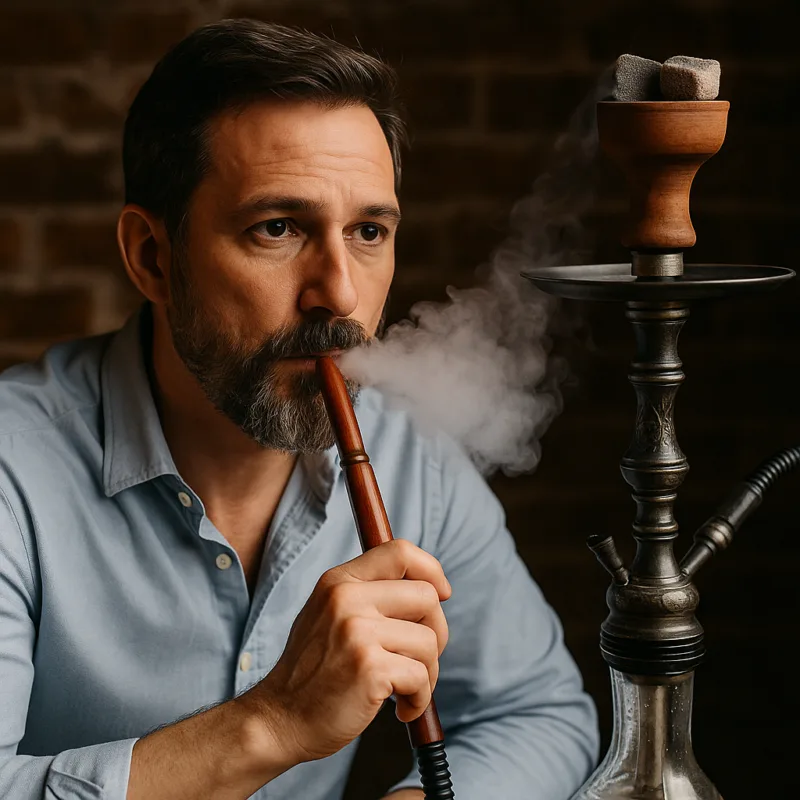
Hookah Interviews
The world of hookah goes beyond just tobacco and flavors; it is a rich culture that encompasses people’s stories, experiences, and passions. In this article, Hookah Interviews Through this platform, we’ve spoken with experts from various sectors and are sharing their valuable insights with you.
Hookah experts, In our interviews with café owners, tobacco producers, and passionate hookah enthusiasts, we’ll delve into the depths of this culture. In this comprehensive interview series, designed for both beginners and experienced hookah enthusiasts, you’ll discover the lesser-known aspects of the hookah world.
In these interviews, hookah cultureYou’ll learn how it has evolved, what the current trends are, and what the future holds for the world of hookah. You’ll also be able to draw inspiration for your own hookah journey by learning from the experiences of successful business owners.
Interview with a Hookah Café Owner: “My 20 Years of Experience”
Mr. Mehmet (45) is the owner of a hookah café chain with three locations in Istanbul
Question: How did you get started in the hookah industry?
“2003 Back then, we started by opening a small café with friends from my college days. At the time, hookah culture wasn’t as widespread as it is today. We only knew the traditional flavors—like apple, grape, and mint. “Our first café was a tiny 20-square-meter space, but we’d created a warm and welcoming atmosphere for our customers.”
Question: How has hookah culture changed over the past 20 years?
““We’ve seen major changes. There used to be only 5 or 6 flavors, but now there are hundreds of varieties. Our customer base has also changed a lot. In the past, only men would come, but now we have a lot of female customers as well. Families, couples, coworkers… Hookah has become a social activity.”
Question: What are the most popular flavors?
“The classics are still the most popular—apple, grape, and peach. But now people are looking for more creative combinations. Our “Love Blend”—a mix of strawberry, vanilla, and rose—is very popular. Young people are more adventurous; they want to try new flavors. Our older customers, on the other hand, prefer traditional flavors.”
Question: What is the secret to a successful hookah café?
“Quality, cleanliness, and a warm, welcoming atmosphere. We know each of our customers personally and understand what they like. When a customer comes in, we ask, “The usual?” That personal touch is very important. We’re also constantly innovating—new flavors, new blends, and special events.”
Question: How did the pandemic affect you?
““It was a very difficult time. We were completely closed for 8 months. But during that time, we started selling online—we sold hookah sets for home use. We taught our customers how to use a hookah at home. We came back stronger after the pandemic because people started placing greater importance on socializing.”
Question: What advice do you have for young people?
““Start this business with curiosity and passion. Do it not just to make money, but because you truly love it. Listen to your customers and learn what they want. Keep improving yourself and stay on top of new trends. And most importantly, never compromise on cleanliness and quality.”
Interview with a Tobacco Grower: “The Secret Behind the Flavors”
Ahmet Usta (52), an experienced master craftsman who has been producing tobacco for 25 years
Question: What is the process of tobacco production?
“It's a very complex process that requires patience. A good hookah tobacco “First, we select high-quality leaves. We prefer Virginia tobacco because it’s mild and absorbs flavors well. We dry the leaves in special ovens, then add the flavors.”
Question: How does the flavoring process work?
“"This is our biggest secret. We use a different technique for each flavor. We derive fruit flavors from natural extracts. For apple flavor, we use real apple extract, but it takes hours for the tobacco to absorb this extract. The tobacco absorbs the flavors over a period of 24 to 48 hours."
Question: Which flavors are the hardest to produce?
“"Sweet flavors like chocolate and vanilla are the most challenging. It’s very difficult to make these flavors taste natural. If you add too much, it tastes artificial; if you add too little, it’s not enough. It takes years to find the right balance. Flavors like mint, on the other hand, are easier because natural mint extract is very strong."
Question: How can we tell if tobacco is high-quality?
“High-quality tobacco is first evident by its appearance. The leaves should be whole, with few breaks. It should have a natural scent, without any artificial odor. When you hold it in your hand, it should feel slightly moist but not soggy. And of course, the taste—high-quality tobacco is smooth to smoke and doesn’t burn the throat.”
Question: What do you think about homemade mixtures?
“"It's a wonderful hobby, but you have to be careful. When mixing tobaccos from different brands, you need to pay attention to their moisture levels. Some tobaccos are very moist, while others can be dry. These mixtures affect the burn time. I recommend starting with simple blends."
Question: How will hookah tobacco evolve in the future?
“"Organic tobacco is on the rise. People want more natural products. We’ve also started producing certified organic tobacco. Low-nicotine tobacco is also becoming popular. As health awareness grows, demand for these types of products will increase."
Interview with a Hookah Master: “A Master with 30 Years of Experience”
Hasan Usta (58), a master craftsman who has been working at one of Istanbul’s oldest hookah cafés for 30 years
Question: What is it like to be a hookah master?
“"It's an art. It's not just about putting in tobacco—it's about preparing the hookah according to the customer's mood. If a customer comes in feeling sad, I make a soothing blend for them. If they come in feeling happy, I make an energizing blend. To do this job, you have to understand people."
Question: How do you prepare the perfect hookah?
“It’s all in the details. First, I clean the plate thoroughly. I loosen the tobacco with my hands—I don’t pack it down too tightly. The foil is very important—it shouldn’t be too tight or too loose. I make the holes small but plenty of them. I let the coals burn until they’re fully glowing, making sure there’s no black residue left.”
Question: Which type of customer is the most difficult?
“The know-it-all customer (laughs). The ones who tell me, “Do it this way, do it that way.” But I’m usually patient. Sometimes they’re right, and sometimes my experience proves me right. The best customers, though, are the ones who say, “Master, you know best.” I make special blends just for them.”
Question: What are some common mistakes made by young craftsmen?
““They’re rushing things. This is a job that requires patience. They pack the tobacco too tightly and add the charcoal too early. The biggest mistake, though, is not listening to the customer. Every customer is different; everyone has different tastes. They need to learn that.”
Question: How has hookah culture changed?
““In the past, hookah-making was a more respected profession. Masters were highly valued. Now anyone can call themselves a master, but true mastery is on the decline. The old tradition of mastery is fading away. The younger generation is trying to learn quickly, but mastering the finer points of this craft takes years.”
Question: What is your most memorable moment?
“There was a couple who came every week. The man was going to propose to the girl, so he asked me to prepare a special hookah for him. I made a special rose-scented blend, and we placed a small ring on the tray. She said yes, and now their children come here too. Moments like these make this job worthwhile.”
Interview with a Female Hookah Enthusiast: “Women’s Hookah Experience”
Ayşe (32), a marketing specialist who has been a regular hookah smoker for 8 years
Question: How did you get into hookah?
““I started doing this with my friends during my college years. It seemed really strange at first, but then I got used to it. It helps me relax, especially during stressful times. It’s become a ritual whenever I meet up with my friends.”
Question: How is it viewed when a woman smokes a hookah?
“It used to draw more attention, but now it’s considered normal. In fact, at many hookah cafés, there are more female customers than male ones. We women generally smoke in a more social way—chatting and sharing. Men tend to take a more individualistic approach.”
Question: Do women prefer different scents?
“"We generally prefer fruity and sweet scents. Strawberry, peach, and vanilla are very popular. Men tend to prefer stronger scents—like mint and eucalyptus. But of course, everyone is different, so we shouldn’t generalize."
Question: What do you pay attention to when smoking a hookah?
“Hygiene is very important. I always bring my own mouthpiece. I don’t drink from places that don’t look clean. I also make sure not to drink for too long, for health reasons. I usually limit it to one hour.”
Question: How is a hookah shared among groups of friends?
“"It's a lot of fun. Everyone brings a different flavor, and we make our own blends. Sometimes it turns into a competition—to see who can make the best blend. The moments when we laugh the most are when we're smoking the hookah."
Interview with a Young Entrepreneur: “The Modern Hookah Trend”
Emre (28), owner of an online hookah store and social media influencer
Question: What is entrepreneurship like in the hookah industry?
“"It's a very dynamic industry. New trends are constantly emerging, and new products are being developed. We've focused on online sales because the younger generation shops online. We market our products through Instagram and TikTok."
Question: How does social media influence hookah culture?
““It has a huge impact. People are sharing hookah photos and trying out new blends. We’re constantly creating new content—blend recipes, tips, and product reviews. A blend that goes viral is tried by thousands of people overnight.”
Question: What are the younger generation's preferences when it comes to hookah?
“"They're very different. They want creative blends rather than traditional flavors. We give them names like 'Unicorn Mix' and 'Galaxy Blend.' Colorful blends that look great on Instagram are very popular. There's also growing interest in organic and natural products."
Question: How will the hookah industry develop in the future?
“"Technology will have a huge impact. Electric hookahs, smart temperature control, and hookahs that can be controlled via mobile apps are on the way. Personalization will also increase—everyone will be able to create their own custom blend."
Question: How did your success story unfold?
“2 "We started a year ago with 50,000 TL in capital. The first year was very tough, but we went viral on social media. Now we have a monthly revenue of 500,000 TL. Our secret is being customer-focused and constantly innovating."
Interview with an Elderly Hookah Enthusiast: “From the Old Days to Today”
Uncle Ali (67), a retired teacher who has been smoking hookah for 45 years
Question: What was the hookah like 45 years ago?
““It was very different back then, my child. In those days, there was only tobacco—no flavors or anything like that. We smoked Tombeki tobacco; it was very strong. Smoking a hookah was a matter of prestige. The older folks smoked it in coffeehouses; the young people didn’t really smoke it.”
Question: How do you feel about change?
““There are pros and cons. The good thing is that anyone can smoke it now—even women. The bad thing is that it doesn’t have the same prestige it used to. Smoking a hookah used to be a ritual; now it’s become very ordinary.”
Question: Which scents do you prefer?
“"I still love the classics—apple, grape. These new flavors seem very artificial to me. Chocolate, vanilla… They taste more like desserts than hookah. But my grandchildren love them, so I try them sometimes with them."
Question: What advice do you have for the younger generation?
““They should be moderate. Hookah is nice, but they shouldn’t overdo it. They should see it as a social activity and not become addicted. And most importantly, they should smoke it in clean places. They should take care of their health.”
Question: What are your fondest hookah memories?
“"The hookahs my friends and I used to smoke when I was in the military. Back then, they were really hard to find, but we were so happy whenever we did. Now they’re everywhere, but that old excitement is gone. Sometimes I miss the old days."
Interview with a Hookah Collector: “A Passion for Antique Hookahs”
Mr. Kemal (54), collector of antique hookahs – a collection of over 200 pieces
Question: How did you get started collecting hookahs?
“30 "A year ago, I saw an old hookah in an antique shop and was really impressed. The craftsmanship was so beautiful that I bought it right away. Then I started doing some research and learned about its history. Now I have more than 200 antique hookahs."
Question: Which is your most valuable piece?
“18. "A silver hookah from the Ottoman period, dating back a century. The craftsmanship is stunning—it even has a tuğra on it. It’s a museum-quality piece. Of course, I don’t smoke it; I just display it. I have separate hookahs for smoking."
Question: What is the difference between old hookahs and new hookahs?
“"Old hookahs are works of art; new ones are functional. In the past, every hookah was handmade—the work of a master craftsman. Now they’re mass-produced. But in terms of functionality, the new hookahs are better—they’re easier to clean and more durable."
Question: Which periods are represented in your collection?
““From the Ottoman period through the Republican era. The oldest one dates back to the 17th century. I also have pieces from Egypt, Syria, and Iran. Each has its own distinctive style. Ottoman hookahs are more ornate, while Arab hookahs are simpler.”
Question: What advice do you have for young collectors?
“"They should be patient. It takes time to find good pieces. They should do their research and learn about their history. And most importantly, they should watch out for counterfeit pieces. Unfortunately, there are a lot of counterfeit antique hookahs on the market."
Interview with a Hookah Barista: “The Modern Art of Hookah”
Zeynep (26), professional hookah barista and blend specialist
Question: What is it like to be a hookah barista?
“"It's a very creative job. I make custom blends for each customer. I try to understand their mood and tastes, and prepare a blend based on that. I feel like a painter—I blend aromas just as a painter blends colors."
Question: What are your most popular blends?
“‘The strawberry-rose-vanilla blend we call “The Taste of Love” is very popular. The watermelon-mint-lemon blend called “Summer Breeze” is also very popular. The apple-cinnamon-honey blend called “Childhood Memories” evokes a sense of nostalgia in people.”
Question: What do you pay attention to when mixing?
““First, I try to get to know the customer. What flavors do they like? What’s their mood? Then I look at how the flavors complement each other. Some flavors overpower each other, while others bring out the best in one another. The proportions are very important—even one extra gram can change the taste.”
Question: Which mixture was the hardest?
“A customer had asked for a blend that “tasted like her mother’s apple jam.” It was a very emotional request. I tried to capture that flavor by mixing apples, cinnamon, cloves, honey, and a little vanilla. We tried five different versions, and she finally liked it. She even cried.”
Question: How will the art of hookah evolve in the future?
“"It will be much more personalized. Maybe the blends will be tailored to each person’s DNA. Technology is advancing rapidly, and AI is already suggesting blends. But the human touch will always remain important."
Conclusion: The Rich Mosaic of the Hookah World
This Hookah Interviews As we’ve seen in this series, the hookah is not just a drink—it’s an experience that brings people together, creates stories, and builds bridges between cultures. In each of our interviews, we’ve discovered a different perspective, a different experience, and a different passion.
Hookah CultureWe learned how it has evolved from the past to the present, how different generations experience this culture, and what we can expect in the future. From traditional craftsmanship to modern entrepreneurship, and from female hookah enthusiasts to elderly masters, everyone has their own unique hookah story.
The most important conclusion we can draw from these interviews is this: The hookah is a universal language that brings people together. Regardless of age, gender, or profession, everyone has fond memories and experiences related to the hookah. It is certain that this culture will continue to thrive in the future and be passed on to new generations.
Hookah expertsWe can apply what we’ve learned from their experiences to our own hookah journey. Quality, cleanliness, patience, and creativity—these four fundamental principles apply to both professionals and hobbyists.
Finally, when smoking a hookah, don’t just focus on the taste—also cherish the connections you make with the people around you, the moments you experience, and the memories you create. Because the best part of the hookah experience is those special moments you share.

Write a reply