

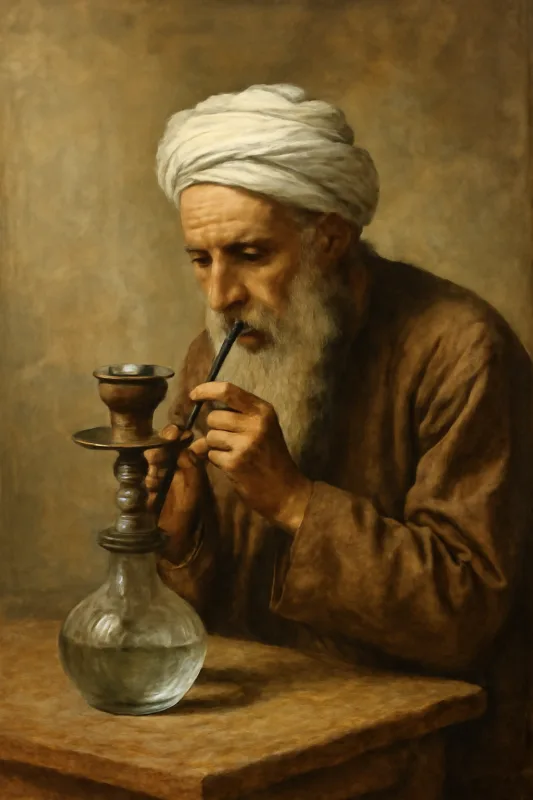
The Invention of the Hookah – A Journey Through History and Cultural Heritage
The hookah stands out as a cultural heritage that has served as a meeting point for different cultures over the centuries, strengthening social interaction and preserving traditional values. The invention of this unique smoking device is not merely the story of an invention, but also a significant indicator of cultural exchange across civilizations.
Although there are various theories about the origins of the hookah, the most widely accepted view is that this device was invented in India in the 16th century. However, the story behind this invention is a far more complex and rich process than the creation of a single individual. Similar solutions, born out of different needs in various regions, merged over time to take on the form of the hookah as we know it today.
The hookah tradition that YTShisha.com has upheld since 1967 plays a significant role in bringing this historical legacy into the modern era. This experience, spanning three generations, demonstrates that the hookah is not merely a smoking device but also serves as a cultural bridge. With 15 branches and 5 factories across Turkey, the company preserves traditional hookah culture while also meeting modern needs.
The story of the hookah’s invention is a beautiful example of human creativity and the interaction between different cultures. In this article, we will examine in detail the historical development of the hookah, its evolution across different regions, and its journey up to the present day. We will also discuss how YTShisha.com, one of the modern-day representatives of this historical legacy, carries on this tradition.
Keywords: history of the hookah, the invention of the hookah, the origins of the hookah, the creation of the hookah, traditional hookah, hookah culture, history of YTShisha, the evolution of the hookah, hookah history, the legacy of the hookah
The Historical Origins of the Hookah
First Traces in India
The most widely accepted theory regarding the invention of the hookah is that Hakim Abul Fath, a physician who lived in India in the 16th century, invented this device. According to legend, Abul Fath—who served as physician to the Mughal Emperor Akbar—developed a method of filtering tobacco through water to reduce its harmful effects.
This first hookah had a simple design consisting of a water chamber made from a coconut shell and a bamboo tube. Physician Abul Fath’s goal was to cool the tobacco smoke by passing it through water and to filter out its harmful substances. This innovative approach was a revolutionary discovery at the time.
Persian Influence and Development
After India, the hookah spread to the Persian Empire, where it underwent significant developments. The Persians enhanced its artistic value by incorporating aesthetic elements into the hookah’s design. Thanks to their mastery of metalwork, they crafted elegant pieces made of copper and brass hookah sets They produced them.
In Persian culture, the hookah evolved from being merely a smoking device into a symbol of social status. Hookah sets used in palaces and by wealthy families were adorned with precious stones and used during special ceremonies.
The Hookah in the Ottoman Empire
Arrival in Istanbul
- The hookah, which was introduced to the Ottoman Empire in the 19th century, attracted great interest in Istanbul. This new smoking device, which spread rapidly, especially among the court circles, soon became an integral part of Ottoman culture.
During the Ottoman period, the hookah was known as a “şişe.” Later, the name “nargile” was derived from the Persian word “nargil” (coconut). This name change is an important detail that reminds us of the device’s Indian origins.
The Golden Age of Coffeehouses
- In the 19th century, Istanbul’s coffeehouses became the center of hookah culture. During this period, the profession of “hookah maker” emerged, and expert hookah preparers began to appear. Smoking hookah in coffeehouses became an indispensable part of intellectual conversations and social interaction.
During the Ottoman period, hookah sets began to be produced by local artisans. Cities such as Istanbul, Bursa, and Trabzon became centers for the production of high-quality hookahs. The sets produced during this period are now regarded as works of art with museum-quality value.
The Culture of the Hookah in the Arab World
Egypt and the Damascus Region
The hookah also spread to the Arab world through the Ottoman Empire. It gained particular popularity in Egypt and the Damascus region (Syria, Lebanon, Palestine). In these regions, the hookah was known as “shisha” or “argileh.”
In Arab culture, the hookah has become a symbol of hospitality. Offering guests a hookah is considered a sign of respect and friendship. This tradition remains an important part of Arab culture today.
Tobacco Production and Flavor Development
Arab countries made significant contributions, particularly in the areas of tobacco production and flavor development. Syria’s Latakia tobacco and Lebanon’s fruit-flavored tobaccos gained worldwide renown. The flavor techniques developed during this period laid the foundation for the modern hookah industry.
The Evolution of the Hookah in the Modern Era
20. Changes Over the Centuries
- Over the past century, the hookah has evolved from its traditional form to modern designs. Advances in glassmaking have made it possible to produce more aesthetically pleasing and functional sets. In addition, rising hygiene standards have led to new approaches to cleaning and maintenance.
During this period, the founders of YTShisha.com also entered the hookah industry. This journey, which began in 1967, aimed to blend traditional hookah culture with modern production techniques.
Globalization and Diffusion
- Over the past century, the hookah has become widespread worldwide as a result of globalization. Hookah cafes opening particularly in Europe and the United States have helped this culture take on an international dimension. Modern design concepts and quality standards have taken the hookah industry to a new level.
YTShisha.com’s Contribution to Cultural Heritage
Three Generations of Experience
YTShisha.com has been working to preserve and promote hookah culture since 1967. Drawing on three generations of experience, the company combines traditional production techniques with modern quality standards while keeping the historical legacy of the hookah alive.
Since its founding, the company has embraced not only a commercial mission but also a cultural one. Training artisans who learn and refine traditional hookah-making techniques is an important part of this mission.
Modern Manufacturing and Traditional Values
YTShisha.com’s five factories produce high-quality hookah sets by blending traditional craftsmanship with modern production techniques. This approach preserves the historical legacy of the hookah while also meeting contemporary needs.
The 15 branches across Turkey play a significant role in the spread of hookah culture. Each branch not only sells products but also provides education and consulting services on hookah culture.
Names for the Hookah in Different Regions
Etymological Diversity
The fact that the hookah goes by different names in different cultures is an interesting indication of this device’s global spread:
- Hookah/Narghile: Of Turkish and Persian origin
- Hookah: English is derived from the Arabic word “huqqa”
- Shisha: In Arabic, it means “glass”
- Hookah: Levantine Arabic
- Qalyan: It is used in Persian and in Central Asia
- Hubble-bubble: Use of English slang
Cultural Adaptations
Every culture has adapted the hookah to its own values and lifestyle. These adaptations involve not only changes in name but also differences in how it is used, its social function, and aesthetic sensibilities.
Traditional Materials Used in Hookah Making
Historical Material Selections
The materials used in traditional hookah making are selected based on both functional and aesthetic considerations:
Water Container Materials:
- Coconut shell (in its natural form)
- Glass (transparency and cleanliness)
- Ceramics (thermal insulation)
- Metal (durability)
Body Materials:
- Copper (heat conduction)
- Brass (corrosion resistance)
- Stainless steel (hygiene)
Hose Materials:
- Leather (traditional choice)
- Fabric-covered tire (modern approach)
- Silicone (hygienic and durable)
The origins of the hookah are not so much the invention of a single person as they are the product of a long process shaped by contributions from various cultures. This journey, which began in India, evolved in the Persian Empire, reached its golden age in the Ottoman Empire, and became a cultural symbol in the Arab world.
This historical legacy is preserved today by long-established companies such as YTShisha.com and passed on to future generations. With experience dating back to 1967, these companies help keep the hookah culture alive by blending traditional values with modern needs.
The story of the hookah’s invention is a beautiful example of human creativity and cross-cultural interaction. This unique smoking device is not just a hobby; it is also an important cultural bridge that strengthens social bonds, unites different cultures, and keeps historical heritage alive.
To preserve and develop hookah culture in the future, it is of great importance to pass on historical knowledge and sustain traditional values by blending them with modern approaches. YTShisha.com’s pioneering role in this regard offers hope for the future of hookah culture.



Write a reply