

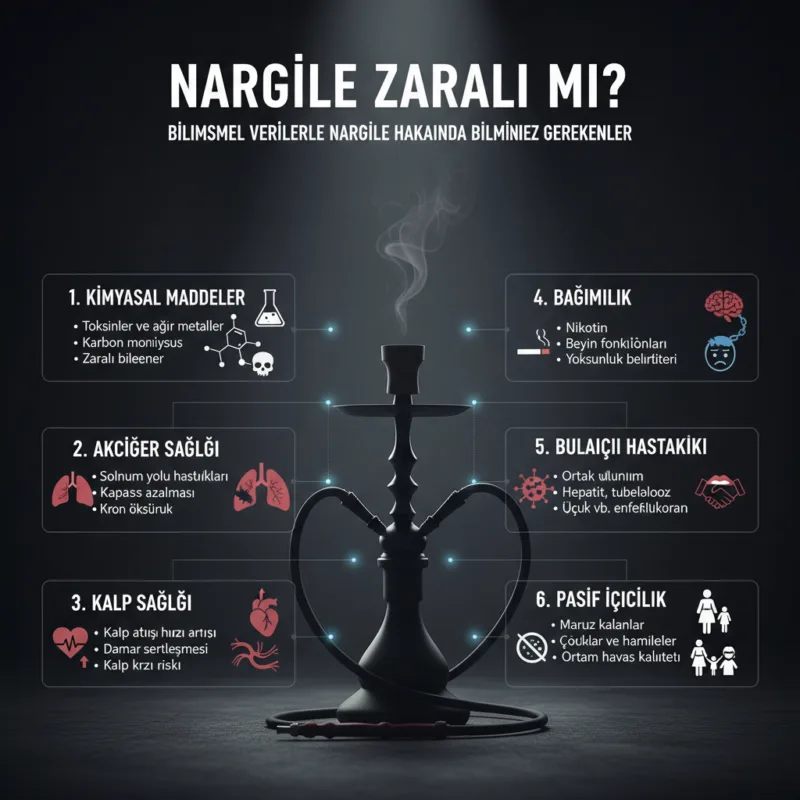
Is Hookah Harmful? What You Need to Know About Hookah Based on Scientific Data
While hookah use has rapidly spread worldwide in recent years, it has also raised many questions about its health effects. Questions such as “Is hookah harmful?”, “Is it as harmful as cigarettes?”, and “Does the water filter remove harmful substances?” are frequently raised by both users and health experts. In this article, we will objectively examine the health effects of hookah use based on scientific research and medical data.
There are many myths and misconceptions circulating about hookah. While some claim that hookah is completely harmless, others exaggerate its dangers. The truth, however, lies somewhere in the middle. In this guide, we’ll provide you with the most accurate information using data from the World Health Organization (WHO), the American Lung Association, and various scientific studies.
What Is a Hookah and What Is in It?
To understand the health effects of hookah use, it is first necessary to know what it contains. Hookah tobacco consists of specially processed tobacco leaves and typically contains the following components:
Composition of Hookah Tobacco:
- Tobacco: The main ingredient containing nicotine
- Glycerin: A substance that retains moisture and increases smoke density
- Melas or Honey: For sweetness and stickiness
- Aromas: Fruit, spice, or floral essences
- Guardians: Additives that prevent the product from spoiling
Substances Released During Combustion:
- Carbon monoxide (CO)
- Tar
- Heavy metals (lead, nickel, chromium)
- Polycyclic aromatic hydrocarbons (PAHs)
- Volatile organic compounds
- Nicotine
- Formaldehyde and acetaldehyde
Most of these substances are produced by the combustion of coal and the heating of tobacco. Although the water filter traps some of these substances, it cannot filter out all of them.
What Does the World Health Organization (WHO) Say?
The World Health Organization has taken a clear stance on hookah use. According to a report published by the WHO in 2015:
WHO’s Key Findings:
- Hookah use poses serious health risks
- A water filter does not remove most harmful substances
- One hookah session contains a volume of smoke equivalent to 100 cigarettes
- The risk of nicotine addiction is high
- There is also a risk of secondhand smoke
The WHO states that hookah use is just as harmful as smoking and may even be more risky in some respects. In particular, long sessions and deep inhalations lead to greater absorption of harmful substances.
Frequently Asked Questions: Aren't the WHO's figures exaggerated?
The WHO’s data is a compilation of hundreds of scientific studies conducted worldwide. The phrase “100 cigarettes” refers to the volume of smoke, not the amount of nicotine. However, this is also an important indicator because more smoke means more harmful substances.
What Does Scientific Research Say?
Scientific studies on the health effects of hookah use have revealed various findings:
Effects on Lung Health:
2019 Johns Hopkins University Study:
- Regular hookah use leads to a decline in lung function
- The risk of chronic bronchitis increases
- The risk of lung infections increases
2020 Report by the American Thoracic Society:
- Even those who smoke hookah once a week are at risk
- The risk of COPD (Chronic Obstructive Pulmonary Disease) increases
- Asthma symptoms may worsen
Heart and Vascular Health:
2018 Cardiology Study:
- Hookah use increases heart rate
- It causes sudden spikes in blood pressure
- Arteriosclerosis increases
- The risk of a heart attack increases
Effects on Blood Circulation:
- Carbon monoxide reduces the blood's ability to carry oxygen
- The risk of blood clots increases
- The progression of atherosclerosis (hardening of the arteries) accelerates
Cancer Risks:
Findings of the International Agency for Research on Cancer (IARC):
- The risk of lung cancer increases
- The risk of mouth and throat cancer increases
- There is a risk of esophageal (food pipe) cancer
- A link to bladder cancer has been found
Which Is More Harmful: the Hookah or Cigarettes?
This is one of the most frequently asked questions. However, the answer is not simple because the comparison depends on many factors.
Comparison of Nicotine Levels:
- 1 Cigarettes: Approximately 1–2 mg of nicotine
- 1 Hookah Session: Approximately 2–4 mg of nicotine
- However, a hookah session lasts 45–60 minutes, while a cigarette lasts 5–7 minutes
Smoke Volume Comparison:
- 1 Cigarettes: 0.5-0.6 liter of smoke
- 1 Hookah Session: 50-200 liter of smoke
- A hookah produces a much larger volume of smoke
Carbon Monoxide Exposure:
- Hookah results in 7 to 10 times higher CO exposure than cigarette smoking
- The risk of CO poisoning is higher with hookahs
- Headaches and dizziness are common for this reason
Frequency of Use:
- Smokers may smoke 10 to 20 cigarettes a day
- Hookah is usually smoked 1–2 times a week
- If the frequency is low, the total loss also decreases
Conclusion: Both are harmful. Which one is “more harmful” depends on how often and for how long they are used. Smoking cigarettes daily and smoking a hookah once a week present different risk profiles.
Frequently Asked Questions: Is a hookah less harmful than a cigarette?
No, this is a common myth. Water filters remove only a small portion of harmful substances. In addition, long sessions and deep breaths cause the lungs to be exposed to more harmful substances.
Do Water Filters Really Protect You?
One of the biggest misconceptions among hookah users is the belief that the water filter removes harmful substances.
Scientific Facts:
Substances Removed by the Water Filter:
- Coarse-particle tar (partial)
- Some water-soluble gases (partial)
- Smoke lowers the temperature (which makes it easier to take deeper breaths)
Substances That a Water Filter Cannot Remove:
- Nicotine (over 90%)
- Carbon monoxide (fully passes)
- Heavy metals (most of them)
- Carcinogenic chemicals (most of them are included)
- Volatile organic compounds (pass)
2017 University of Pittsburgh Study:
- A water filter removes only 5–10% of harmful substances
- Nicotine absorption is nearly the same as with cigarettes
- Carbon monoxide levels are higher
These findings clearly show that a water filter is not a safety measure. Water merely cools the smoke and makes it feel gentler on the throat, but it does not remove harmful substances.
Is Hookah Addictive?
Yes, since hookah contains nicotine, it has the potential to be addictive.
Mechanism of Addiction:
- Nicotine triggers the release of dopamine in the brain
- Regular use leads to the development of tolerance
- As frequency of use increases, the risk of addiction rises
- Addiction develops more quickly in young people
Signs of Addiction:
- An increase in the desire to smoke hookah
- A feeling of restlessness when you don't drink
- Increased frequency of use
- Having a hard time letting go
- Planning daily activities around the hookah
2020 Addiction Research:
- Signs of addiction are observed in 40% of those who smoke hookah 2–3 times a week
- Young users are at higher risk
- Hookah can be a gateway to cigarette addiction
Frequently Asked Questions: I only drink once a week—will I become addicted?
Using it once a week carries a lower risk of addiction than daily use. However, the risk is not zero. Addiction can develop, especially if you increase the duration of use or the frequency.
Secondhand Smoke and Environmental Health
Hookah affects not only the person using it but also the people around them.
Risks of Secondhand Smoke:
- Hookah smoke affects everyone in the room
- Children and pregnant women are the group most at risk
- The risk is higher in indoor spaces
- Respiratory illnesses may be triggered
Environmental Pollution:
- One session of hookah pollutes the room more than cigarette smoke
- Carbon monoxide levels can reach dangerous levels
- If ventilation is inadequate, there is a risk of poisoning
- Odors and particle residue linger for a long time
High-Risk Groups:
- Pregnant women: It negatively affects infant development
- Children: Respiratory infections increase
- Older Adults: Existing medical conditions may worsen
- People with asthma: The risk of an attack increases
Short- and Long-Term Health Effects
The effects of hookah use manifest in different ways in the short and long term.
Short-Term Effects (Immediately or Within a Few Hours):
- Headache and dizziness
- Nausea
- Increased heart rate
- Rise in blood pressure
- Dry mouth
- Sore throat
- Red eyes
- Attention deficit disorder
Medium-Term Effects (Weeks–Months):
- Increased coughing and phlegm
- Shortness of breath
- Tooth and gum problems
- Decreased sense of taste
- Feeling of fatigue
- A decline in sleep quality
Long-Term Effects (Years):
- Chronic lung diseases (COPD, bronchitis)
- Risk of heart disease
- Cancer (lung, mouth, throat)
- Vascular diseases
- Weakening of the immune system
- Fertility Issues
- Signs of premature aging
Hookah and Youth: A High-Risk Group
Hookah use is rapidly increasing among young people, and this is a particular cause for concern.
Risk Factors in Young People:
- Developing lungs are more sensitive
- Addiction develops more quickly
- Social pressure and curiosity play a major role
- They cannot fully understand the risks
2021 Youth Health Survey:
- 15-24 Hookah use among this age group increased by 30 percent
- 60% of young people believe that hookah is harmless
- The age of first use is steadily decreasing
- Hookah serves as a gateway to cigarette smoking
Tips for Parents:
- Communicate openly with your children
- Explain the risks of hookah using scientific data
- Be a role model (don’t use it yourself either)
- Support social activities
- Early intervention is important
Reducing or Quitting Hookah Use
Tips for those who want to cut back on or quit hookah:
Reduction Strategies:
- Reduce the Frequency: Cut back from 3 to 1 per week
- Shorten the Session Duration: 60 30 minutes instead of one minute
- Stay Away from Social Settings: Reduce trigger situations
- Alternative Activities: Sports, hobbies, social activities
- Sources of Motivation: Health, saving money, family
To Quit Completely:
- Select a Date: Set a specific end date
- Get Support: Family, friends, or professional help
- Identify the Triggers: What situations trigger the urge to drink?
- Manage Withdrawal Symptoms: The first few weeks can be tough
- Reward Yourself: Reward yourself at every milestone
Benefits After Quitting:
- 20 A minute later: The heart rate returns to normal
- 12 an hour later: Blood CO levels drop
- 2-3 A week later: Lung function improves
- 1-9 A month later: Coughing and shortness of breath are reduced
- 1 A year later: The risk of heart disease is cut in half
Frequently Asked Questions: Is quitting hookah as hard as quitting cigarettes?
It depends on how often you use it. Quitting may be more difficult for daily smokers because their exposure to nicotine is more frequent. However, regular hookah users may also experience withdrawal symptoms. In both cases, professional support can be helpful.
Measures to Reduce Harmful Effects
If you plan to continue using a hookah, there are some steps you can take to reduce the risks:
During Use:
- Proper Ventilation: Be sure to use it in an open or well-ventilated area
- Short Sessions: 30 Don't go over the minute
- Low Frequency: Don't do this more than once a week
- High-Quality Products: Do not use unknown brands
- Natural Coal: Coals that burn quickly are more harmful
- To Stay Hydrated: Prevent Dehydration
- Don't Drink on a Full Stomach: Reduces nausea
Hygiene Measures:
- Personal Mouthpiece: Use a disposable mouthpiece
- Clean Hookah: Clean after each use
- Fresh Water: Change the water after each session
- Share: Reduce the risk of spreading illness
Health Monitoring:
- Regular Checkups: An annual lung checkup
- Watch for the Symptoms: If you have a cough or shortness of breath, see a doctor
- Blood Pressure: Take regular measurements
- Dental Checkup: 6 a monthly visit to the dentist
Hookah Alternatives and Nicotine-Free Options
If you're looking for a hookah experience but want to avoid the health risks:
Nicotine-Free Options:
- Herbal Hookah: Tobacco-free, plant-based blends
- Steam Stones: A glycerin-based, tobacco-free alternative
- Fruit Flavors: Just flavor, no nicotine
Warning: These aren’t completely harmless either! Coal smoke and combustion byproducts are still present. However, the risks associated with nicotine and tobacco are reduced.
Social Alternatives:
- Tea/Coffee Sessions: An alternative for socializing
- Board Games: Spending quality time with friends
- Outdoor Activities: Healthy social interaction
- Hobby Clubs: Gathering around shared interests
Legal Regulations and Public Health Policies
Regulations on hookah use are increasing worldwide:
The Situation in Turkey:
- 18 No sales to minors
- Use prohibited in enclosed spaces
- Advertising and promotional restrictions
- Hookah cafes are banned in the vicinity of schools
Worldwide:
- Many countries are restricting the use of hookahs
- Taxes are being raised
- Awareness campaigns are being conducted
- Research funding is being increased
Conclusion: Making Informed Decisions
Is hookah harmful? Scientific data clearly shows that yes, hookah poses health risks. The water filter does not eliminate harmful substances. Long sessions and deep inhalations cause the lungs to be exposed to more harmful substances.
Key Points:
- Hookah is just as harmful as cigarettes
- A water filter does not provide protection
- There is a risk of addiction
- There is a risk of secondhand smoke
- Young people are at particular risk
- The risk of cancer and heart disease increases
However:
- Frequency of use is important
- Using it once a week carries less risk than smoking a cigarette every day
- You can reduce risks by taking precautions
- Conscious use is important
Final Thoughts: This article is not intended to encourage hookah use, but rather to provide information so you can make an informed decision. Your health is your most valuable asset. If you don’t use it, don’t start. If you do use it, do so by being aware of the risks and taking precautions. The best option, however, is not to use it at all.
Stay healthy!


Write a reply