

Unheard-of Regional Blends: Anatolia’s Local Tobacco Culture
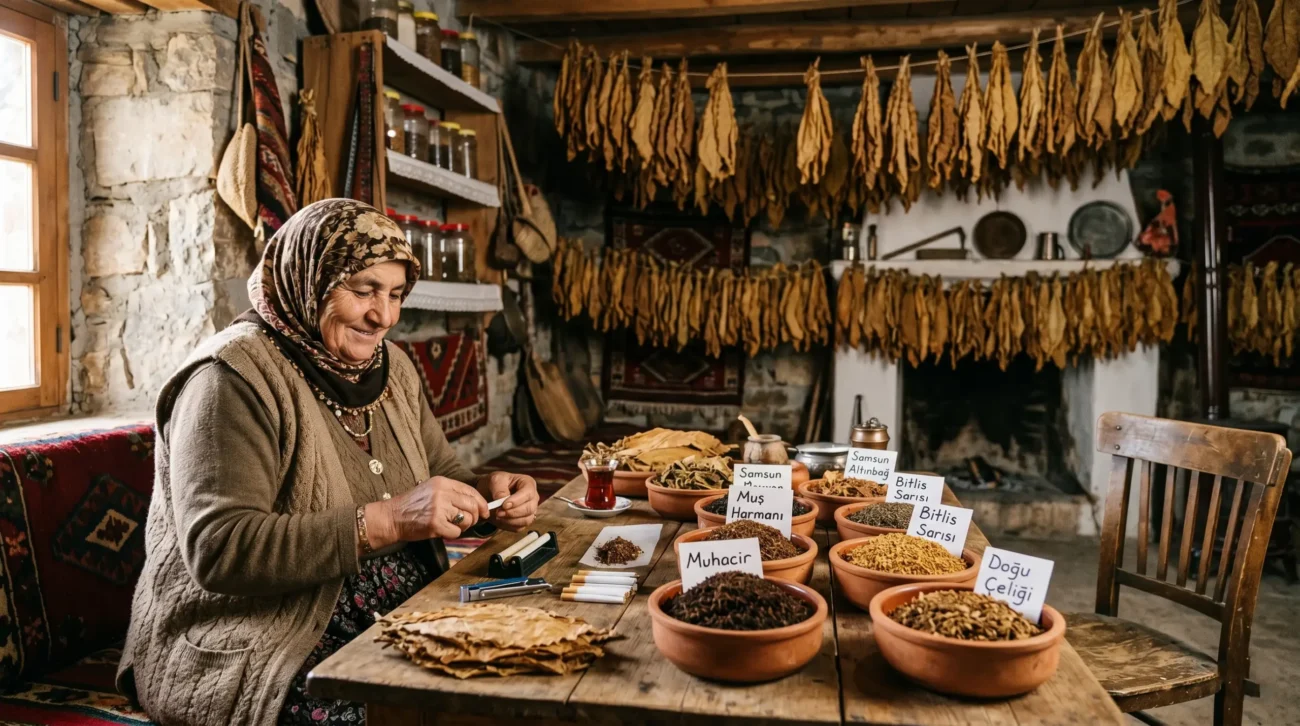
When people think of hookah tobacco, the brands that come to mind are globally recognized, packaged, standardized products. These brands ensure flavor consistency; however, they also obscure the richness of local traditions. Across Anatolia, in places where major brands have never set foot, a unique tobacco culture is still thriving.
The Aegean region is perhaps the most deeply rooted home of this culture. The tobacco fields around Torbalı, Tire, and Ödemiş have been producing Turkey’s highest-quality leaves for centuries. The tobacco grown in this region is known for its light, floral, and delicate flavors. In the past, these leaves were transported directly to village coffeehouses, where they were prepared with a simple moistening process and no additives. Today, the number of elderly masters carrying on this tradition is dwindling; however, a few local producers still adhere to traditional curing methods such as sun-wilting and oven-drying.
“"The best tobacco isn't the one with fancy writing on the package; it's the one that lets you feel the earth."
The situation is different in the Black Sea region. The leaves, grown in a humid climate dominated by hazelnut orchards, are heavier, earthy, and slightly bitter. Compared to those from the Aegean region, these tobaccos leave a much stronger impression; it’s a matter of preference, but for connoisseurs, this strength is not a flaw but a distinctive feature. The way the region’s characteristic humidity permeates the leaves creates a unique fermentation process—one that cannot be replicated in any factory.
Southeastern Anatolia, on the other hand, opens the door to a whole different world. In the coffeehouse culture of Urfa, Gaziantep, and the surrounding areas, tobacco is sometimes blended with spices. There have been experiments using cumin, cloves, dried lemon peel, and even chili peppers. These blends are not written down anywhere; they are passed down by word of mouth, from master to apprentice.
You won’t find any of these delicacies online. The way to find them is through local connections: talking to shopkeepers, asking around at market stalls, and meeting small-scale producers. Anatolia’s tobacco map is a legacy that hasn’t yet been digitized—it remains preserved in people’s memories. And we can only truly appreciate the value of this legacy once we’ve lost it.
Write a reply