

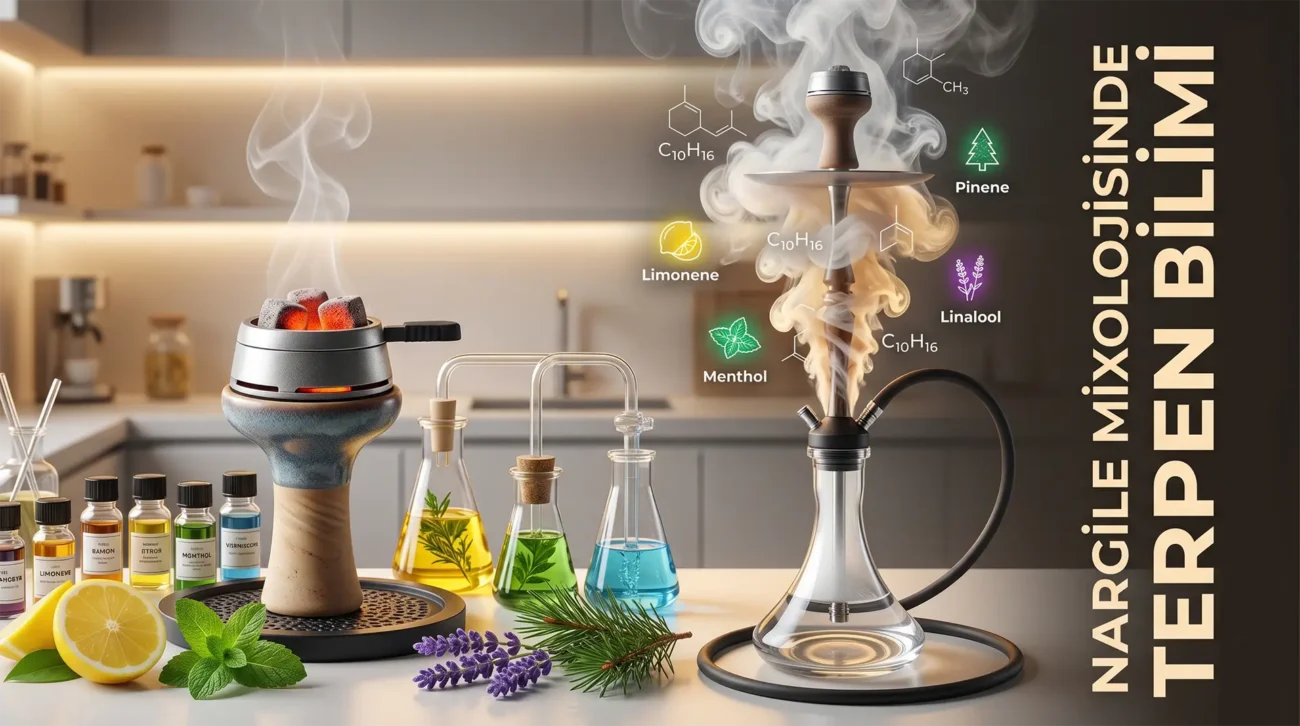
The Science of Terpenes in Hookah Mixology
The Science of Terpenes in Hookah Mixology: The Molecular Chemistry of the Art of Aroma
Traditional hookah culture has given way in recent years to a modern craft, namely hookah mixology is changing. People no longer just smoke “double apple” or “mint”; hookah enthusiasts are seeking complex smoking experiences that are layered, deep, and appeal to the senses. At the heart of this transformation lies a hidden hero: Terpenes.
If you’ve ever wondered why you smell that refreshing lemon, soothing lavender, or earthy pine notes when you sniff hookah tobacco, the answer lies in chemistry. In this article, we’ll take an in-depth look at the science of terpenes—which will take hookah mixology to the next level—and explore how these aromatic compounds shape your smoking experience.
What Are Terpenes? Nature’s Aromatic Fingerprints
Terpenes are compounds produced by plants that give them their distinctive scent, taste, and sometimes color They are organic hydrocarbon compounds. There are more than 20,000 types of terpenes found in nature. Used in a wide range of fields—from cosmetics to food, and from perfumery to medicine—these compounds are also the cornerstone of the flavoring process in hookah tobacco.
When the glycerin and syrup used in hookah tobacco production combine with the tobacco leaf’s natural terpenes and externally added flavor extracts, they produce that captivating smoke. However, for a mixologist (blending expert), terpenes are not just “scents,” but rather It is an engineering tool.
The Most Common Terpenes in Hookah Mixology and Their Characteristics
To understand which aroma will dominate or which two flavors will balance each other out when creating a blend, you need to be familiar with the most common terpenes found in hookah tobacco:
1. Limonene (Citrus Notes)
It is one of the most common terpenes. It is the main component of tobacco with lemon, orange, and grapefruit aromas.
-
Effect: Energizing, refreshing, and helps improve focus.
-
The Secret to Mixing: Tobacco blends containing limonene are ideal “brightening” agents for cutting through the cloying sweetness of heavy, sweet (caramel, vanilla) flavors.
2. Mirsen (Earthy and Musky Scent)
It is found in abundance in mango, thyme, and hops. In the world of hookah, it is the foundation of “earthy” flavors.
-
Effect: Soothing, muscle-relaxing, and sedative.
-
The Secret to Mixing: Mirsen softens the throat hit of fruity aromas and makes the smoke feel “fuller.”
3. Linalool (Floral and Lavender Notes)
It lies at the heart of floral aromas, particularly lavender and rose.
-
Effect: Stress-relieving, anti-anxiety.
-
The Secret to Mixing: When combined with spiced tobaccos (cinnamon, cardamom), it creates an oriental and exotic depth.
4. Pine (Pine and Resin)
It is found in pine trees and rosemary. In hookah, it is often hidden within the “forest fruits” or “cool” series of flavors.
-
Effect: Breath-opening, mind-refreshing.
-
The Secret to Mixing: Since it is a very dominant terpene, it is recommended that its concentration in blends not exceed 10–15 percent; otherwise, it may overpower all other aromas.
“The “Entourage Effect” and Synergy of Blends
The most interesting aspect of terpenes in mixology synergy their ability to interact. Known in pharmacology as the “Entourage Effect,” this phenomenon occurs when different terpenes combine to produce an effect that is much stronger or has a different profile than the effects they produce on their own.
For example, when peppermint (menthol) tobacco is mixed with lemon (limonene) tobacco, you don’t just get two flavors. Menthol opens up the airways, allowing limonene to reach the receptors at the back of the tongue more quickly. This causes the smoke to feel both cooler and more acidic.
Mixologist's Note: When creating a blend, don’t just focus on the names of the fruits (e.g., strawberries + bananas). Consider the dominant terpenes in these fruits. Combining a sweet terpene (linalool) with a tart terpene (limonene) creates a “flavor contrast” on the palate, making the drinking experience more enjoyable.
Thermal Management and the Boiling Point of Terpenes
The science of terpenes isn’t just about creating blends; vaporizing these compounds without burning them is the true art. Each terpene has its own unique boiling point there is:
-
Limonene: 176°It evaporates at around C.
-
Pinen: 155°It becomes active at low temperatures, such as C.
-
Linalool: 198°It requires a higher temperature, like C.
If you apply too much heat to your hookah bowl, the low-boiling-point terpenes (citrus notes) will burn within seconds, leaving behind a bitter taste. That’s why what we call “flavor loss” in hookah is actually the thermal degradation of terpenes due to improper heat management.
Pro Tip: When using your heat management system (HMD), observe how the aroma changes over the first 10 minutes compared to how it is at the 40-minute mark. If the citrus notes disappear and only earthy tones remain, it means your pipe is getting too hot.
Step-by-Step Guide to Preparing a Scientific Mix
Think like a mixologist and follow this hierarchy to prepare the perfect bowl:
-
Base Note (Body): It makes up 50% of the blend. Choose tobacco varieties with heavy, low-volatility terpenes, such as Mirsen or Karyophyllene (spicy). (E.g., black tobaccos, biscuit, the tobacco’s natural aroma).
-
Bridge: It makes up 30% of the blend. These are the aromas that bridge the base note and the top note. Fruity or floral terpenes are typically used.
-
Top Note (High Note/Zest): 20% of the mixture. These are the most volatile and brightest terpenes. Limonene or menthol come into play here. That sharp scent you notice the moment you take your first breath is this.
Conclusion: The Engineering of the Senses
Hookah mixology isn’t just about blending tobaccos—it’s about orchestrating these aromatic molecules that nature has given us, much like a conductor. Once you master the science of terpenes, you can understand at the molecular level why one tobacco “burns the throat,” why another “feels stale,” or why two different brands create a perfect harmony.
During your next hookah session, focus not only on the density of the smoke, but also on the dance of the terpenes within it. Remember, the best blend isn’t just one that produces good smoke—it’s one that tells a story on the palate.
Write a reply