

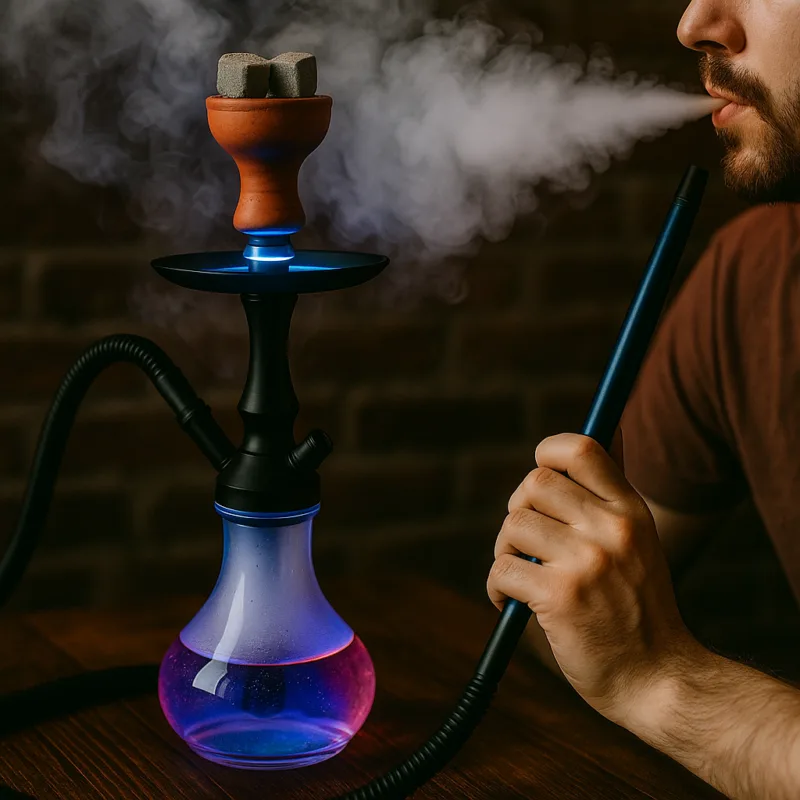
Tips for Increasing Hookah Smoke
One of the most important elements of the hookah experience thick, high-quality smoke is to achieve this. In a good hookah session, producing plenty of smoke is both visually satisfying and enhances the flavor experience. In this comprehensive guide, Increasing Hookah Smoke We will cover the techniques, tips, and professional advice in detail.
Hookah smoke density, It is a combination of the right technique, high-quality materials, and proper adjustments. Focusing on just one factor isn’t enough—all the elements must work in harmony. In this article, you’ll find practical information that everyone—from beginners to experienced hookah enthusiasts—can benefit from.
Modern Hookah Techniques By combining traditional methods with modern techniques, it’s possible to achieve professional-level smoke density at home. We’ll examine every detail, from choosing the right tobacco to managing the charcoal, and from maintaining the water level to the drawing technique.
Key Factors Affecting Hookah Smoke Density
Increasing Hookah Smoke There are many factors that influence this process. Properly managing each of these factors is the key to achieving the desired smoke density.
Tobacco Quality and Preparation
Tobacco Selection: High-quality tobacco is essential for producing plenty of smoke. Tobacco blends based on Virginia tobacco and with a high glycerin content produce more smoke. Dry or low-quality tobacco won’t produce enough smoke, no matter how carefully you use the correct technique.
Tobacco Moisture Content: The ideal moisture content of tobacco should be between 30% and 40%. Tobacco that is too dry will burn up, while tobacco that is too moist will not heat up. When you squeeze the tobacco in your hand, it should feel slightly moist but no water should drip from it.
Tobacco Preparation Technique:
- As you remove the tobacco from the plate, separate the large stems
- Loosen them gently with your hands; don't squeeze them
- Cut the long leaves into small pieces
- Do not mix the tobacco fibers together
Tobacco Placement Method:
- Gently place them on the plate; don't press down on them
- The tobacco level should be 2–3 mm below the edge of the dish
- Leave a small air gap in the middle
- Adjust it so that it does not come into contact with the foil
Coal Management and Heat Control
Selecting a Type of Coal: Natural coals (coconut shells) burn longer and provide a steady heat. Fast-burning coals are practical, but the smoke quality can be poor.
Coal Carbonization Process:
- Let the coals burn completely to embers; don't leave any black parts
- The carbonization time for natural coals is 8–12 minutes
- The coal should be red-hot all over
- Wait until the burnt smell goes away
Coal Placement Strategy:
- Start with 2 pieces of coal at first
- Place the coals along the edge of the plate
- 5-10 Add the third piece of coal a minute later
- The distance between the pieces of coal should be equal
Heat Management Techniques:
- Start on low heat for the first 10 minutes
- As the tobacco heats up, add more charcoal
- If you notice signs of overheating, remove the coal
- Turn the coals regularly
Water Level and Body Settings
Optimal Water Level: The water level should be 2–3 cm below the end of the tube. Too little water prevents filtration, while too much water makes it difficult to draw on the pipe and reduces the density of the smoke.
Effect of Water Temperature:
- Cold water (5–10°C) produces denser smoke
- Adding ice increases the density of the smoke
- Very cold water can reduce the flavor
- Room temperature water provides average performance
Body Cleaning: A clean housing ensures better airflow. A dirty housing obstructs airflow and reduces smoke quality.
Hose and Connection Check:
- Make sure all connections are tight
- An air leak significantly reduces smoke density
- The hose should be clean and free of clogs
- The mouthpiece should be clean and allow for good airflow
Professional Smoke Enhancement Techniques
Foil Technique and Vent Strategy
Foil Thickness: Using two layers of foil provides more controlled heat distribution. A single layer of foil heats up very quickly, while three layers of foil heat up very slowly.
Film Tension:
- The foil should be moderately taut; it should not be too tight or too loose.
- Adjust it so that it doesn't touch the tobacco
- Tightly wrap the edges around the bottom of the plate
- Do not leave any air pockets
Drilling Technique:
- Drill many small holes
- A hole diameter of 1–2 mm is ideal
- Fewer holes in the center, more holes at the edges
- A total of 20–30 holes is optimal
Hole Distribution Strategy:
- Fewer holes in the areas beneath the coal
- More holes between the pieces of coal
- The spiral pattern is more effective
- Drill holes at regular intervals
Shooting Technique and Breath Control
The Correct Shooting Technique:
- Take slow, deep breaths
- Do not make sudden or abrupt movements
- 3-4 Continuous shooting at one second is ideal
- Wait 10–15 seconds between shots
Exhalation Technique:
- Hold the smoke in your mouth for 1–2 seconds
- Exhale slowly through your nose
- Exhaling suddenly reduces smoke density
- Maintain a steady rhythm
Shooting Frequency:
- 4–6 shots per minute is optimal
- He smokes tobacco very frequently
- It causes the engine to cool down very rarely
- Find Your Own Rhythm
Advanced Smoke Techniques
Using the Heat Management Device (HMD):
- HMDs such as the Kaloud Lotus and Provost provide more stable heat
- Using an HMD instead of foil improves the quality of the vapor
- Coal management is easier with HMD
- Ideal for long sessions
Tobacco Blending Techniques:
- Mix tobacco with different moisture levels
- %70 A mixture of 30% moisture and 30% dry material yields good results
- Mix and match different cut sizes
- Add tobacco with a high glycerin content
Double Foil Method:
- Bottom foil: Thin, with many holes
- Top foil: Thick, with few holes
- A 2-3 mm gap between the two sheets of foil
- It provides more controlled heat distribution
Ice and Refrigeration Techniques:
- Add ice to the container
- Use cold water (5–8°C)
- Chill the hose in the refrigerator
- Cold air creates thicker smoke
Common Errors and Their Solutions
Low Smoke Output Issues
Problem: No Smoke Is Coming Out
- Reason: Air leaks, clogged holes, unburned coal
- Solution: Check all connections, clean out the holes, and reignite the coals
Problem: Not Enough Smoke
- Reason: Insufficient heat, dry tobacco, incorrect water level
- Solution: Add charcoal, change the tobacco, adjust the water level
Problem: Starts Off Well but Then Declines
- Reason: The coals are dying out, the tobacco is burning, the heat is uneven
- Solution: Improve coal management, reduce heat
Taste and Quality Issues
Problem: Burnt Taste
- Reason: Too much heat is coming into contact with the coal
- Solution: Reduce the charcoal, check the foil, change the tobacco
Problem: Hard Pull
- Reason: Clogged holes, very tightly packed tobacco, high water level
- Solution: Enlarge the holes, loosen the tobacco, and reduce the water
Problem: Irregular Smoke
- Reason: Uneven heat distribution, coal placement
- Solution: Rearrange the coals; use an HMD
Special Techniques for Different Types of Tobacco
Virginia Tobacco (Blonde Leaf)
Features: Light in color, high in glycerin, heats up easily Smoke Technique:
- Start on low heat
- 2 Start with a little and gradually increase the amount
- Use perforated foil
- Rotate the coal frequently
Burley Tobacco (Dark Leaf)
Features: Dark color, high nicotine, heats up slowly Smoke Technique:
- Requires high heat
- 3-4 Use coal
- Thick foil with few holes
- Allow for a long warm-up period
Herbal Blends
Features: Nicotine-free, various herbal blends Smoke Technique:
- Medium heat
- It can catch fire quickly—be careful
- Standard foil technique
- Short-term sessions
Seasonal Smoke Optimization
Winter Months
Issues: Cold weather, indoor spaces, humidity issues Solutions:
- Raise the room temperature
- Ensure proper ventilation
- Increase the number of coals
- You can use hot water
Summer Months
Issues: Hot weather, open spaces, wind Solutions:
- Use ice
- Choose a shaded area
- Use a windshield
- Reduce the number of pieces of coal
Humid Weather
Issues: High humidity, increase in tobacco moisture content Solutions:
- Dry the tobacco beforehand
- Apply more heat
- Increase ventilation
- Use silica gel
Equipment and Accessory Recommendations
Basic Equipment
Choosing a High-Quality Hookah:
- Stainless steel body
- Large-diameter hose
- Good wick system
- High-quality glass body
Coal Equipment:
- Electric coal burner
- Coal tongs
- Coal carrier
- Windbreak
Advanced Accessories
Heat Management Devices:
- Kaloud Lotus I+
- Provost
- Shishabucks Cloud Mini
- Apple on Top
Special Foil Alternatives:
- Perforated foil
- Heavy-duty foil (thick foil)
- Aluminum screens
Measurement and Control Instruments:
- Digital thermometer
- Timer
- Humidity Meter
- Precision scale
Smoking Techniques in Social Settings
Group Sessions
Multi-Hose Management:
- A separate nozzle for each hose
- Uniform distribution of draws
- Coordinated shooting techniques
- Hygiene Rules
Optimization for Large Groups:
- Use a larger plate
- Increase the number of coals
- Frequent coal changes
- Prepare a spare hookah
Performance and Show
Smoke Cheats:
- Smoke rings
- Double smoke
- Smoke Shapes
- Slow-motion effects
For Photos and Videos:
- Use a backlight
- Choose a dark background
- Slow-motion footage
- Use a macro lens
Health and Safety Measures
Safe Smoking Techniques
Coal Safety:
- Never burn coal indoors
- Use a coal tongs
- Keep away from flammable materials
- Keep a fire extinguisher on hand
Respiratory Health:
- Do not inhale excessive smoke
- Get some fresh air every now and then
- Ensure proper ventilation
- Don't forget to drink water
Hygiene Rules
Personal Hygiene:
- Use your own mouthpiece
- Don't share the hose
- Wash your hands
- Do not drink while you are sick
Equipment Cleaning:
- Clean after each use
- Use a disinfectant
- Don't skip the setup process
- Perform regular maintenance
Increasing Hookah Smoke Succeeding in this art requires patience, practice, and the right knowledge. By applying the techniques we share in this guide, you can achieve professional-level smoke density at home.
The most important point is that all factors must work in harmony. Instead of focusing on just one technique, adopt a holistic approach. With high-quality materials, the right technique, and regular practice, you can enjoy a perfect smoking experience.
Remember that every hookah is different and has its own unique characteristics. Over time, you’ll get to know your hookah and develop techniques specific to it. Be patient, keep trying, and enjoy your hookah experience.
Hookah smoke density It’s not just a technical matter—it’s also an art form. Learning and honing this art is one of the most enjoyable aspects of hookah culture. Enjoy your smoke!



Write a reply