

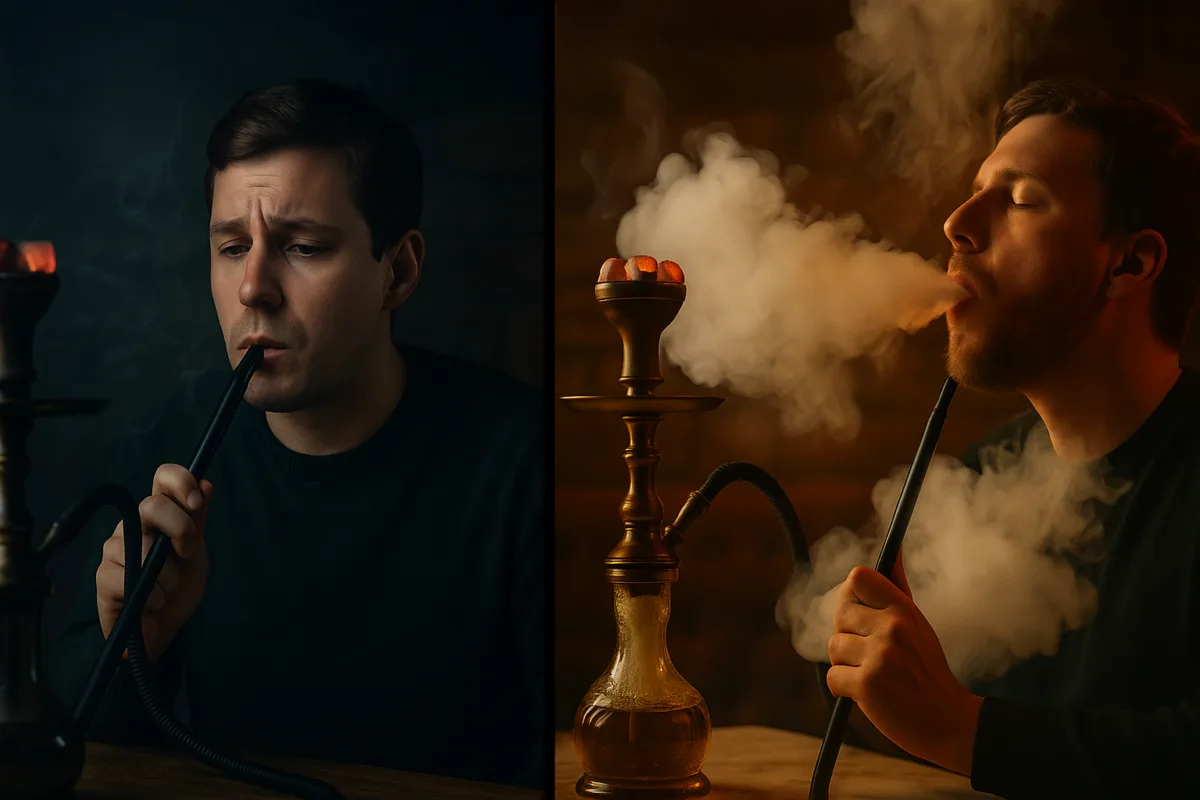
Why Does a Hookah Produce So Little Smoke? A Comprehensive Guide to Solutions for 2025
The hookah produces very little smoke This problem is one of the most common issues faced by both beginners and experienced hookah users, and it negatively impacts the entire hookah experience, leading to disappointment. In modern hookah culture, producing dense, high-quality smoke is not only a visual pleasure but also a key indicator of the flavor experience and social interaction. The Problem with Hookah Smoke Active users often attribute a multifaceted problem to a single cause, leading them to seek the wrong solution.
Increasing Hookah Smoke These techniques require a combination of scientific approaches and practical experience because they result from complex physical processes such as smoke generation, heat transfer, airflow, moisture balance, and chemical reactions. No smoke is coming out of the hookah This issue may arise as a result of any component in the system not functioning optimally, and an accurate diagnosis is critical for an effective solution. Hookah smoke density Optimization requires not only technical knowledge but also a comprehensive understanding of material quality, preparation techniques, and maintenance routines.
In this detailed guide, we will analyze all possible causes of low hookah smoke output using a scientific approach, offer specific solutions for each problem, and share advanced techniques for professional-level smoke production. Additionally, we will cover the topic from every angle, including modern hookah technologies and innovative approaches for the year 2025. Our goal is to ensure that users of all skill levels can optimize their own hookah systems to enjoy a perfect smoking experience.
The Scientific Basis of Hookah Smoke Production
Hookah smoke production results from a combination of complex physical and chemical processes, and the optimal functioning of each of these processes is critical for producing dense smoke. Essentially, moisture-retaining substances in the tobacco, such as glycerin and propylene glycol, vaporize under the influence of heat to form smoke. This process depends not only on temperature but also on a delicate balance of factors such as airflow, pressure differences, and humidity balance.
The heat transfer mechanism forms the basis of smoke production. Heat from the coal reaches the tobacco via foil or a heat management system, where glycerin molecules vaporize within a critical temperature range (approximately 200–250°C). Below this temperature range, smoke production is insufficient; above it, a burnt taste and harmful compounds are produced. The fact that modern tobacco contains 30–40 percent glycerin forms the basis of this chemical process.
Airflow dynamics are the second critical factor in vapor production. The vacuum effect created as the user inhales draws air through the tobacco, and this airflow carries the vaporizing glycerin, producing vapor. Insufficient airflow causes glycerin vapor to stagnate, while excessive airflow rapidly dries out the tobacco and reduces smoke production. Optimal airflow maintains this balance, enabling consistent and dense smoke production.
Moisture balance is the third key factor in smoke quality. The moisture content of the tobacco should be between 15% and 25%; below this level, the tobacco burns too quickly and smoke production decreases, while above this level, the heating process takes longer and efficiency drops. The water filtration system also contributes to this balance; water temperature and level directly affect smoke density. Professional users ensure optimal smoke production by continuously monitoring these factors.
Causes of Low Tobacco Smoke Levels
The quality and characteristics of tobacco are the most fundamental factors determining hookah smoke production, and low-quality tobacco results in insufficient smoke production even with the best equipment and techniques. Modern hookah tobaccos consist of a mixture of glycerin, propylene glycol, tobacco leaves, and flavorings, and the ratio of these components directly affects smoke density. While high-quality tobaccos contain 30–40% glycerin, low-quality products may contain only 10–15%.
The age of the tobacco and storage conditions have a critical impact on smoke production. Aged tobacco loses moisture, reducing its glycerin content, which dramatically decreases smoke density. Tobacco stored in breathable packaging loses moisture within 3–6 months and becomes unusable. Proper storage should be done in airtight containers in a cool, dry environment. Storing tobacco in the refrigerator can extend its shelf life by 2 to 3 times by maintaining moisture balance.
Tobacco packing techniques play a critical role in optimizing smoke production. Packing the tobacco too tightly restricts airflow and reduces smoke output. Packing it too loosely, on the other hand, causes the tobacco to burn too quickly and run out prematurely. Optimal packing should be done by lightly pressing the tobacco down with a finger so that it sits 2–3 mm below the edge of the grill. Different tobacco types require different packing techniques; Virginia tobaccos should be packed more loosely, while Burley tobaccos should be packed more tightly.
Tobacco blending techniques are particularly important for users who blend different brands. Blending tobaccos with different glycerin levels can result in an unbalanced vapor production. Professional blending should be done with tobaccos that have similar moisture content and glycerin ratios. Additionally, blend ratios should be experimentally tested to achieve optimal results.
Coal and Heat Management Issues
The quality and type of charcoal are among the most critical factors in hookah smoke production, and choosing the wrong charcoal will result in insufficient smoke production even if all other factors are optimal. Natural coconut charcoal ensures clean combustion and produces a steady heat thanks to its chemical-free composition. Quick-lighting coals, on the other hand, contain chemical additives, produce uneven heat, and negatively affect smoke quality. Professional users optimize smoke quality by using only natural charcoal.
The number and placement of charcoal pieces directly determine heat distribution, and improper placement results in insufficient smoke. For a standard grill, three medium-sized charcoal pieces is the optimal number; fewer pieces result in insufficient heat, while more pieces produce excessive heat. The coals should be arranged in a triangular formation, equidistant from the edges of the grill. Placing them too close to the center causes the tobacco to smoke, while placing them too close to the edges results in insufficient heat.
Heat management systems are one of the most significant advancements in modern hookah technology and provide more stable heat control compared to traditional foil methods. Systems such as Kaloud Lotus, Provost, and HMD distribute the charcoal’s heat more evenly and prevent overheating. The use of these systems offers a critical advantage in maintaining smoke density, especially during extended sessions. However, these systems must be used correctly; using them with the lid on produces less heat, while using them with the lid off produces more heat.
Coal rotation and maintenance are necessary to maintain smoke density throughout the session. The coal should be turned every 15–20 minutes to ensure even burning. Ash should be removed, and fresh coal should be added as needed. A professional approach aims to maintain the optimal temperature range by measuring the coal temperature with a thermal thermometer.
Airflow and System Problems
Airflow issues are one of the most common causes of low smoke output in hookahs, and any problem with the system’s integrity can dramatically affect smoke production. The water level is the primary determinant of airflow, and an incorrect level can cause both difficulty drawing and low smoke output. The optimal water level should be adjusted so that the stem is submerged 1–2 cm in the water. Too much water causes a difficult draw, while too little water results in insufficient filtration and smoke loss.
System airtightness is critical for maintaining smoke production. Air leaks reduce smoke production by diminishing the vacuum effect. All points—such as connection points, hose joints, the grill-to-body connection, and the bottle cap—must be inspected. The professional testing method involves sealing all openings, blowing air into the system, and identifying leak points. Silicone gaskets and seals should be replaced regularly.
Cleaning the wick and hose is essential for maintaining airflow. Resin and dirt buildup obstruct airflow and reduce smoke production. The wick should be cleaned using special brushes and cleaning solutions. Hose cleaning, on the other hand, varies depending on the type of hose; washable hoses should be cleaned with water, while non-washable hoses should be cleaned with compressed air. Regular cleaning is critical not only for hygiene but also for performance.
The foil and hole configuration is a key factor in optimizing airflow. Foil thickness, as well as the number and size of the holes, directly affect airflow. While a thin foil allows for easier airflow, a thick foil provides more controlled heat transfer. The number of holes should be between 15 and 25, and the holes should be small enough to be poked with a toothpick. To ensure uniform air distribution, fewer holes should be placed in the center and more toward the edges.
Foil Alignment Errors
Foil application techniques are critical for balancing heat transfer and airflow. If the foil is too taut, the holes will close; if it is too loose, it will come into contact with the tobacco and burn. Optimal tension is the level at which the foil surface is flat yet flexible. Using a double layer of foil provides more controlled heat transfer but may reduce airflow. A single layer of foil, on the other hand, offers more direct heat transfer.
Drilling techniques require a systematic approach to ensure uniform air distribution. Holes should be drilled using toothpicks or special drilling tools. Drilling 5–7 holes in the center, 8–12 holes in the middle, and 5–8 holes along the edges ensures optimal distribution. The hole size should be equal to the diameter of the toothpick, and the foil must not tear. A professional approach aims to ensure standardization by using hole templates.
Water and Filtration Factors
Water quality and characteristics are factors that directly affect hookah smoke production but are often overlooked. Water temperature is a critical determinant of smoke density; cold water produces denser smoke, while lukewarm water provides a smoother draw. The optimal water temperature is between 15–20°C, and this can be achieved by adding ice or chilling the water in the refrigerator. Water that is too cold (below 5°C) makes it harder to draw, while water that is too hot (above 25°C) reduces smoke density.
Water quality is important in terms of taste and vapor production. Chlorinated tap water can impart a chemical taste and negatively affect vapor quality. Using filtered or distilled water ensures a cleaner taste and optimal vapor production. Water hardness is also a key factor; very hard water can cause mineral buildup, while very soft water may not provide adequate filtration. Professional users test water quality to make the optimal choice.
Optimizing the water level is critical for both airflow and smoke production. The optimal level is when the stem is submerged 1–2 cm in the water; if it is submerged less than that, filtration is insufficient, while if it is submerged more, it results in a difficult draw and smoke loss. The water level may decrease due to evaporation during hookah use and requires regular monitoring. Monitoring the water level during extended sessions is important for maintaining smoke quality.
Water additives and flavorings can affect smoke production. Additives such as milk and fruit juice can increase smoke density but make cleaning more difficult. Glycerin increases smoke density, but excessive use results in a sweet taste and stickiness. A professional approach aims to achieve maximum effect with minimal additives and tests the effects of each additive.
The Impact of Environmental Factors
Weather conditions and environmental factors can unexpectedly affect hookah smoke production, and being aware of these factors is critical for consistent performance. Humidity is the primary determinant of smoke visibility; in high-humidity environments, smoke appears denser, while in dry air, it dissipates quickly. The optimal humidity level is between 40% and 60%; below this level, smoke visibility decreases. In indoor settings, humidity can be controlled using humidifiers or dehumidifiers.
Temperature and airflow directly affect smoke dispersion. While cold air increases smoke density, warm air accelerates dispersion. Devices that create airflow, such as air conditioners and fans, quickly disperse the smoke, reducing visibility. The optimal ambient temperature is between 20–24°C, and airflow should be kept to a minimum. Professional hookah lounges ensure an optimal smoking experience by controlling these factors.
Changes in pressure affect smoke production, especially at high altitudes. In low-pressure environments, the boiling point of water decreases, and smoke production may decrease. Changes in air density affect drag resistance and can alter smoke density. These factors are particularly important for travelers, and adjustments should be made accordingly.
Lighting conditions affect the visibility of smoke but do not alter its production. While smoke appears more distinct in a dark environment, its visibility decreases in bright light. In professional photography and videography, the angle and intensity of light can dramatically alter the appearance of smoke. This factor can be important for social media posts.
Modern Technological Solutions
2025 Modern hookah technologies of the year optimize smoke production by offering innovative solutions to traditional problems. Electronic heat control systems automatically maintain the optimal temperature range by monitoring the charcoal temperature with sensors. These systems use PID controllers to maintain temperature control with ±2°C precision, minimizing fluctuations in smoke production. Smart heat management systems can learn user habits to create personalized heat profiles.
Digital moisture measurement systems determine the optimal filling time by monitoring tobacco moisture content in real time. This technology is critical for ensuring consistent quality, particularly in commercial applications. Moisture sensors measure with 1% accuracy, instantly indicating whether the tobacco is at the optimal moisture level. Professional systems notify the user by issuing automatic alerts based on the moisture level.
Airflow optimization systems maintain optimal draw resistance using pressure sensors and automatic valves. These systems ensure optimal smoke production at all times by adjusting the airflow based on the user’s draw strength. Advanced models support multiple user profiles, allowing settings to be customized according to each user’s preferences.
Professional Tips and Advanced Techniques
Professional hookah users and café owners use various advanced techniques to maximize smoke production. Tobacco conditioning is the process of bringing the tobacco to its optimal moisture level before use. Dry tobacco is conditioned by leaving it in a sealed container with a damp cloth for 2–4 hours. Excessively moist tobacco, on the other hand, is dried by leaving it in the open air for 30–60 minutes. This technique is critical for consistent smoke production.
The multi-layer filling technique ensures an optimal burning process by layering different types of tobacco. By filling the lower layer with tobacco containing less glycerin and the upper layer with tobacco containing more glycerin, a gradual burn is achieved. This technique is particularly effective at maintaining smoke density during extended sessions.
Temperature profiling is a technique for gradually adjusting the coal temperature throughout a session. Initially, the tobacco is heated at a low temperature; during the middle phase, the temperature is raised to its maximum; and in the final phase, it is lowered again to prevent a burnt taste. Professional users monitor the temperature profile using thermal cameras to make optimal adjustments.
Smoke density tests enable the evaluation of smoke quality using objective measurement methods. Methods such as measuring smoke density with a laser beam and testing smoke concentration with a particle counter can be used. These tests provide the ability to objectively compare the effects of different settings.
Common Mistakes and Things to Avoid
Common mistakes that lead to insufficient smoke in a hookah usually stem from a misunderstanding of the basic principles. Using too much charcoal is one of the most common mistakes, made under the assumption that it will produce more smoke. Excess charcoal burns the tobacco, resulting in a bitter taste and insufficient smoke. The optimal number of charcoal briquettes should be determined based on the size of the hookah and the amount of tobacco, and adjustments should be made gradually.
Over-packing tobacco restricts airflow, dramatically reducing smoke production. Over-packing causes tobacco particles to stick together and prevents uniform burning. Proper packing is achieved by arranging the tobacco loosely but evenly. The finger test is performed by applying light pressure to the surface of the tobacco and feeling a slight resistance.
Water level errors include both using too much and too little water. Too much water causes a harsh draw and smoke loss, while too little water results in inadequate filtration. The optimal level is when the tip of the rod is submerged 1–2 cm in the water. Since the water level may fluctuate due to evaporation during a session, it requires regular checking.
Neglecting cleaning is one of the most common mistakes that gradually reduces system performance. Factors such as a dirty rod, a clogged hose, and stale water negatively affect smoke quality. A regular cleaning routine should be planned to include basic cleaning after each use and a weekly deep cleaning. Using professional cleaning products extends the system’s lifespan and maintains its performance.
Conclusions and Recommendations
The hookah produces very little smoke The problem is a multifactorial issue that can be resolved with a systematic approach and an accurate diagnosis. All the factors we examine in this comprehensive guide, Hookah smoke problem It offers practical solutions for active users. Increasing Hookah Smoke These techniques are a process that requires not only technical knowledge but also patience and experience.
No smoke is coming out of the hookah Instead of panicking in such situations, a systematic checklist should be followed: tobacco quality and filling, coal condition and placement, airflow and system integrity, water level and quality, and environmental factors. Each of these factors should be checked individually to identify the source of the problem and implement the appropriate solution.
Hookah smoke density Optimization requires a continuous process of learning and improvement. Every hookah system has its own unique characteristics, and finding the optimal settings requires patient experimentation. While modern technological solutions may speed up this process, understanding the fundamental principles remains the most important factor.
2025 Technological advancements in [year] enhance the traditional hookah experience by enabling more consistent and high-quality results. However, technology cannot replace proper knowledge and technique. Even the most advanced systems deliver optimal results only when the user understands the basic principles and applies them correctly.
A professional approach takes into account not only vapor density but also flavor quality, health factors, and the user experience. Maximum vapor production is not always the best option; the optimal balance should be determined based on personal preferences and intended use, and should be continuously fine-tuned.
Finally, the social and communal nature of hookah culture should not be overlooked. Optimizing smoke density is not just a technical achievement—it’s also a tool that enhances the quality of enjoyable moments shared with friends. By applying the information provided in this guide, you can enjoy a perfect hookah experience in terms of both personal satisfaction and social interaction.
Remember that the perfect hookah experience isn’t about reaching a destination—it’s a journey of continuous improvement. Every session offers a new opportunity to learn, and as your experience grows, so does your ability to find the optimal settings. With patience, a systematic approach, and ongoing practice, anyone can become a professional-level hookah user.


Write a reply