

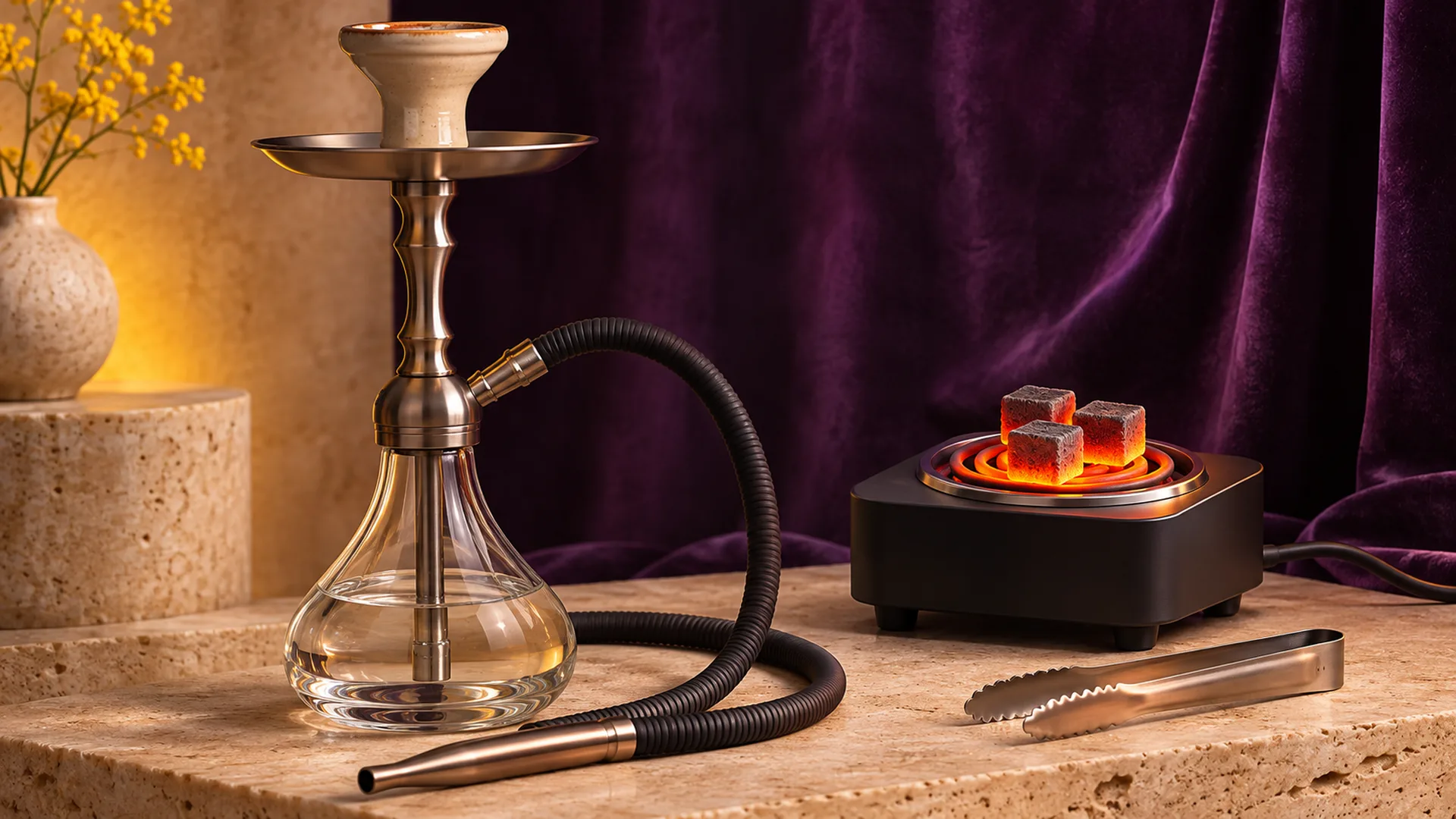
How to Use an Electric Hookah Charcoal Burner: Heat-Up, Placement, Safety

Summarize this article with AI
Discover the key points with your preferred tool.
The title, article link and text context are sent to your chosen tool.
Use an electric hookah charcoal burner on a flat, stable, heat-resistant surface, plugged directly into a wall outlet: space the coals out on the grate, flip them with tongs along the way, and switch the burner off once every side glows evenly. Heat-up time varies with the type and size of the charcoal and the power of the burner; one source puts it at 5-10 minutes in most cases. Stay with the burner while it is on and ventilate the room.
This guide explains how to position an electric charcoal burner, how to use it step by step, how to tell when the charcoal is ready, how to move the coals and how to maintain the burner. It makes no promises about the wattage, temperature or heat-up time of any specific model; that information is in the product's own manual and label. Hookah is a tobacco product and is not sold or served to anyone under 18.
What is an electric hookah charcoal burner and how does it work?
An electric hookah charcoal burner is a plug-in heater used to light charcoal without an open flame or gas. Inside is a heating element that gets hot; the coals sit on a grate or wire surface above it. As the element heats up, the charcoal catches from below, and as you flip it, every side turns into a glowing ember.
Electric burners on the market come in a few basic designs. Some are small and light for single use, while others have a wide surface that can light more coals at once. Models with a rack help keep the tongs or coals organized while the charcoal burns; lidded or box-type models trap the heat in an enclosed space. Which type suits you depends on how many coals you light at a time and where you will use the burner.
YT Shisha’s hookah charcoal burners category includes single, rack-equipped and wide-surface electric models, along with spare parts such as heating elements and grates. When choosing, check the dimensions and power listed on the product page; don't try to guess from the photo how many coals the burner holds.
An electric charcoal burner only lights the charcoal; it is not the same as electric heaters that manage the heat on the bowl. For a general look at electric systems that do away with charcoal entirely, see our article on electric heat management systems are available to browse.
Placement and electrical connection
Where you put the burner matters as much as how you use it. During use, both the burner body and the surface around it get hot, and small bits of charcoal or ash can fall from the grate. That is why it is safer to think through the placement once before first use and keep it fixed, rather than deciding again every time.
| Check | Suitable | Avoid |
|---|---|---|
| Surface | A flat, stable, heat-resistant stone or metal surface | A wooden table, the edge of a glass coffee table, a tablecloth or a plastic tray |
| Surroundings | An open corner away from curtains, paper and fabric | Under a shelf, inside a cabinet, next to a sofa |
| Foot traffic | A spot where no one will bump into it and the cord does not hang to the floor | In front of a door, in a hallway, within reach of children and pets |
| Outlet | A sturdy wall outlet with the plug inserted directly | Daisy-chained power strips, a loose plug |
| Air | A ventilated room with a window that opens | A closed, small, stuffy space |
The top of a kitchen stove is not a suitable spot either. One source points out that glass-ceramic and induction surfaces can be damaged and that ash and residue end up in the kitchen. Using the burner on a dedicated, stable surface makes both cleaning and safety easier.
On the electrical side, the basic rule is to use a connection that matches the burner's power. If you have to use an extension cord, check its current rating, don't plug extension cords into one another, and fully unwind reel-type cords; a coiled reel can carry noticeably less current. Read the burner's power rating from the product label and avoid running other high-power appliances on the same circuit. If you are setting up a permanent hookah area at home, the placement tips in our article on setting up a hookah corner at home will also come in handy.
Step-by-step use
The sequence below is a general flow that applies to most electric charcoal burners. If your model has an on/off switch, a lid or a timer, follow the order in its manual.
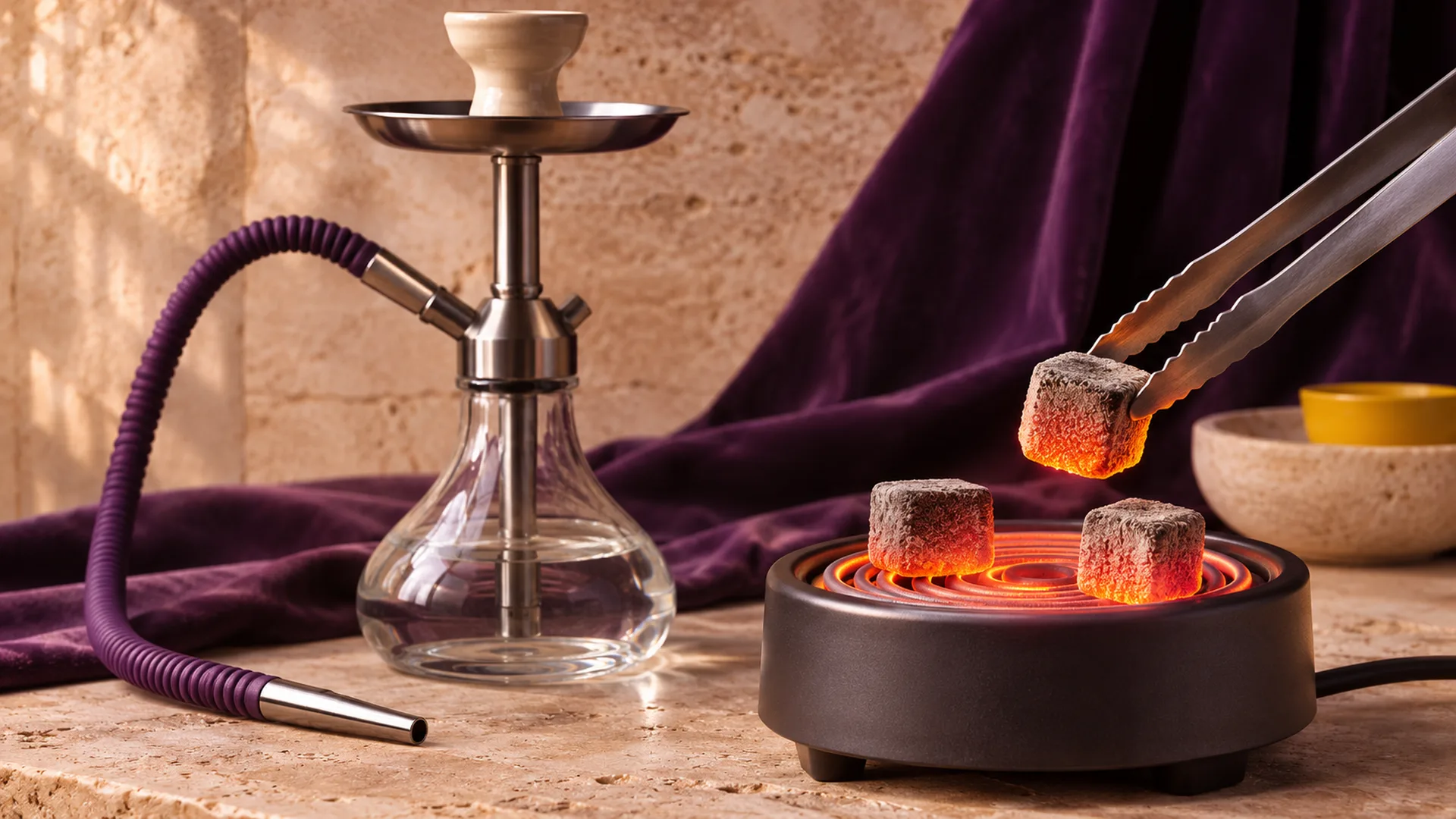
- Check While the burner is cold, inspect the cord, plug and grate. If the cord is crushed, the plug is scorched or the grate is cracked, do not use the burner.
- Positioning Place the burner on a surface that matches the table above and have your tongs and charcoal pan ready beside it.
- Arranging the coals Arrange the coals on the grate without leaning them against each other, leaving small gaps between them. Stacking them makes it harder for the bottom coals to get air.
- Switching on Plug it in or turn on the switch. Stay with the burner while it heats up.
- Flipping After a few minutes, flip the coals with tongs. If needed, turn a coal on its side so its side faces also touch the heating element.
- Check and switch off Once every side of the charcoal glows evenly, switch the burner off or unplug it. Leaving the burner running when the charcoal is ready just means wasted heat.
- Moving Pick up the coals with tongs and take them straight to the bowl, the heat management device or the charcoal pan.
Decide how many coals to light based on the setup of your bowl and heat management device; the size of the electric burner does not change that number. For charcoal quantity and placement, see our article on charcoal setup and coal placement is a useful reference.
Heat-up time and telling when the charcoal is ready
There is no single number for how long charcoal takes to get ready on an electric burner. The time depends on the type and size of the charcoal, the burner's power, how many coals you put on the grate and how worn the heating element is. One of the sources we reviewed says this takes about 5-10 minutes in most cases. Treat that as a starting point and trust your eyes for the exact timing.
With natural cube charcoal lit on an electric burner, the heat comes from below; each coal has to be flipped for every side to turn into an ember. That is why you shouldn't skip the flipping step. For the differences between charcoal types and sizes, see our hookah charcoal guide for more.
- Ready Every side of the coal glows evenly, no black spots remain and the corners are glowing too.
- Not yet The bottom face glows but the top face and edges are still black. Flip the coal and wait a little longer.
- Uneven One coal is ready while the one next to it is still black. Move the ready one to the charcoal pan and pull the other toward the center.
- Left too long A thick layer of ash has formed on the outside of the coal. Gently shake off the ash with tongs before putting it on the bowl.
If the heat-up time gets noticeably longer over time, make a note of it. As product descriptions also mention, heat-up time can increase as the heating element wears; this is covered separately in the maintenance section.
Moving the coals and placing them on the bowl
The few seconds after the charcoal is ready are the part of the process that needs the most care. Always hold the coals with tongs; never carry them by hand, with a napkin or with a fork. Keeping the distance between the burner and the hookah short and leaving nothing in the way reduces the chance of dropping a coal.
If you lit more than one coal, use a charcoal pan instead of carrying them all at once. The pan keeps the ready coals together and gives you a heat-resistant stopover on the side table next to you. Chimney, tongs and charcoal pan options come in different sizes; longer tongs leave more distance between your hand and the burner.
If you use a heat management device when placing the coals on the bowl, fill the lid and charcoal slot according to the device's own layout. For using the device, session length and how many coals to use, see heat management device guide for details. If you're thinking of switching the type of charcoal you use, you can compare sizes and pack options in the hookah charcoal category.
Safety, cleaning and maintenance
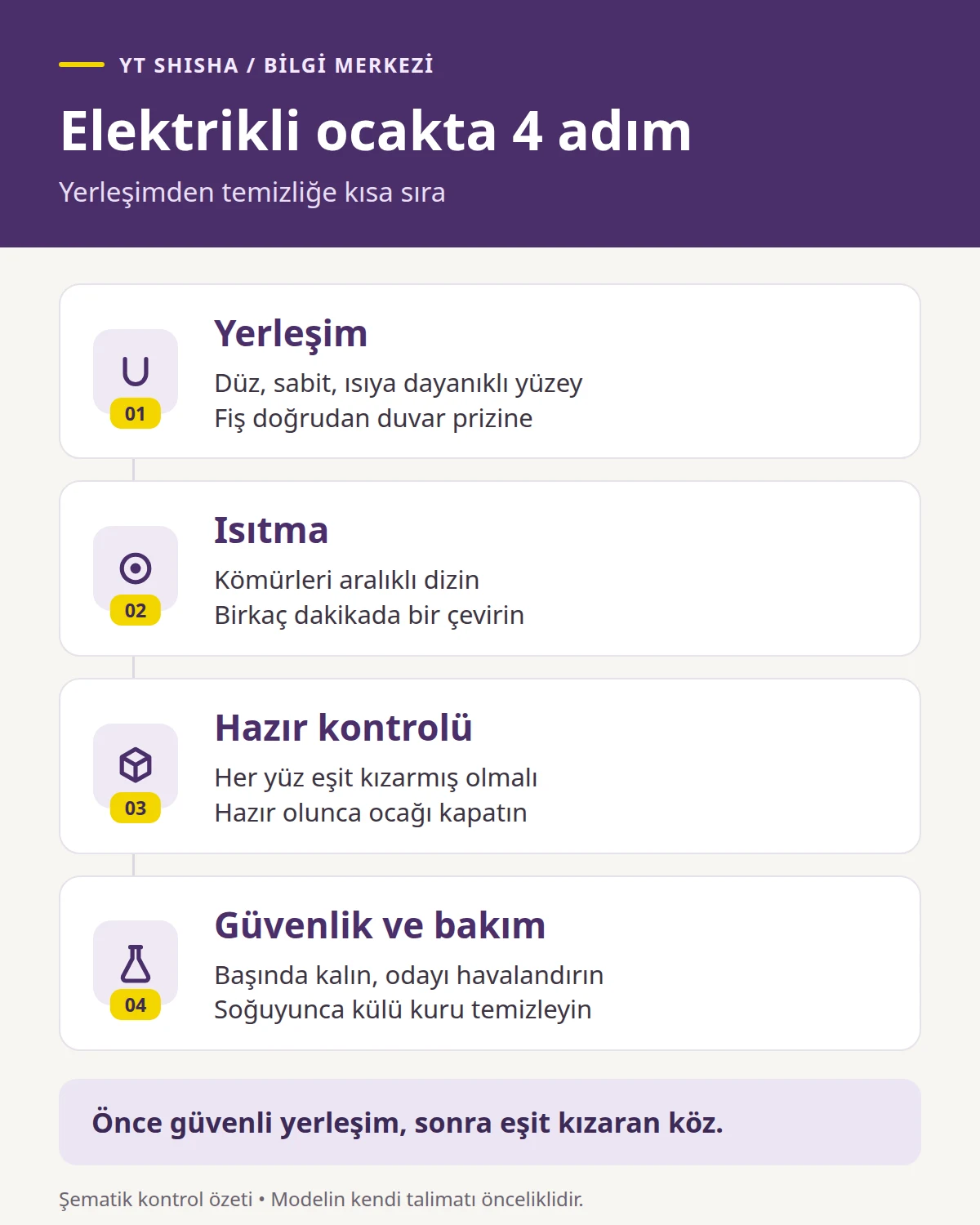
Even though an electric burner produces no flame, it is a device that runs at high temperatures with burning charcoal on top. Safe use comes down to a few simple habits:
- Supervision Do not leave the burner unattended while it is on; switch it off once the coals are ready.
- Ventilation Burning charcoal can produce carbon monoxide. If you are using it indoors, open a window and ventilate the room.
- Access Set things up so children and pets cannot reach the burner, the cord or the charcoal pan.
- Cooling down After use, unplug the burner and wait for it to cool down completely. Don't test the temperature with your hand.
- Water Do not try to cool the burner with water or wipe it with a damp cloth. Keep the electrical parts away from water.
For cleaning, the burner must be unplugged and completely cold. Remove charcoal crumbs and ash from the grate with a dry brush or tongs, and collect the crumbs carefully instead of turning the burner upside down and shaking it. Ash buildup can make heating harder and cause odors during use, so regular cleaning helps the burner heat up in about the same time every session.
The heating element and grate are parts that wear over time. If heat-up time is getting longer, part of the element no longer glows or the grate is warped, consider replacing the part. Check your burner's model name before buying a spare heating element; elements from different models may not fit each other. The burner must be unplugged and cold during the replacement. If you see damage to the cord, plug or internal connections, do not open the device yourself and stop using it.
Common problems
Most problems with an electric burner come down to coal placement, ash buildup or worn parts. The table below shows the order of things to check first.
| Symptom | Possible cause | What to do |
|---|---|---|
| The charcoal takes longer to glow than it used to | Ash buildup or a worn heating element | Clean the burner while it is cold; if the problem persists, consider a spare heating element that matches your model |
| One side of the coal stays black | The coal was not flipped or is not fully touching the heating element | Flip the coal with tongs and turn it on its side if needed |
| Some coals are ready, others are not | The edge of the grate may be heating less than the center | Move the ready ones to the pan and pull the others toward the center |
| Odor or smoke increases during use | Ash and crumbs have built up on the grate | Clean it while cold and watch again during the next use |
| The burner does not heat at all | A fault in the plug, outlet or device | Test the outlet with another appliance; do not try to open the burner, and stop using it |
If the breaker trips while you are using the burner, check whether another high-power appliance is running on the same circuit and don't keep trying to reproduce the problem. If you have doubts about your electrical wiring, consulting an electrician is the right call.
Frequently asked questions
How many minutes does charcoal take to light on an electric hookah charcoal burner?
There is no exact time. The type and size of the charcoal, the burner's power and the number of coals on the grate all change it. One source gives a range of about 5-10 minutes in most cases; the charcoal is ready when every side glows evenly.
Can I use the electric charcoal burner with an extension cord?
If possible, plug it directly into a wall outlet. If you have to use an extension cord, make sure its current rating suits the burner, don't connect extension cords to each other and fully unwind reel-type cords.
Can I leave the coals sitting on the burner?
Leaving ready charcoal on the burner for a long time creates unnecessary heat and ash. Move the charcoal to the bowl or the charcoal pan and switch the burner off.
Can an electric charcoal burner be used in a closed room?
Because burning charcoal can produce carbon monoxide, always ventilate the room if you are using it indoors. Do not run the burner in small, stuffy spaces, inside a cabinet or under a shelf.
When should the heating element be replaced?
Consider replacing it when heat-up time gets noticeably longer, part of the element no longer glows or there is visible deformation. Choose the spare part by model name and do the replacement on an unplugged, cold device.
Sources and scope
This guide covers the general use of an electric charcoal burner; it does not guarantee the power, temperature or heat-up time of any specific model. The heat-up time range comes from a glossary source and is an approximate figure. Your model's manual and product label always take priority. When working with burning charcoal and an electric heater, put fire, burn and electrical safety first. Hookah is a tobacco product and is not sold or served to anyone under 18.
Sources reviewed: Smokedex, glossary entry on hookah charcoal burners, Electrical Safety First, guide to overloading sockets and Hookah.com glossary of hookah terms. The last source is vendor content and may highlight its own products.