


Steel or Aluminium? Which Hookah Set Should You Buy?

Summarize this article with AI
Discover the key points with your preferred tool.
The title, article link and text context are sent to your chosen tool.
The answer to whether to choose a steel or aluminum hookah depends on where you will use the set and your maintenance expectations. Stainless steel can be considered for its sturdiness and surface care, while aluminum offers a lighter body at similar dimensions. Flavor, draw, and the overall user experience depend not only on the metal but also on the interior surface, connections, bowl, hose and the cleaning routine determine it together.
In this article
- Steel and Aluminum Comparison Table
- Weight and durability
- Flavor, draw, and heat
- Differences in corrosion and maintenance
- Selection by Usage Profile
- Budget, brass, and coffeehouse alternatives
- Purchase checklist
- Frequently asked questions

Steel and Aluminum Comparison Table
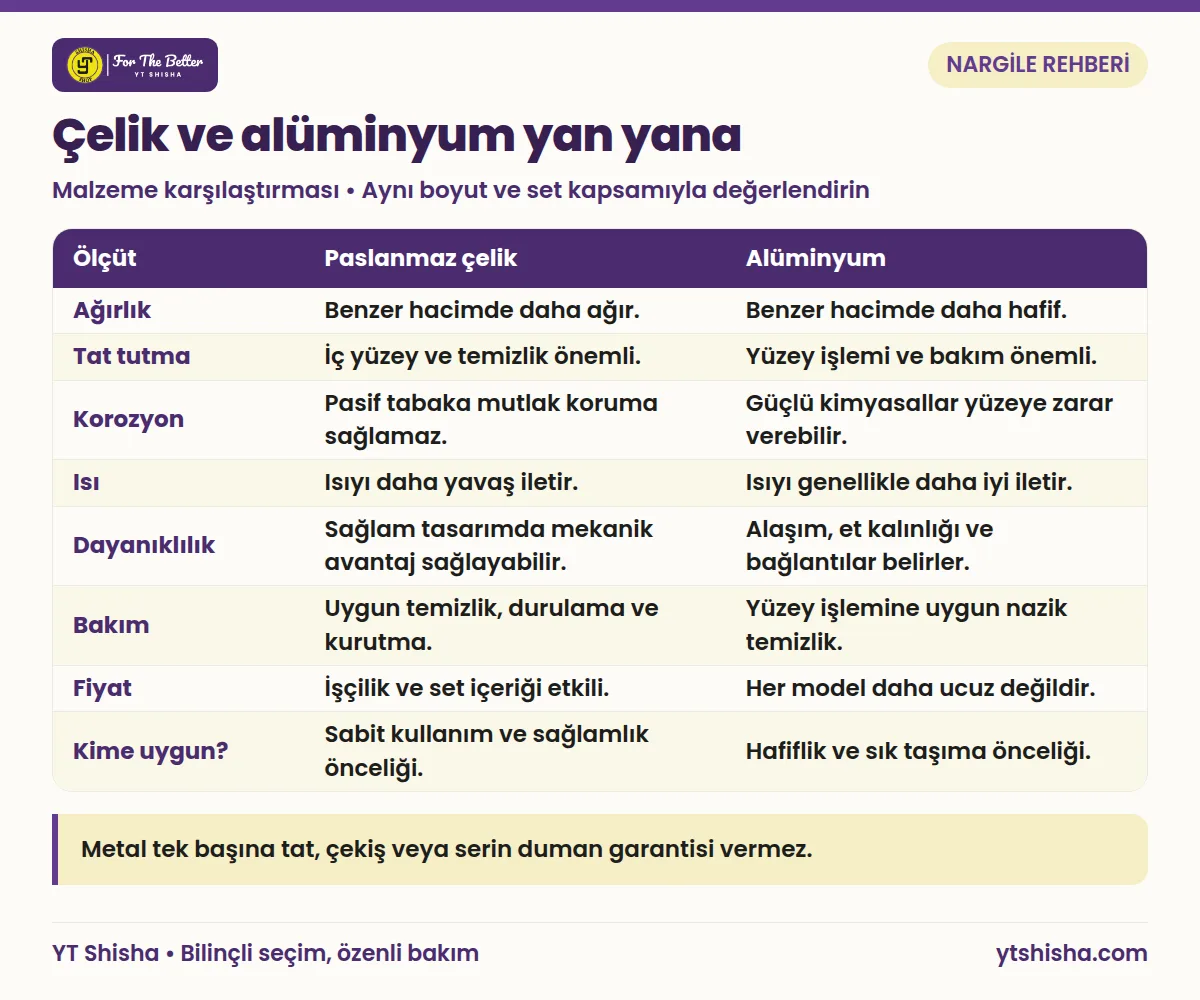
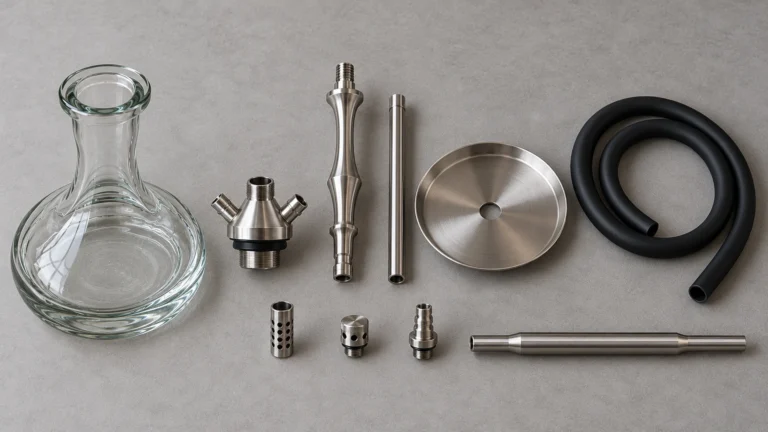
In this comparison, steel refers to a stainless steel body. A product's appearance does not indicate that all its parts are made of the same metal. The body coating, downstem, connection block, and screws may contain different materials. Reading the model description by component therefore provides more information than deciding based solely on the category name.
| Criterion | Stainless steel | Aluminum |
|---|---|---|
| Weight | Heavier at a similar volume; total weight depends on the design. | Lighter at a similar volume; may be easier to carry. |
| Flavor retention | The interior surface and cleaning matter; this does not guarantee permanent odor resistance. | Surface finishing and care matter; they do not determine flavor quality alone. |
| Rusting and oxidation | A protective passive layer is present; corrosion can develop under unsuitable conditions. | A natural oxide layer forms; harsh chemicals can damage the surface. |
| Heat | Common types conduct heat more slowly than aluminum. | It generally conducts heat better; this feature does not guarantee cool smoke. |
| Durability | May offer an advantage in mechanical strength in a solid design. | The alloy, wall thickness, and connection design determine the result. |
| Maintenance | A suitable cleaner, rinsing, and drying are required. | Gentle cleaning appropriate for the surface finish is required. |
| Price range | It ranges from entry-level to premium; workmanship and set contents have an effect. | Affordable options are available; not every model is cheaper. |
| Who is it suitable for? | A candidate for those prioritizing stationary use and sturdiness. | An option for those who prioritize light weight and frequent transport. |
Use the table as a screening tool. First, identify your transport needs and cleaning habits, then compare models with the same equipment. To see the options steel-bodied set options you can examine it and match the weight and parts information to your own usage conditions.
Weight and durability: Does lighter mean weaker?
Aluminum's density is approximately one-third that of steel. This is a meaningful comparison for metal parts of equal volume; it does not mean a finished hookah will be three times lighter. The base's glass thickness, tray diameter, whether the body is machined solid or hollow, and connection parts all affect total weight. Asking the seller for the weight of the complete set is more useful.
For a set you transport every week, having a few easily detachable parts may provide more convenience than the metal type. The arrangement in the bag, separate protection for the glass, and transporting connectors without losing them also matter. When choosing a lightweight body, check that the base is sufficiently stable; parts added to the tray and pulling on the hose can affect the center of gravity.
There is no one-word winner for durability either. For the same use, look for a properly finished body with adequate wall thickness. Screws that do not cross-thread, parts that fit without play, and disassembly that does not require excessive force are practical signs of quality. A heavy steel body does not compensate for a weak connection or fragile glass.
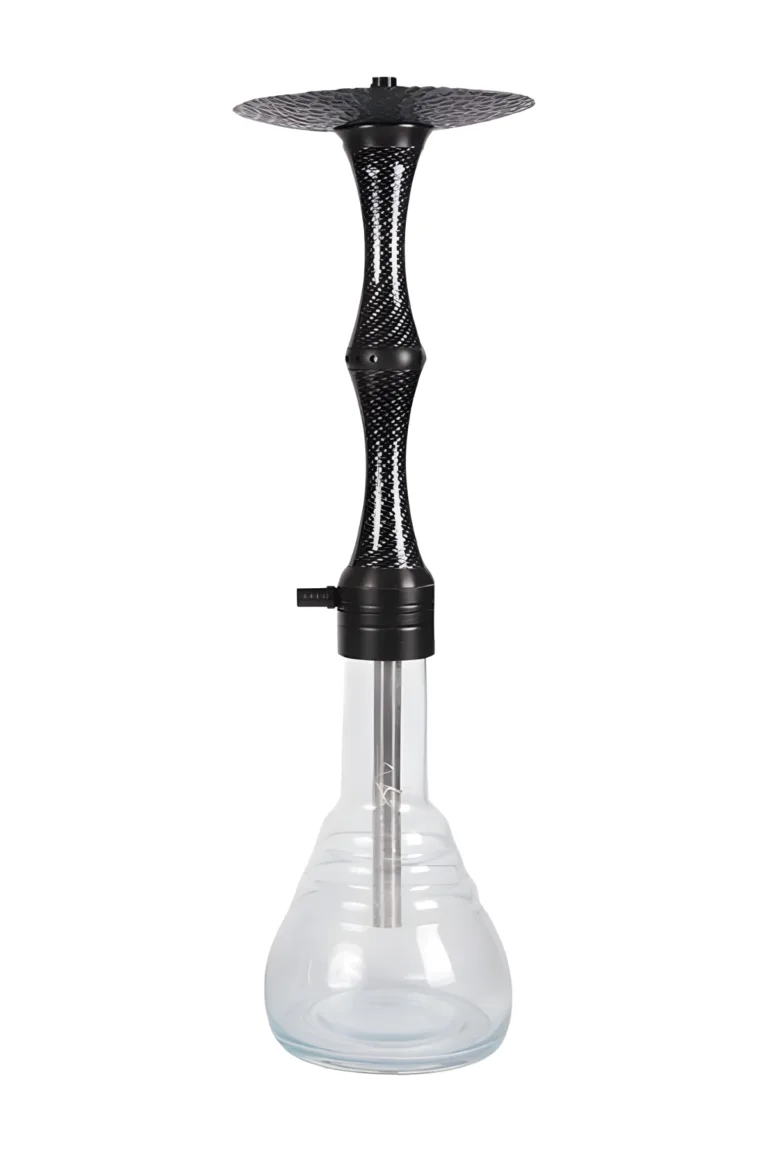
Do not focus solely on color when evaluating aluminum options. Models with aluminum bodies compare them alongside height, total weight, removability, and replacement part information. If the product's light weight is an advantage for you, also assess how it affects setup stability in the store or using the product's dimensions.
Taste, Draw, and Heat: How Much Does the Metal Matter?
How should you interpret flavor retention claims?
“Absolute statements such as “Steel never retains flavor” or “Aluminum always gives a metallic taste” are not sound criteria for choosing. Residue in the internal channel, old water, dirty grommets, and odors accumulated in the hose can change the experience. Attributing taste directly to the body material without knowing the surface condition and previous care is misleading.
If you switch between flavors, being able to reach the internal channel with a brush and dry the parts completely becomes important. If an unfamiliar taste or odor persists despite cleaning, investigate its source part by part. If you see flaking, pitting, or unexplained residue on the surface, ask the seller for an assessment instead of continuing to use it. Do not polish a part of unknown material at random.
Assess draw and temperature together
Aluminum's high thermal conductivity alone does not mean cooler or better smoke. Bowl heat management, the air passage, the environment, and the setup also affect the result. Compare identical setup conditions instead of drawing guarantees about session length or flavor intensity from the stem metal.
Inner tube diameter, immersion depth, the diffuser, and leaks determine the feel of the draw. Sets made from two different metals can offer a similar draw with similar airway designs. Also consider accessory choices: the bowl options when assessing compatibility and heat management, among hose alternatives check the connection size and cleanability.
The difference between rusting, oxidation, and care
A protective passive layer rich in chromium forms on the surface of stainless steel. This protection does not mean the material is unaffected under all conditions. Steel grade, surface workmanship, accumulated residue, and chloride-containing environments can alter corrosion behavior. Therefore, do not read "stainless" as a promise of a maintenance-free product.
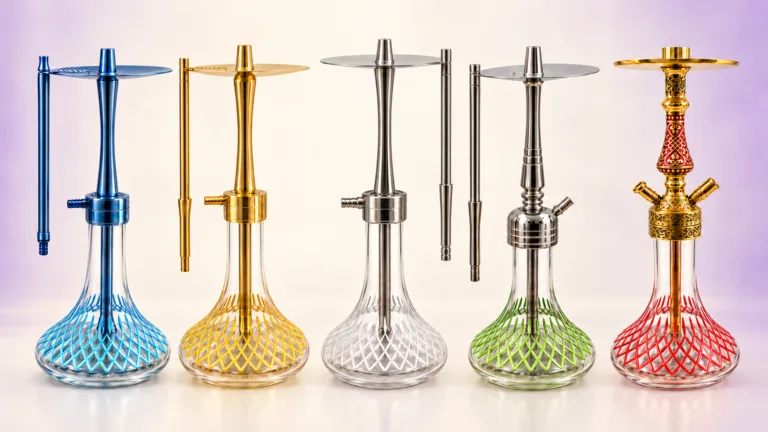
Aluminum also forms a natural oxide layer on contact with air. Anodizing develops this surface layer in a controlled way; it is not the same as paint. However, not every colored body can be said to be anodized. Instead of judging by appearance, ask the seller about the surface treatment and the material inside the internal channel.
For both materials, the manufacturer's care instructions take priority. The basic approach is warm water, a suitable soft brush, an approved cleaner, thorough rinsing, and complete drying. Strongly acidic or alkaline products can affect aluminum surfaces; chlorinated cleaners can cause problems with stainless steel. Do not use just any household descaler on the body.
Also be careful with connections that join different metals and trap moisture. Checking screw bases and enclosed spaces after washing and avoiding packing the set in a bag while wet are useful practices. Do not automatically regard discoloration as rust, but do not assume visible damage is merely cosmetic either. When uncertain, verify the product's care information.
Which material should you choose for your usage profile?
Those using it in a fixed location at home
If the set usually stays on the same table, light weight may be a lower priority. In that case, choose based on stable setup, an easily removable downstem, and maintenance access. Stainless steel options may meet these needs, though a well-designed aluminum model can also be considered for home use. Do not assume a set performs better simply because it is heavy.
Frequent carriers
If you regularly carry your set, you can shortlist lightweight aluminum bodies. Still, check the weight including the bag, glass protection, and how the parts are packed. In a tight carrying space, a short, disassemblable set may be more practical than a tall but lightweight model. Assess portability based on the entire set.
Those who change flavors frequently and use their hookah heavily
When switching flavors, prioritize channels that are accessible and easy to clean. With heavier use, ease of assembly and disassembly, availability of grommets, and ease of connection maintenance become more important. Alternatives with stainless steel bodies ask about these features for each model when reviewing them; do not automatically consider a particular material suitable for professional use.
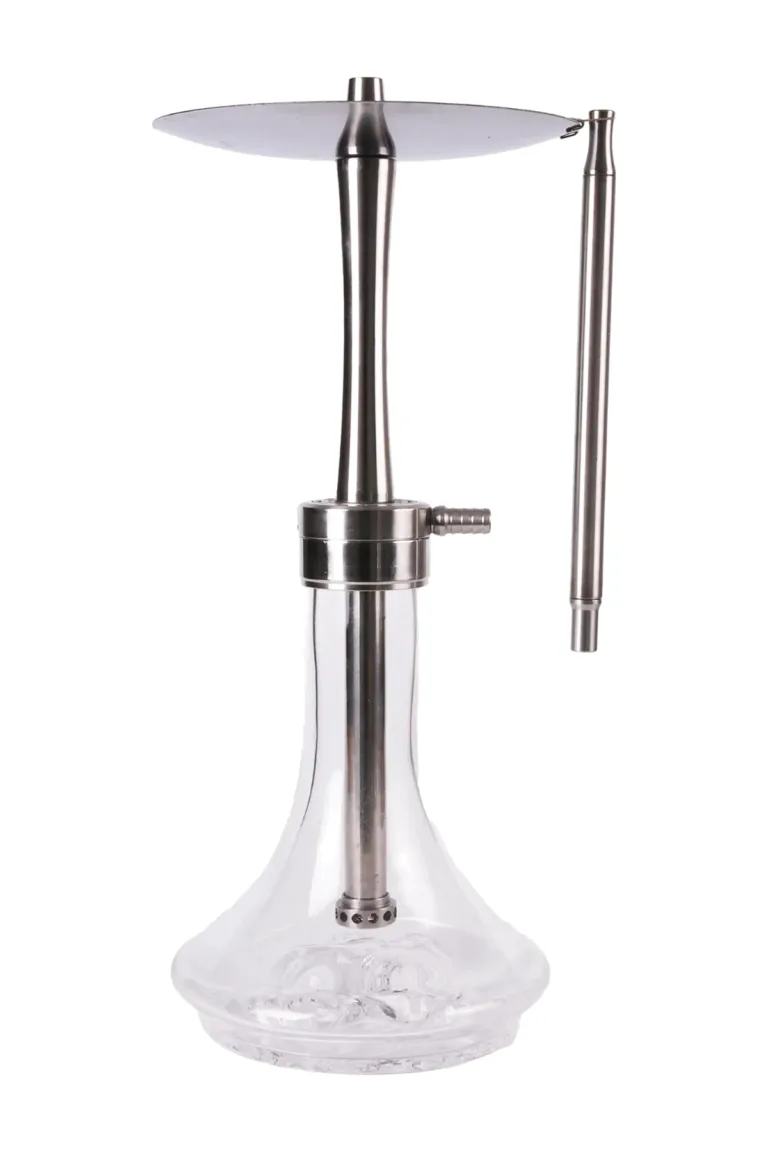
For example YT Bullet Hookah Set when opening the product page for an option like this, do not infer the alloy or set contents from its name. Check the included parts, dimensions, and care information. Asking the same questions about the second product you compare shifts your choice from appearance to concrete usage needs.
Price range, total budget, and coffeehouse-style alternatives
Material explains only part of the price. Machining time, surface finishing, design, base, and included accessories may affect it. Affordable options among aluminum models do not mean all aluminum products will cost less than steel ones. Compare entry-level, midrange, and high-end products of similar size and equipment.

Mentally divide your budget into two parts: the amount paid for the body and the total for a ready-to-use set. If the bowl, hose, base, or tray is not included, the displayed price may be misleadingly low. Check the product page for the current price and availability; do not treat prices collected on different dates as a definitive market range.
If you want a traditional look, you can also add brass and coffeehouse styles to your shortlist. Brass is an alloy of copper and zinc; “coffeehouse” alone does not explain the materials of all the parts. In Kahveci-Style Options review the inner tube, coating, and cleaning instructions separately. This choice should be assessed mainly in relation to appearance and usage habits.
When deciding between two candidates, consider how much time you can devote to maintenance. If taking parts apart and drying them after use feels difficult, a complex design with hard-to-reach channels may not suit your daily routine. Simple connections, clear care information, and readily available grommets are valuable for long-term use. These points reveal needs that may not be apparent at purchase but frequently arise later.
If information is missing from the product page, collect your questions in one list instead of guessing. Which parts does the total weight include, is the inner tube removable, what is the surface finish, and which cleaner is recommended? Clear answers provide a more concrete comparison than looking for a general advantage of one metal over another. Recording answers in the same order also makes it easier to see the strengths and weaknesses of different models.
Decide in five steps before buying
- Write down your priority: Decide which matters most: light weight, stationary use, traditional appearance, or maintenance access.
- Malzemeyi parça bazında sorun: Find out about the outer body, downstem, connections, and surface treatment separately; do not rely solely on the color name.
- Check compatibility: Make sure the base connection, grommet, hose port, and bowl seating work together.
- Compare equivalent sets: Evaluate the total cost while accounting for the same accessories and transportation needs.
- Learn about care in advance: Clarify removable parts, suitable cleaners, and necessary replacement parts before ordering.
If the decision is still close, holding both models and comparing their total weight and connections is helpful. locations on the Stores page by examining them, you can determine what suits you. Base your final choice on verified product information and your own usage habits rather than expectations created by a metal’s name.
Frequently asked questions about choosing steel and aluminum
Should I choose a steel or aluminum hookah?
If you transport it often, consider a lighter aluminum body of a similar size. If stationary use and sturdiness are your priorities, examine stainless steel options. Make your final decision by comparing total weight, connection quality, maintenance access, and set contents together.
Aluminum hookah does it rust?
Aluminum does not develop the red rust seen on iron, but oxidation and corrosion under unsuitable conditions can occur. Its natural oxide layer provides protection. Surface treatment, cleaners, and damp storage conditions affect the product’s condition; follow its care instructions.
Does stainless steel never corrode?
It can. Stainless steel’s protective layer does not provide absolute protection under every condition. Alloy grade, surface workmanship, accumulated dirt, and chloride-containing substances affect the outcome. Thorough rinsing after washing and drying the parts are fundamental to maintenance.
Which body retains less flavor odor?
It is not appropriate to make a definitive ranking based on the metal name alone. The internal surface condition, residue, hose, and grommets also affect odors. Parts that can be disassembled, reached with a brush, and dried completely offer more practical maintenance when switching flavors.
Does an aluminum body cool smoke better?
Aluminum generally conducts heat better than stainless steel, but this property alone does not guarantee cooler smoke. The bowl, heat management, airway design, and setup conditions must be considered together.
Is an aluminum set always cheaper?
No. Craftsmanship, design, surface finishing, and box contents can affect the price. Compare sets that include the same accessories. Add the extra budget needed for any missing base, bowl, or hose to the total cost.
Is the Entire Kahveci Set Made of Brass?
The term Kahveci alone does not indicate that every part is brass. The inner tube, outer body, and connections may be made of different materials. Do not draw firm conclusions about the materials before checking the product description for part details and any coating care requirements.
Products Related to This Guide
Supplementary Guides

304 Or 316? How to Identify Steel Quality in a Hookah
Assess the difference between 304 and 316 steel in hookahs through a magnet test, weld workmanship, weight and coating. Clarify material information with questions…

10 Things to Consider When Buying a Steel Hookah Set
When buying a hookah set, consider materials, connection compatibility, balance and access for maintenance together. Clarify your purchasing decision with a ten-item list and…

Why Brass Hookahs Tarnish and How to Care for Them
A checklist to distinguish tarnishing, coating and buildup on brass hookahs; model-specific care, drying and storage steps.
Aluminium Hookah Cleaning and Coating Care
When cleaning an aluminium hookah, assess the body, coating, downstem and connections separately. A checklist by part and catalogue examples.

Leave a Reply