


How to Clean a Stainless Steel Hookah: A Step-by-Step Guide

Summarize this article with AI
Discover the key points with your preferred tool.
The title, article link and text context are sent to your chosen tool.
Steel hookah cleaning involves disassembling the cooled set, washing parts approved for water contact with warm water and a suitable mild detergent, rinsing thoroughly, and drying completely. Clean the body with an appropriate brush; handle the base, grommet, and washable hose separately. To protect the finish, avoid steel wool, bleach, and prolonged soaking in chemicals.
In this article
- Preparation and materials list
- Step-by-step cleaning
- Grommet, hose, base, and bowl care
- Solutions for stains, tarnishing, and odors
- Cleaning frequency table
- Mistakes to avoid
- Drying, Storage, and Final Check
- Frequently asked questions
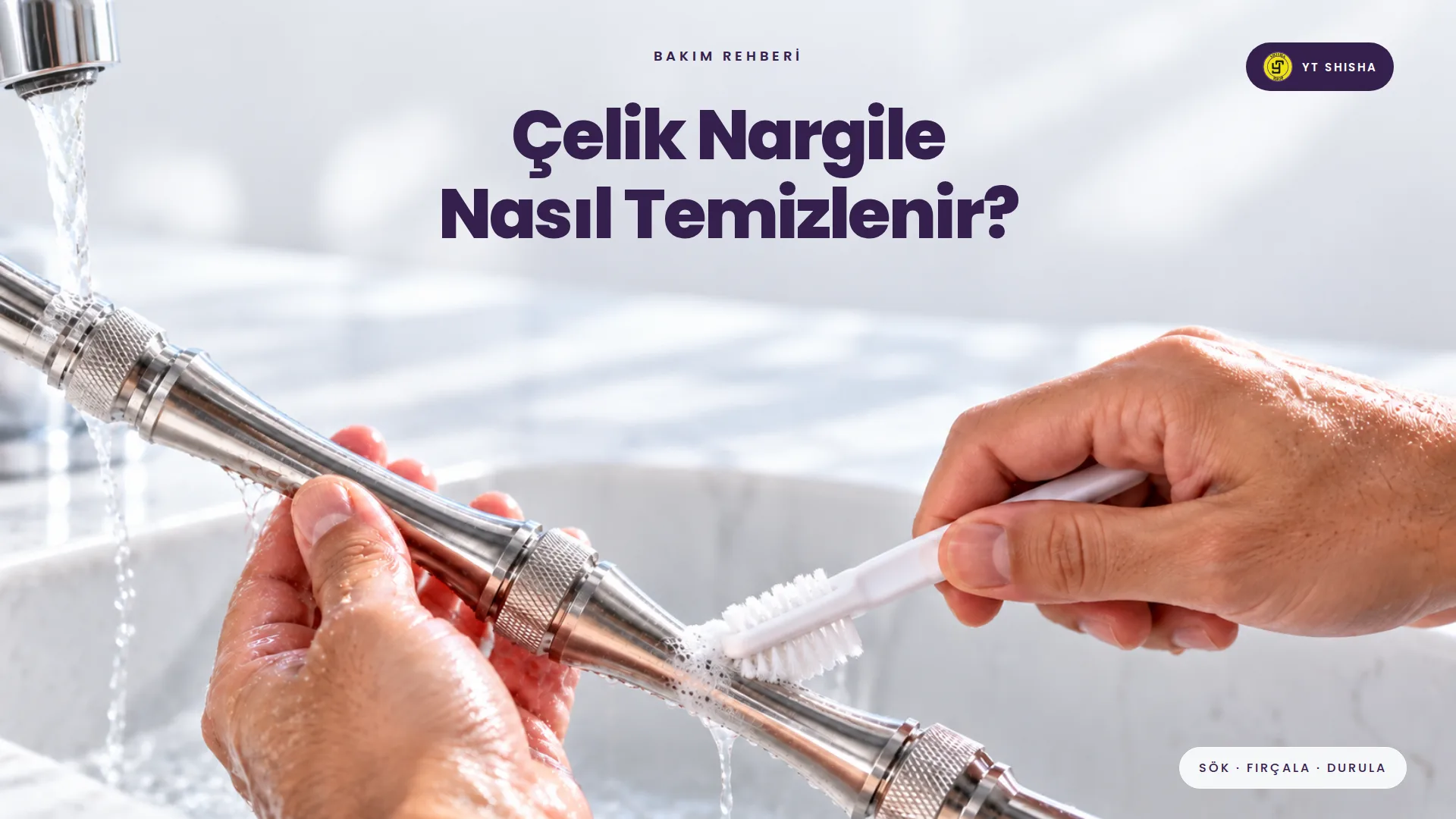
Preparation and materials list
Maintenance is about more than polishing the exterior. Residue in the inner tube, buildup on the base's shoulder, or damp hose, can cause old odors to be noticeable during the next use. Cleaning parts separately also makes it easier to identify which section is causing the problem. The first step is to check the set’s user manual and find out which parts can be removed.
A set that appears to be steel may have aluminum connections, a painted outer sleeve, wood decoration, or a valve made of another material. A method suitable for the body therefore cannot be applied to all accessories. Steel set models when examining them, consider removable parts and cleaning access as well as material; ask for product-specific care recommendations.
- Clean, warm drinking-quality water and a large washing container.
- A mild, easily rinsed detergent approved by the manufacturer.
- A soft-bristled tube brush of a suitable length for the body passage.
- A base brush that can reach the bottom and shoulders of the base.
- Microfiber cloth, small soft brush, and clean drying cloth.
- A separate container for small parts such as grommets and valve balls.
Make sure the brush’s metal tip does not rub against the surface. Choose the right size rather than forcing an overly thick brush into a narrow channel. Close the sink drain or use a strainer; losing a small ball can prevent the purge from working after cleaning. Laying a cloth on the counter also helps prevent glass from hitting the hard surface.
Step-by-step steel hookah cleaning
The sequence below is a practical starting point for daily care. Increasing soaking time or adding more cleaner does not always produce better results. If the part’s material or coating is unknown, use only the permitted method; especially on colored surfaces, do not experiment in a way that causes permanent changes.

- Wait for the set to cool completely. Remove the charcoal safely. Do not place a hot bowl, heat management device, or tray directly under cold water. Do not expose the glass base to sudden temperature changes either. Before cleaning, make sure the parts are cool enough to handle safely.
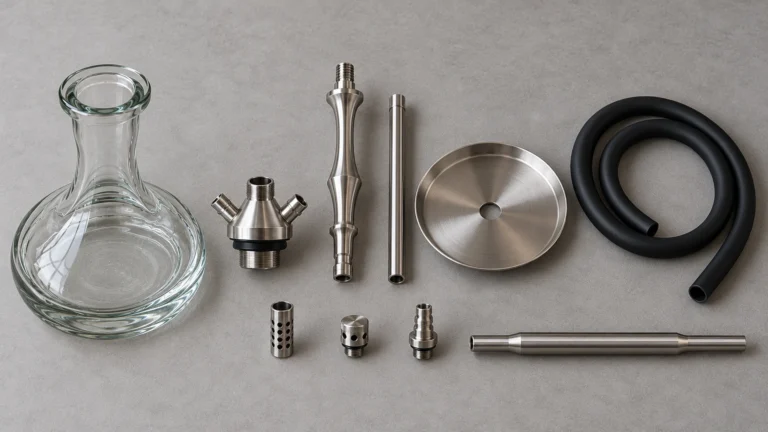
- Empty the base and separate the removable parts. Remove the hose, bowl, grommets, and connections that may be detached. Photographing the parts' order during the first disassembly helps with reassembly. Do not force a stuck thread with pliers; proceeding without understanding the resistance can damage the connection.
- Remove loose residue with a preliminary rinse. Run warm water through the body channel and base. This removes loose deposits from surfaces and allows more controlled brushing. Watch the water at the outlets; if the flow is weak, separately check narrow connections that may be disassembled.
- Clean the inside of the body with a soft brush. Use a suitable mild detergent according to its instructions. Move the brush gently through the channel and clean accessible connection openings as well. Do not insert hard objects into blind channels. Use a microfiber cloth on the exterior, following the direction of any brushed finish.
- Wash the base and small parts separately. Brush the bottom, shoulders, and area around the opening of the base. Clean the grommets gently; handle the purge ball and its seat according to the model's instructions. Run water through a hose confirmed to be washable; do not do the same with a non-washable hose.
- Rinse every part with plenty of clean water. Threads and grommet seats can retain detergent. Continue rinsing until no foam remains; do not stop simply because the smell has diminished. Rinsing narrow channels from another direction may help remove residue left inside.
- Drain the water and dry completely. Wipe the exterior with a clean cloth and leave internal channels to dry in a place with air circulation. Hang the hose without sharp bends. Do not seal the base opening airtight. Do not put parts in a bag before they dry or assemble the set while it is still closed up.
- Check the parts when assembling. Check for cracked grommets, missing balls, strained threads, and cracks in the glass. Assemble the connections by hand without overtightening. If there is an unusual odor or visible residue after cleaning, inspect again; do not try to cover up the problem with another flavor.
Separate care for the grommet, hose, base, and bowl
Grommets and purge parts
Do not use a pointed screwdriver or knife when removing the grommet. Separate parts that can be removed by gently flexing them with your fingers; do not force fixed components. Clean sticky residue in the grommet groove with a soft brush. A torn, hardened, or misshapen grommet may still cause sealing problems after washing is complete. To find the appropriate size grommet and spare part options inspect; do not choose parts based on appearance alone.
The purge ball must move freely in its seat. Cleaning a dirty seat is different from altering the mechanism. Do not sand the ball or randomly replace it with one of a different diameter. If you do not remember where the part goes, refer to the assembly image; purge arrangements differ by model.
Hose and mouthpiece
A hose exterior that looks like silicone does not by itself prove that the entire assembly can be washed with water. The internal structure, connector, and mouthpiece material matter. For a washable silicone hose, use the manufacturer-approved lukewarm-water rinsing method. Do not fill leather-covered, metal-wrapped, or nonwashable hoses with water.
The inside of the hose may dry more slowly than the outside. Allow airflow even after water stops dripping from the ends; do not coil it tightly and trap moisture inside. If there is a persistent odor or deterioration of the interior surface among washable hose options compare connection compatibility and care instructions. Do not skip cleaning before first use with the new part either.
Glass base and bowl
A clear-looking base does not mean no sediment remains around the bottom. Hold it up to the light and check the shoulder and neck. If a brush will not pass through the narrow opening, do not force the glass. Use a surface-appropriate brush instead of shaking vigorously with salt, rice, or hard grains; protect exterior decorations separately on painted and decorated glass.
Clean the bowl according to its material after it has cooled completely. Follow manufacturer instructions for detergent use on porous ceramics; do not automatically copy the body cleaning method. Scraping residue with a metal tip can damage the glaze. For a cracked part bowl options when looking, consider the connection size and the material's maintenance requirements together.
The right approach to stains, tarnishing, and odors
White water marks or limescale appearance
Light-colored rings left after washing may be mineral deposits from dried water. Start with gentle cleaning and careful drying. If the stain remains, ask the manufacturer which product is appropriate for the bare metal, coating, and connection. A descaler's packaging mentioning metal cleaning does not mean it can be used on every hookah part.
Do not use vinegar or lemon mixtures as an unmeasured, prolonged soak. Acid treatment should be used only if explicitly suitable for the material concerned and only for the specified duration. Thorough rinsing is required afterward. Clarify each part's care requirements before placing different metals and grommets in the same acidic container.
Brown spots and darkening
Not every color change is rust; transferred metal particles, deposits, and surface changes may look similar. Instead of scraping with a fingernail or switching to strong chemicals, observe the surface again after gentle cleaning. If the stain does not wipe off, pitting appears, or the coating lifts, consult the seller with photos before continuing to use it.
Do not identify the material by its color alone. When comparing products set options with stainless steel bodies ask about material information and surface care through it. A product name cannot establish steel grade, coating type, or resistance to specific cleaners.
Flavor odor remaining after washing
To locate an odor, check the drying body, hose, grommet, and base separately. Soaking the entire set in chemicals again because one hose retains an odor is unnecessary. First clean the affected part again using an approved method and dry it completely. If the odor is accompanied by stickiness or surface deterioration, ask whether replacement is necessary.
Detergent odors can also mix with old flavor odors. Therefore, do not mask odors with scented products; rinse again. The smell of parts stored in a damp cabinet may not be resolved simply by using more detergent. Review the drying area and storage method as well.
How Often Should a Steel Hookah Be Cleaned?
The table below is a suggested starting routine for home use, rather than a fixed manufacturer maintenance schedule. Frequency of use, water hardness, and the part's construction may change the interval. If visible dirt, residue, or odor is present, do not wait for the scheduled day. Simply adding clean water to the base after multiple uses does not replace washing.
| Part | Recommended time to check | Action to take |
|---|---|---|
| Bottle | After each use | Empty the water, wash, rinse, and dry. |
| Body and downstem | After each use | Remove residue with a suitable brush and rinse the channels. |
| Washable hose | After every use; additionally when changing flavors | Clean it according to its instructions and dry the inside completely. |
| Grommet and Purge Valve | Visual inspection at every cleaning | Remove dirt and sticking; assess the damaged part. |
| Bowl | After every use, once cool | Malzemesine uygun yöntemle kalıntıyı uzaklaştırın. |
| Threads and connection seats | Detailed weekly inspection; immediately if dirty | Clean removable points and check for wear. |
Mistakes to avoid when cleaning
- Putting all parts in the dishwasher: Choose hand cleaning unless the manufacturer expressly permits otherwise; different materials may not be suitable for the same cycle.
- Using bleach and strong acids: Chlorine-based products and hydrochloric acid can damage the surface. Do not mix cleaners together.
- Polishing with a wire scrubber: It can create scratches and leave foreign metal residue. Choose a soft cloth and an appropriate brush.
- Boiling every part: There is no universal boiling method for grommets, coatings, and glass. Follow the model's temperature limits.
- Leaving it in water overnight: Do not treat prolonged soaking as a routine solution; clean hard-to-reach dirt with an appropriate tool.
- Putting it in a closed bag while damp: Dry the passages and the inside of the hose first; a dry exterior is not enough.
Drying, Storage, and Final Check
Do not put clean parts directly on a dirty counter. Make sure cloths are clean and odor-free as well. Leave the tube openings uncovered in a place with air circulation. Once the parts are dry, align the connection threads before assembling; if they are hard to turn, back them out and realign. Consult the care instructions instead of applying a random oil or polish.

If you want easy maintenance, ask before buying whether a brush can reach the inner channel, how the purge opens, and whether the hose is washable. For example The YT Everest product page when examining, you can clarify these questions for the specific model. If you would like to see the parts being disassembled in person from the stores page find a location that suits you and confirm the care information.
Frequently asked questions
Should a Steel Hookah Be Cleaned After Every Use?
Emptying the base after every use, cleaning and rinsing suitable parts, and drying them completely is a practical maintenance routine. Determine the frequency of detailed disassembly according to usage intensity and the model's instructions; do not leave visible residue sitting.
Can a steel body be washed in a dishwasher?
Do not wash it in a dishwasher unless the manufacturer explicitly allows it. The body coating, different metal connections, and grommets may not be suitable for the same washing conditions. Clean removable parts by hand according to their instructions.
Can Vinegar Be Used to Clean a Steel Hookah?
Do not consider vinegar a universal solution for every part. Use it only if the manufacturer permits it for the specific material and surface, and only for the stated duration; then rinse thoroughly. Do not soak parts with unknown coatings in vinegar.
Can every hose be washed with water?
No. Washability depends on the hose's internal construction and connections. Clean with water only those parts confirmed as washable in the product information or manufacturer's instructions; do not apply the same method to leather-covered or metal-wrapped hoses.
Why Does the Flavor Smell Remain After Cleaning?
The odor may come from residue left in the hose, grommet, base, or internal channel. Find the source by checking the dried parts separately. Repeat the approved cleaning process; if the odor persists, discuss the part's condition with the seller.
Are brown spots on the body definitely rust?
No. Metal particles transferred from elsewhere and surface deposits can leave similar marks. If there is staining, pitting, or coating loss that gentle cleaning cannot remove, consult the seller without using abrasives.
Can I reinstall the grommets and hose while they are wet?
Wait until the parts are completely dry before storing them. Water remaining inside the hose in particular may not be visible from outside. Allow air circulation; do not put damp parts in a closed bag or unventilated cabinet.
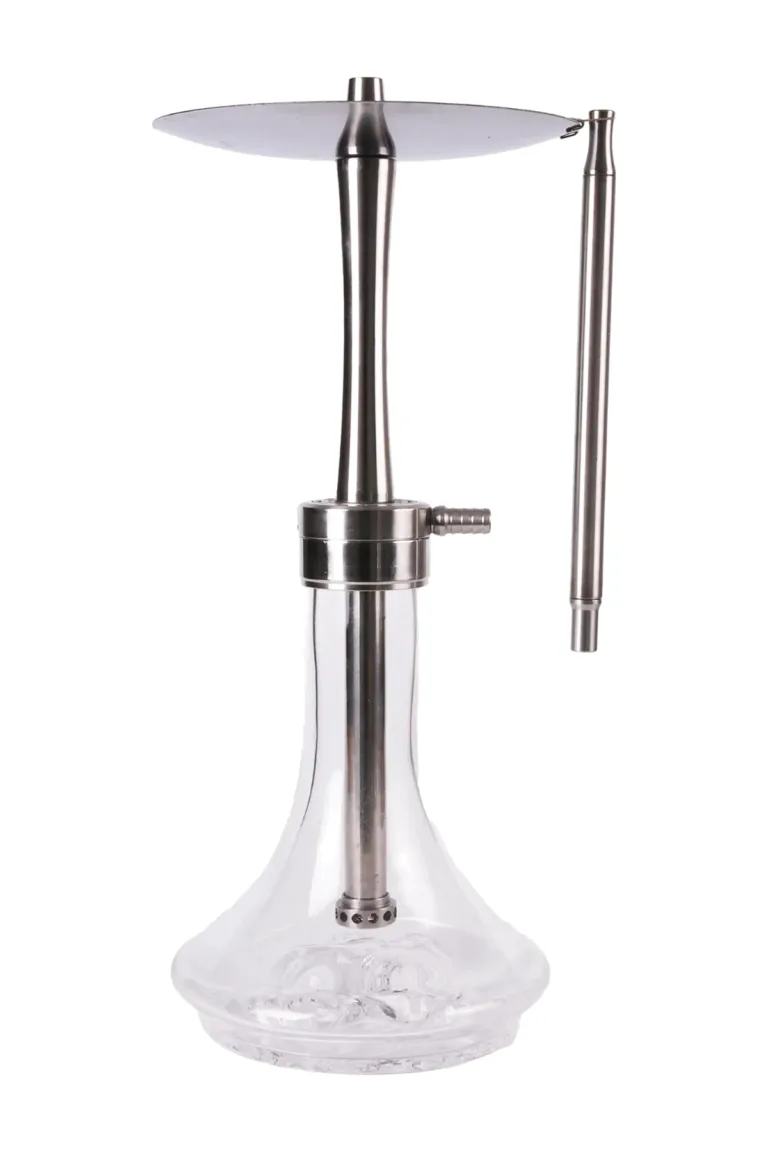
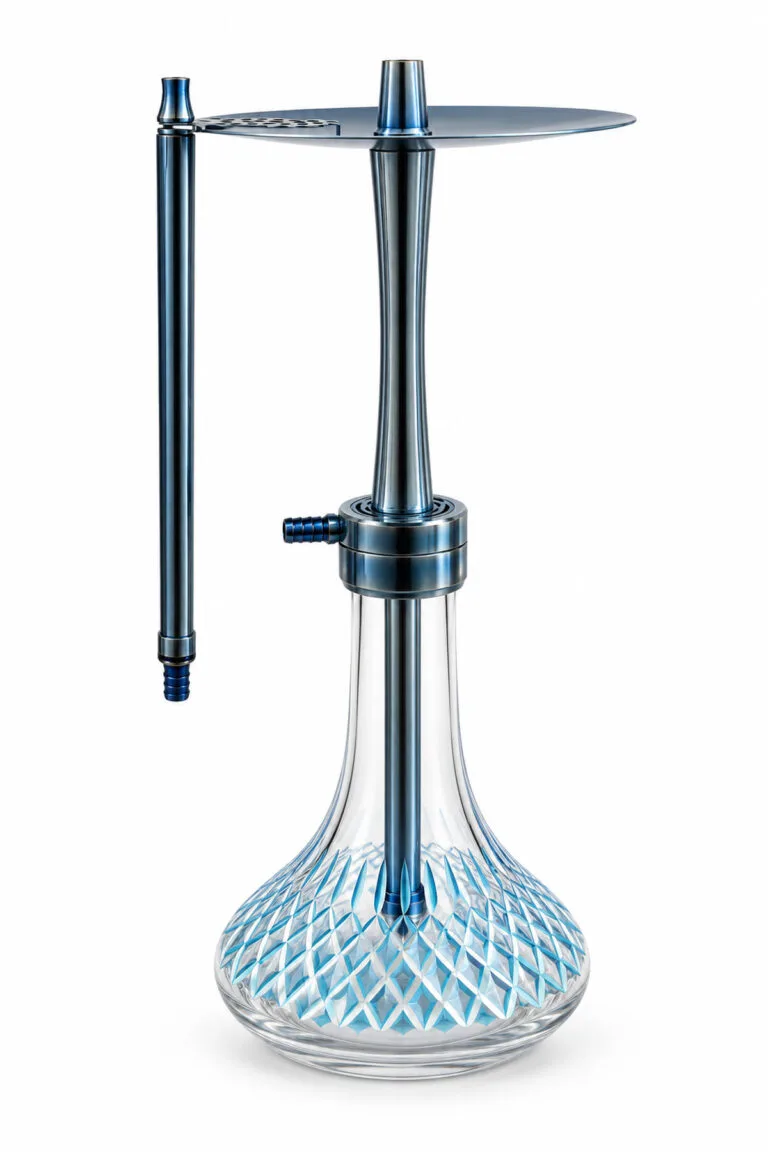
Products Related to This Guide
Supplementary Guides

Steel or Aluminium? Which Hookah Set Should You Buy?
Compare steel and aluminium hookah bodies in terms of weight, care, durability and budget. A table and checklist to help you decide based on…

304 Or 316? How to Identify Steel Quality in a Hookah
Assess the difference between 304 and 316 steel in hookahs through a magnet test, weld workmanship, weight and coating. Clarify material information with questions…

10 Things to Consider When Buying a Steel Hookah Set
When buying a hookah set, consider materials, connection compatibility, balance and access for maintenance together. Clarify your purchasing decision with a ten-item list and…


Leave a Reply