

Hookah Set Brands: Turkish and Russian Schools, and What to Look for When Choosing

Summarize this article with AI
Discover the key points with your preferred tool.
The title, article link and text context are sent to your chosen tool.
Hookah set brands fall roughly into two schools: the Turkish school, known for brass Kahveci and plain steel sets, and the Russian school, known for multi-piece, modular, mixed-material designs. When choosing a brand, look past the logo first at how clearly the materials are described, the connection and size standard, spare part availability and whether the product is genuine.
This article explains what the schools mean, which groups the brands sold on ytshisha.com fall into, and the criteria you can use when choosing a brand. It doesn't pit brands against each other, rank them or criticize any of them. Information about brands' origins is given only to the extent it could be verified, with the source cited. Hookah is a tobacco product and is not sold or served to anyone under 18.
Brand or school?
In the hookah world, the word “school” describes the design and usage habits a country or region has settled into over time. A brand may make designs close to a particular school, but a school is not a certificate of origin. A set made in Türkiye can have a Russian-style modular design, and a set made abroad can have a classic look.
That's why it helps to think about choosing a brand in two steps. First, decide which school suits the way you use a hookah: do you want a classic single-stem set, or a modular set with interchangeable parts? Then, within that school, look at brands that are clear about product information and have good spare part availability.
This distinction is also reflected in the site's categories. The Hookah Sets page shows brass Kahveci, steel and aluminum sets together, while the Russian hookah sets page brings together models that follow Russian-style modular designs. Being in the Russian hookah sets category doesn't mean the brand is of Russian origin; the category describes the design approach.
The Turkish school: from Kahveci brass to modern steel
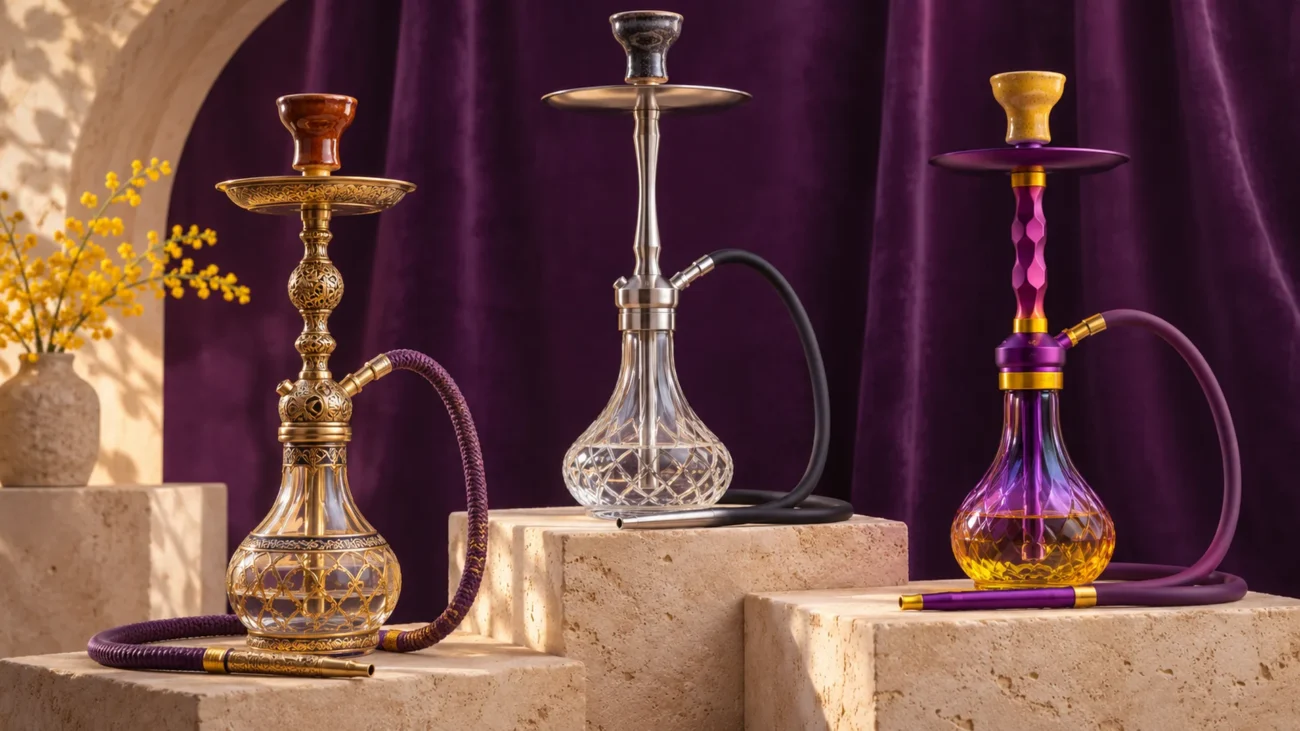
The Turkish school first brings to mind Kahveci sets: a tall, often decorated stem, a wide glass base and a strong link to coffeehouse culture. The stem on these sets is usually made of brass; patterns, gilding and base craftsmanship define the set's character. In recent years, this school has also expanded with plain stainless steel stems that follow the same way of use.
- Structure Usually a one-piece or few-piece stem, a push-fit or threaded base connection and a classic multi-hole bowl.
- Material Brass, stainless steel and, on some models, copper. Surface treatments can include gilding, cut detailing and plating.
- Maintenance With brass, tarnishing and plating care matter most; with steel, the joints and cleaning the downstem.
- Part compatibility Base and grommet sizes can vary by manufacturer; the model name is important for spare parts.
YT Shisha, one of the brands of this school, is an Istanbul manufacturer continuing a production tradition that dates back to 1967; it machines its brass and steel sets on lathes and CNC in its own workshop and finishes them by hand. The production stages are shown with photos and videos on the hookah production and manufacturing page. On the site, 119 YT Shisha sets are listed in the brass Kahveci, decorated brass, steel and aluminum groups. Classic brass sets are on the brass Turkish café hookah sets page.
Another Turkish brand sold on the site is Oduman. According to a vendor source, Oduman is a brand founded in 2014 and made in Türkiye, known for its compact models. On the site, 19 Oduman sets are in the Oduman and Legend sets group, and most of them are marked as tabletop sets of 45 cm and under. For the anatomy and care of Kahveci sets, see our Kahveci brass hookah article are available to browse.
The Russian school: modular design and mixed materials
The Russian school is associated with modern sets whose stem is made of several pieces, whose parts can be taken apart and swapped, and which combine different materials. In these designs, the purge valve, diffuser, hose connection and bowl seat are often treated as separate components.
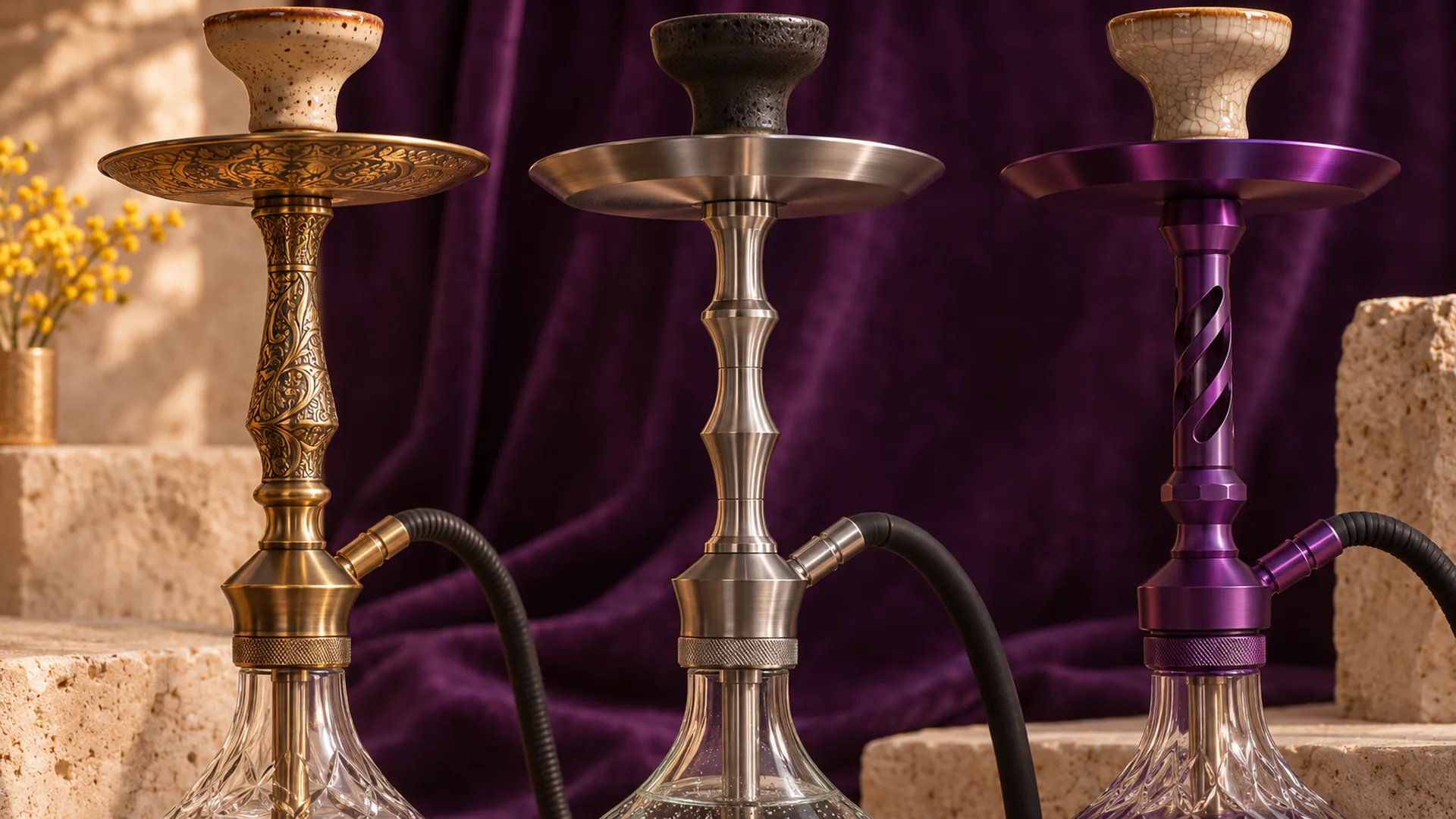
- Structure Removable stem parts, separate purge valve and hose inlets, and on some models magnetic or quick-release connections.
- Material Materials such as stainless steel, anodized aluminum, Delrin and wood may be combined in the same set.
- Bowl Usually used with phunnel or similar Russian-style bowls with an airflow path, with a grommet or adapter.
- Maintenance The multi-piece design makes cleaning easier but requires regular checks of grommets and connections.
The brand with the widest presence on the site in this school is Alpha Hookah. A vendor source describes Alpha Hookah as a Russian brand and presents the Model X as the brand's flagship model; the same source lists that model's materials as anodized aluminum and stainless steel. There are 35 Alpha Hookah sets on the site, and their stem material information also shows aluminum and stainless steel together.
Alongside Alpha Hookah, a total of 25 brands are listed in the Russian hookah sets category on the site, including Blade Hookah, Hoob, Mattpear, Union Hookah and Carver Hookah. Some of these brands have only one or two models on the site. For material and care details of Russian-style sets, see our our Russian-style hookah sets material and care guide is a useful reference.
The German and other schools
Besides the Turkish and Russian schools, people also talk about a German approach known especially for stainless steel craftsmanship and patented connection systems. In this approach, the stem is usually made entirely of stainless steel, and precise machining of the parts stands out.
One of the brands associated with this approach on the site is Steamulation. A vendor source describes the brand as German in origin and says its sets use stainless steel and Bohemian glass. There are four Steamulation sets on the site, and they are listed in the Russian hookah sets category because of their design approach. This is a good example of the difference between school and origin.
You can also read our Russian vs. German school comparison which looks at the technical differences between the German and Russian approaches in more detail. Classic Egyptian-made sets are also known as a separate tradition, but the site doesn't have a category dedicated to this group.
Main hookah set brands on the site
The table below shows, in alphabetical order, the brands with at least four sets listed on ytshisha.com as of November 2026. Set counts and material information are taken from the product records on the site. The origin column includes only information we could verify in a source; a blank row means the information could not be verified, not that it doesn't exist.
| Brand | Group on the site | Number of sets | Stem material information on the site | Origin information |
|---|---|---|---|---|
| Alpha Hookah | Russian hookah sets | 35 | Aluminum, stainless steel | Russia (vendor source) |
| Blade Hookah | Russian hookah sets | 5 | Aluminum, stainless steel | Not verified |
| Hoob | Russian hookah sets | 5 | Aluminum, stainless steel | Not verified |
| Mattpear | Russian hookah sets | 5 | Stainless steel | Not verified |
| Oduman | Oduman and Legend sets | 19 | Stainless steel; titanium or Delrin on some models | Türkiye (vendor source) |
| Steamulation | Russian hookah sets | 4 | Stainless steel | Germany (vendor source) |
| Union Hookah | Russian hookah sets | 7 | Stainless steel; wood or Delrin on some models | Not verified |
| YT Shisha | Brass Kahveci, steel, aluminum | 119 | Brass, stainless steel, aluminum | Türkiye, Istanbul (manufacturer's statement) |
The table is not a ranking. The number of sets shows how wide a selection a brand has on the site, not its quality. Stock status can vary from brand to brand; some imported models were out of stock at the time of writing.
What to look for when choosing a brand
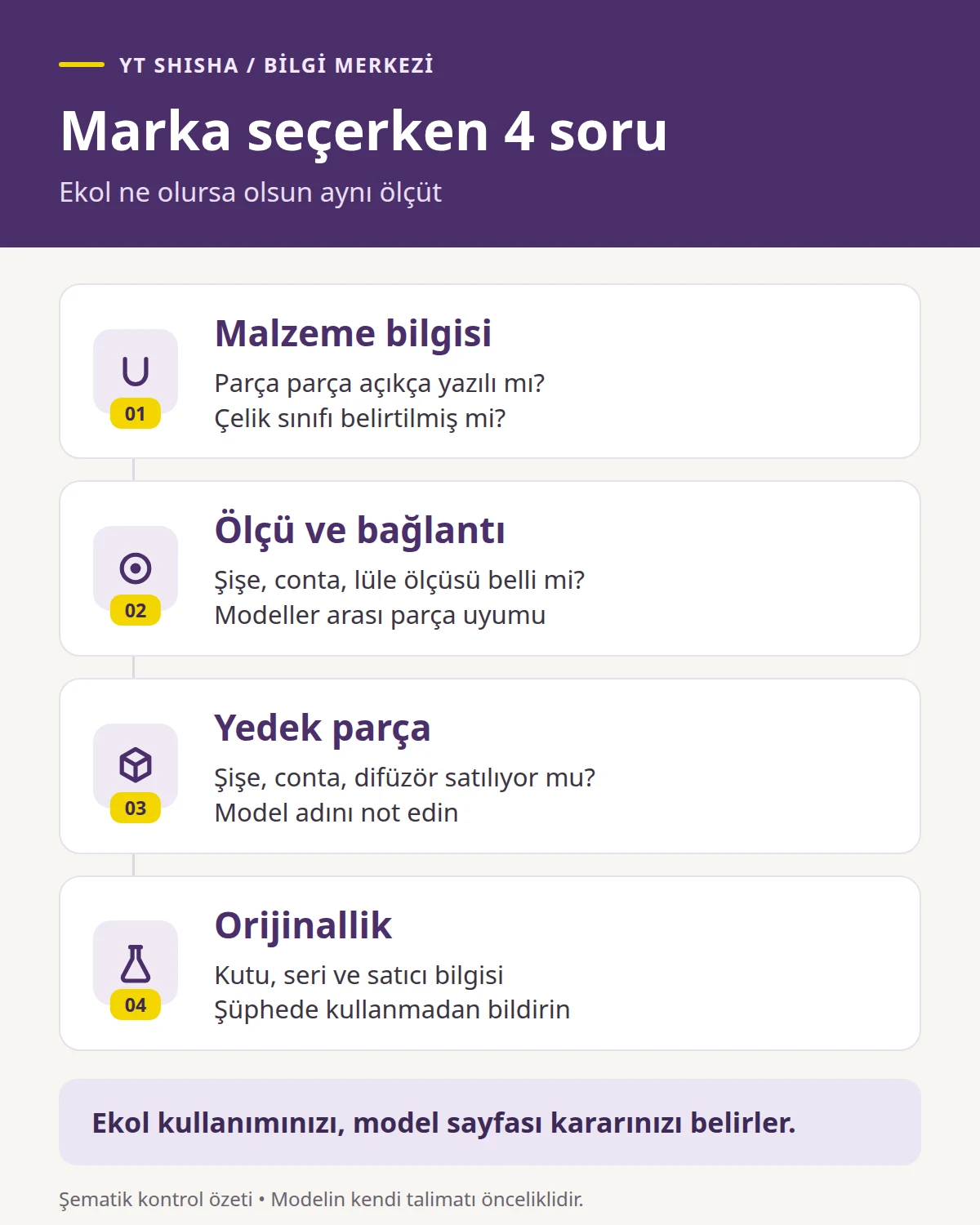
Whichever school you choose, the same questions help when evaluating a brand. The list below goes through them in order:
- Is the material information clear? Are the materials of the stem, downstem, tray and connecting parts listed separately? If steel is used, is its grade specified?
- Are the size and connection standards stated? Are the base opening, grommet size and bowl connection listed? Are parts compatible across the brand's own models?
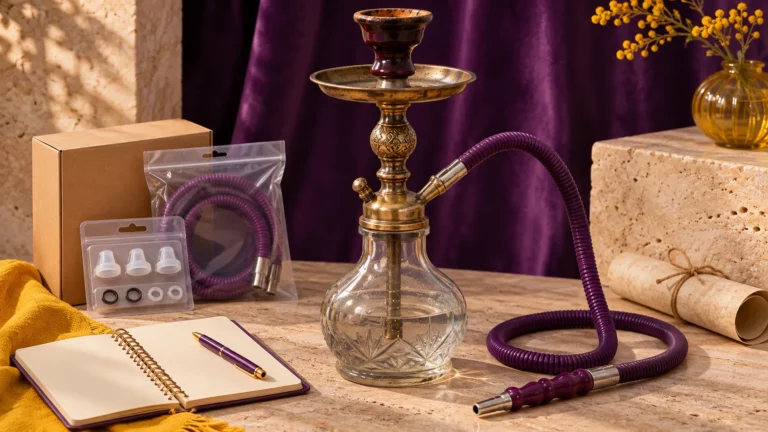
- Are spare parts available? Are the same brand's parts, such as the base, grommets, diffuser and bowl, sold separately?
- How is authenticity verified? Are the product's box, serial information and seller clearly identified? For signs commonly seen on counterfeits, see our counterfeit product identification guide for a closer look.
- Is there after-sales support? Is it clear whom to contact for part replacement, returns and setup help?
- Does it suit the way you use it? Do you want a compact tabletop set or a floor set? A brand's best-known model may not suit how you use it.
The answers to these questions can vary more by model than by brand. One model from a brand may give all the information clearly, while another model may be sold with incomplete information. That's why you should always make the final decision by looking at the model page.
School decision table
The table below summarizes which school stands out depending on what you expect from a set. These are general trends; the features of an individual model may differ from them.
| What you're looking for | School that stands out | Why | Caution |
|---|---|---|---|
| Classic look, striking presence on the table | Turkish school, brass Kahveci | Decorated stem and wide base | Note on brass care and plating |
| A plain set that's easy to clean | Turkish school, stainless steel | Few-piece design, plain stem | Steel grade and joint quality |
| Swapping and experimenting with parts | Russian school | Modular stem, separate components | Grommet and part compatibility |
| Small space, tabletop use | Compact models in both schools | Options of 45 cm and under exist in both schools | Base footprint and tip-over stability |
| All stainless steel, precision craftsmanship | Models associated with the German approach | Steel stem and connection systems | Spare part availability and price |
Frequently asked questions
Are Russian-style hookah sets made in Russia?
Not always. The term “Russian hookah set” usually describes a design approach. Verify where a model is made on the product page or from the manufacturer's own information.
Which hookah set brand is the best?
There is no single answer that applies to every user. A model with clear material information, available spare parts and a fit with the way you use it is the better choice, regardless of brand.
Do parts from Turkish- and Russian-school sets fit each other?
There is no general compatibility standard. Bowl, grommet and base sizes vary by manufacturer and model. Check the model name and measurements before buying parts.
What's the difference between a branded set and an unbranded one?
A brand tells you who the manufacturer is and whom to contact. The real difference shows up in how clear the information is, spare part availability and after-sales support.
How can I tell that the brands on the site are genuine?
Check the product's box, serial information and seller information. If something seems suspicious, report it to the seller with photos before using the product.
Sources and scope
This article is general product information introducing hookah set brands by school. Brand counts and material information are taken from ytshisha.com product records as of November 2026. Information about the brands' origins comes from vendor sources and has not been independently verified; information about YT Shisha is based on the manufacturer's statement on its own page. This article is not a brand ranking.
Sources reviewed: El Badia, Alpha Hookah X product page, Mister Smoke, Oduman brand introduction and El Badia, Steamulation article— all of these sources are vendor content and may highlight the products they sell.


Leave a Reply