

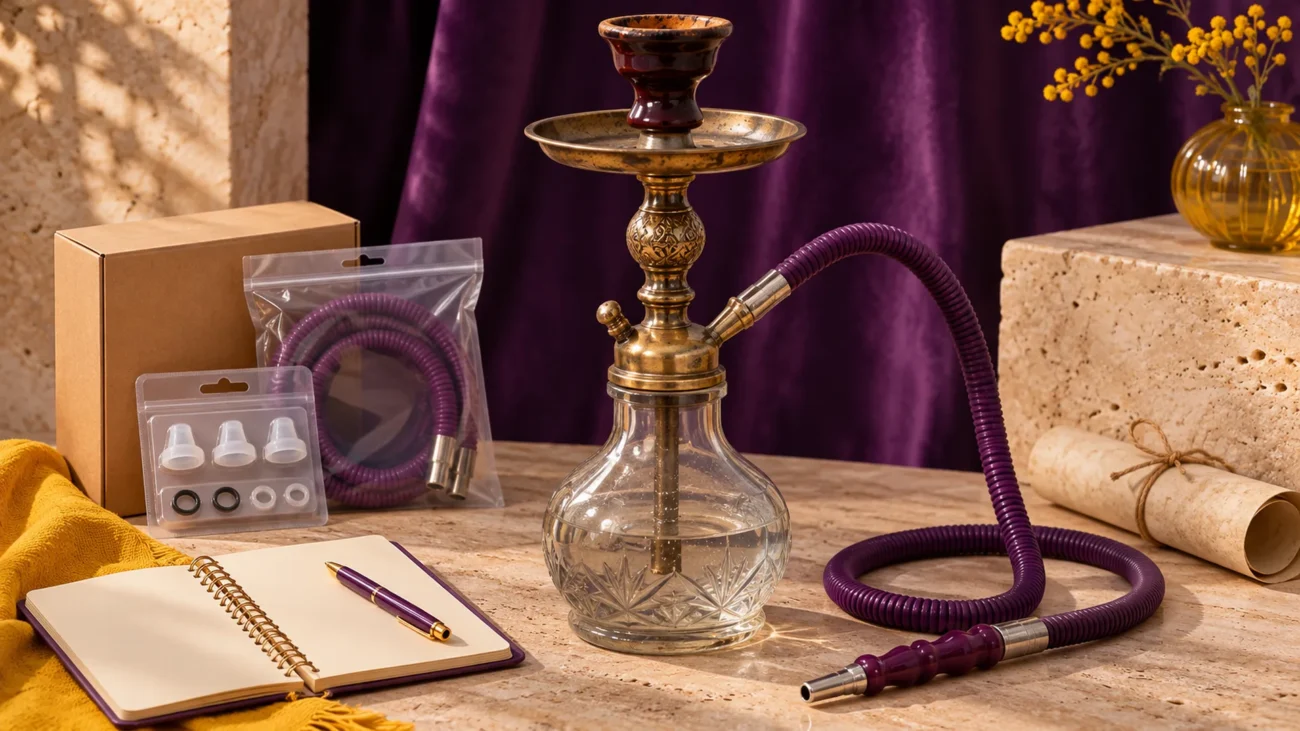
What to Check When Buying a Second-Hand Hookah Set: A Checklist

Summarize this article with AI
Discover the key points with your preferred tool.
The title, article link and text context are sent to your chosen tool.
Second-hand hookah set buyers should first check the soundness of the stem, base and connections, then the seal, and finally which parts need replacing. A metal stem and glass base can be used once they are thoroughly cleaned and checked; the hose, mouthpiece and grommets, on the other hand, are usually replaced for hygiene and wear reasons. Factor this replacement cost into the price.
This article walks through, in order, the checks to make when viewing a used hookah set, when buying it and after bringing it home. Spotting counterfeits, price estimates and brand reviews are out of scope. The checks described are a general framework; every model has its own connection system and care notes.
Is a used hookah set worth buying?
A used set can be a sensible choice if it has been well looked after and is complete. Especially with sets that have stainless steel or brass stems and solid connections, the stem can last a long time. Some parts, however, wear out by nature and are personal; taking them over from the previous owner is not recommended.
Buying used makes more sense in three situations: the model is no longer sold, you are looking for a specific design, or you are prepared to refurbish the stem and use it. If you are looking only because of budget, you need to add the cost of new parts and then compare it with a new hookah set. As a brand that has been making hookahs since 1967, our advice is to think of a used set as a “stem purchase”. The stem and base are assessed carefully, while personal parts that wear out, such as the hose, mouthpiece and grommets, go on the replacement list from the start. This approach makes it easier to see what the seller's price really covers and reduces surprise expenses later on.
To see current options, use the material and height filters in the hookah sets category.
Hygiene: which parts get cleaned and which get replaced?
With a used hookah, the first decision is to sort each part into “clean and use” or “replace with new”. The table below shows a general tendency; if your model's care notes recommend a different method, follow them.
| Part | What to check? | General recommendation |
|---|---|---|
| Stem (ser) and downstem | Rust, cracks, welds, threads, residue inside | If sound, clean and use |
| Glass base | Hairline cracks, the rim, threads, limescale | If there are no cracks, clean and use |
| Tray and metal accessories | Bending, peeling coating, rust | Usually cleaned and used |
| Hose and hose | Odor, dirt inside, hardening, holes | Replacement recommended |
| Mouthpiece and mouth tip | Direct contact with the mouth | Replace with new |
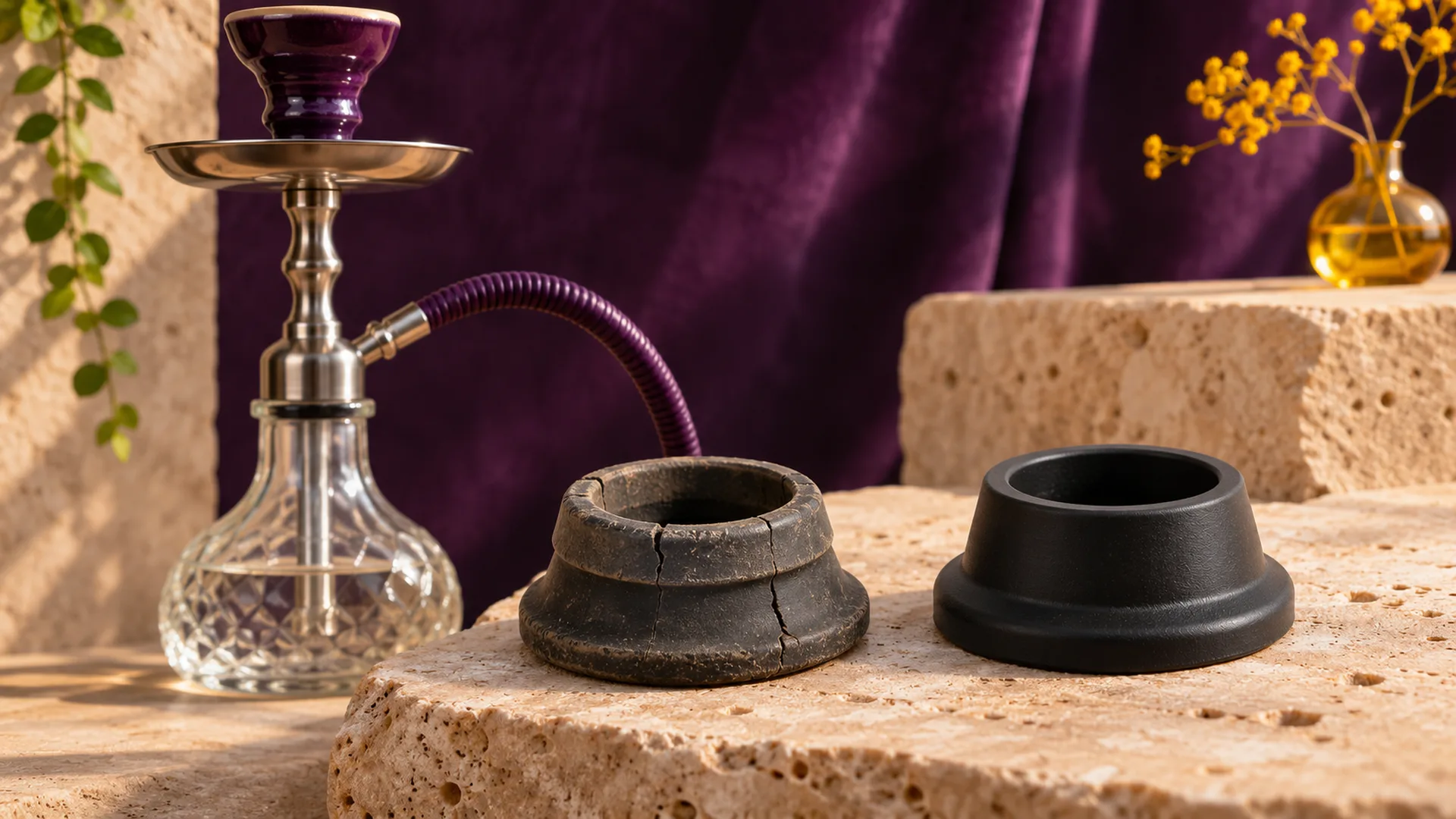
| Grommets | Hardening, cracks, looseness | Replace with new |
| Bowl | Cracks, chipped glaze, absorbed odor | A sound glazed bowl can be cleaned; replace it if cracked |
The hose and mouthpiece are the parts that carry the most traces of the previous owner's habits. Even when cleaned well, silicone hoses can hold a lasting odor; our guide to odor and mold in silicone hoses explains when cleaning won't be enough. For a new hose, see our hookah hoses category.
Checking the stem, metal surfaces and base
Stem and metal surfaces
The stem is the part that carries the real value of a used set. Do the inspection in daylight with the parts disassembled.
- Surface Tarnish, rust and peeling coating are different problems. A darker tone on brass is to be expected; spot rust on steel or peeling on a coated surface deserves a closer look.
- Welds and joints Check the hose port, the purge valve and the tray seat for cracks, wobble or signs of repair.
- Threads If the threads on a threaded connection are damaged, the part will be a struggle every time you assemble it. Try screwing it on and off by hand while it is cold and empty.
- Inner tube Shine a light inside to see whether there is residue or a blockage. A tube that hasn't been cleaned for a long time may have dark buildup.
- Eviction Is the purge valve ball in place, and does it move freely? A stuck ball may be fixed by cleaning, while a missing ball needs a spare that fits the model.
If you're not sure what a change on the surface means, our guide to rust, tarnish and peeling coatings helps tell the three apart by photos and symptoms.
Base and glass
The glass base carries the risk most easily overlooked in a used purchase: hairline cracks. One vendor source notes that fine cracks, bubbles and water seepage in the base are among the first things to check when tracking down an air leak.
- Hold the empty base up to the light and turn it slowly to look all the way around.
- Run your finger along the rim; a chip or rough spot keeps the grommet from seating properly.
- If possible, fill the base with room-temperature water, leave it on a dry surface for a few minutes and check for marks underneath.
- On threaded bases, check whether the threads seat smoothly on the stem.
Don't use a base with a visible crack; for a replacement base, verify the opening diameter, thread type and grommet size against your model. To learn why glass cracks and which habits raise the risk, see our why hookah glass bases crack guide.
Grommets, seal and a simple air leak test
Grommets are rubber- or silicone-based parts and they age over time. In rubber materials, heat, light, oxygen and ozone can gradually cause hardening, cracking and fading. Rubber kept under tension is more vulnerable to these effects. That is why an old grommet that has been fitted for a long time can leak even if it looks fine from the outside.
You can do this simple test before buying or after bringing the set home:
- Set up the hookah with water, but without charcoal or tobacco.
- Cover the bowl seat with your thumb and draw gently through the hose.
- If air comes through easily, there is a leak somewhere. Check, in order, the base-to-stem grommet, the hose port, the hose itself and the purge valve section.
- To check the hose on its own, cover one end and blow through the other; if air gets through, the hose has a hole.
To track down the source of a leak section by section, follow our air leak check sequence guide. To choose the right size when replacing grommets, our hookah grommet size and replacement guide will come in handy; you can find spare grommets on our grommets and replacement parts category.
Missing parts and compatibility
Used sets are often sold incomplete: the bowl, tray, purge valve ball or hose adapter may have been lost. Finding a missing part later depends on knowing the set's brand and model name.
- Model name Ask the seller for the brand, the model and, if possible, where it was originally bought. For a set with an unknown model name, spare parts have to be found by measurement.
- Connection type Is the base connection push-fit or threaded? Does the hose port work with a grommet or an adapter?
- Bowl seat The size of the bowl seat on the stem determines which bowl and grommet you can use.
- Parts set Confirm that every part shown in the photo is included in the sale.
With a used purchase, figuring out whether the set really is the model it is advertised as is a separate matter; our guide to spotting counterfeit products offers extra tips on that.
Used or new? A decision table
The table below sums up when a used hookah set can make sense and when it may be more trouble than it's worth.

| Situation | Assessment |
|---|---|
| Stem and base are sound, model name is known | Makes sense; replace the hose, mouthpiece and grommets |
| Stem is sound, base is cracked | Worth considering if a replacement base can be found |
| Threads on a threaded connection are damaged | A hassle; repairs or compatible parts may be hard to find |
| Model name unknown, parts missing | Be careful; every part will have to be found by measurement |
| Refurbishment cost is close to the price of a new set | A new set may be the simpler option |
| Buying unseen, from photos only | Ask for more photos and a video; get the return terms clear |
When deciding, ask the seller for: close-up photos of the downstem and threads, the base held up to the light, a list of missing parts and when the set was last cleaned.
The first cleaning after you buy
Before using the set for the first time, take all the parts apart and clean them. This is a good opportunity for hygiene and for seeing the set's real condition.
- Fully disassemble the set; separate the bowl, grommets, tray, hose and diffuser, if there is one.
- Set aside the old hose, mouthpiece and grommets; plan to replace them with new ones.
- Clean the stem and downstem with a long brush, using a method suited to the material.
- Clean the base with lukewarm water; avoid sudden hot-cold changes.
- Don't mix cleaning products with each other, and rinse thoroughly.
- Dry all the parts completely, then assemble with new grommets and repeat the air leak test.
After the first setup, keep a close eye on the set over a few sessions. If you notice a change in the draw, water marks at the connections or a sticking purge valve, check the relevant part again. With a used set, some problems only show up in real use, so the first few weeks should be treated as a kind of trial period. Emptying and drying the stem after every use also helps the odor left by the previous owner fade over time.
To find out which cleaning products should not be used together, see our guide to chemicals in hookah cleaning for the full list.
Frequently asked questions
Can the hose of a used hookah set be used?
Not recommended. A hose holds residue and odor on its inner surface and can harden and develop holes over time. A new hose solves both the hygiene and the seal problem at a relatively low cost.
Can old grommets be cleaned and refitted?
Hardened, cracked or loose grommets don't seal. Since grommets are cheap and easy to change, replacing them is the most practical option on a used set.
Can a steel stem that looks rusty be used?
First work out whether the stain is rust, residue or peeling coating. A surface stain is not the same as deep corrosion. If you are not sure, inspect the stem closely before using it and compare it with the symptoms in the guide.
Can a base with hairline cracks be used?
No. A crack can grow with changes in heat and pressure and lead to water leaks. Replace the base and verify the new base's dimensions against your model.
What should I do first after buying a used set?
Fully disassemble the set, set aside the personal parts, clean and dry the remaining parts, then assemble with new grommets and do an air leak test. This order lets you see both the hygiene situation and any possible faults from the start.
Sources and scope
This article describes general checks you can make when buying a used hookah set; it gives no health or safety guarantee and does not replace a specific model's repair instructions. The air leak test and part replacement recommendations are based on common user experience and vendor accounts. The information on rubber aging is general materials knowledge; your grommet's material and lifespan vary by manufacturer. Hookah is a tobacco product and is not sold or served to anyone under 18.
Sources reviewed: Hookah.com, checking a hookah for air leaks and Martin’s Rubber, causes of rubber degradation. The first source is content from a hookah vendor, the second from a rubber parts manufacturer.



Leave a Reply