

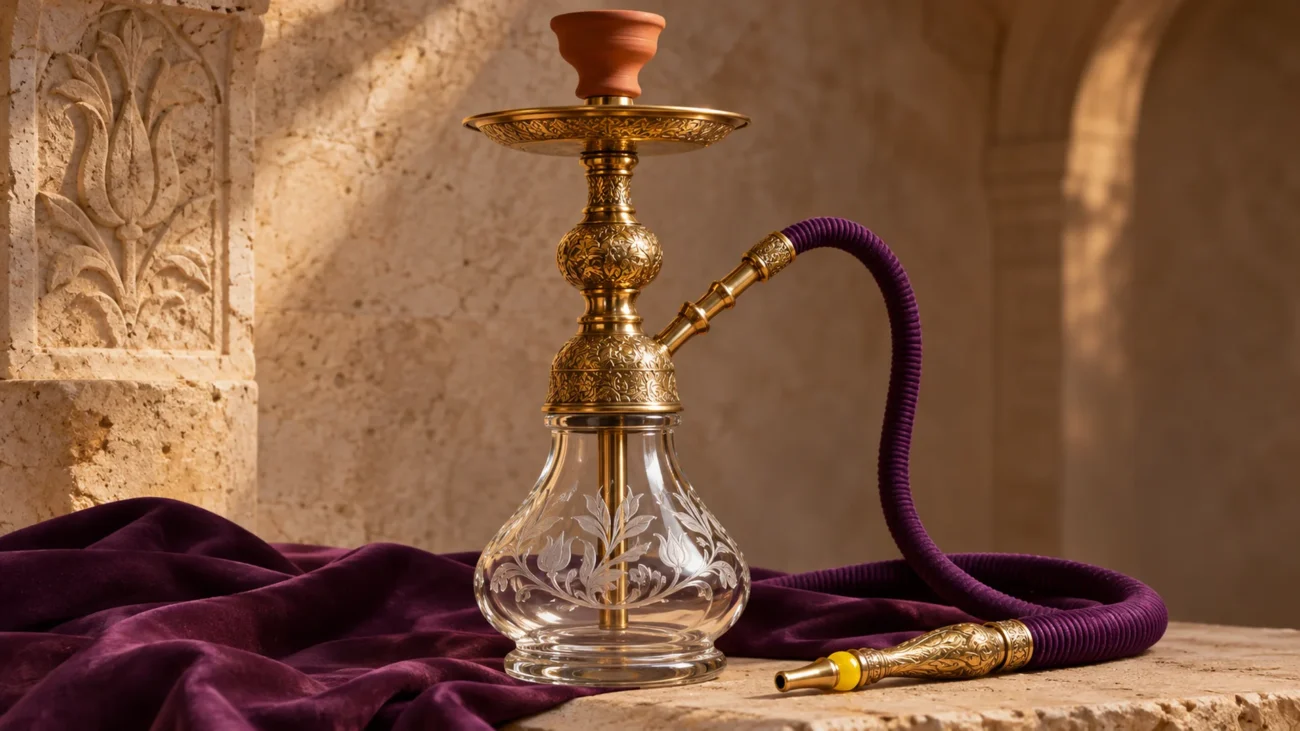
What Is a Kahveci (Brass) Hookah? Anatomy, Who It Suits and Care

Summarize this article with AI
Discover the key points with your preferred tool.
The title, article link and text context are sent to your chosen tool.
Kahveci hookahis the trade name for a classic hookah set with a traditional coffeehouse look, usually featuring a brass stem and a glass base. The name itself doesn't guarantee any material; only the product page can tell you which part is brass, how the base connects and whether the surface is plated. This article explains in plain language what the name means, the parts of the set and how brass behaves.
The scope of this guide is this: the Kahveci set is not pitted against Russian-style or steel sets; only the differences are explained in broad terms. There is no brand ranking and no claims about price or heat performance. The model's own manual and product description always take priority. Hookah equipment is for users over 18.
What does Kahveci hookah mean?
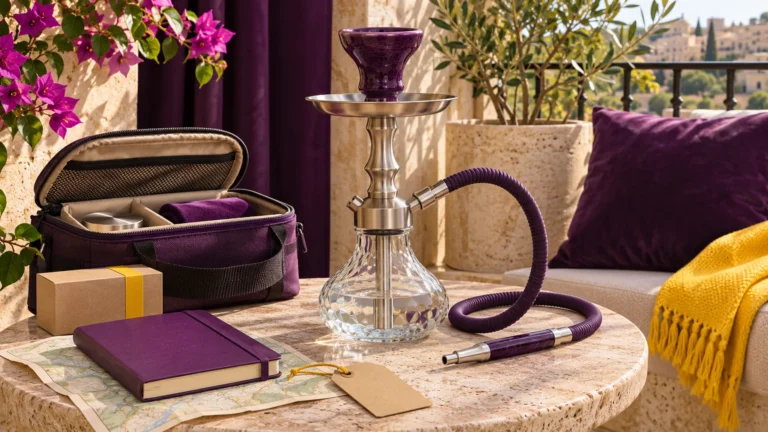
Hookah is often described as a tradition served in coffeehouses for a long time, and the name carries that association with the venue. Today, sales pages use the word “Kahveci” to describe this classic look: a tall, engraved stem, a wide glass base, a bowl and hose.
This is not a dictionary or standard definition. I couldn't find an official source that defines the term; usage can vary a little from seller to seller. Our store's category page makes the same point: the Kahveci name describes the look of the product group and sets no rule about commercial use.
In practice, this means that someone who wants a classic table setup at home and someone who wants to use a row of identical sets side by side in a café can both choose the Kahveci form. A product being in this group doesn't mean all its parts are brass. The first place to look is always the model description.
If you'd like to browse the options, the Brass Kahveci Hookah Sets page has filters for stem material, base type and height.
Anatomy of a Kahveci set
Knowing the parts of the set makes both choosing and caring for it easier. Because Turkish can use different names for the same part, the list below follows common naming; your model's manual may use different terms.
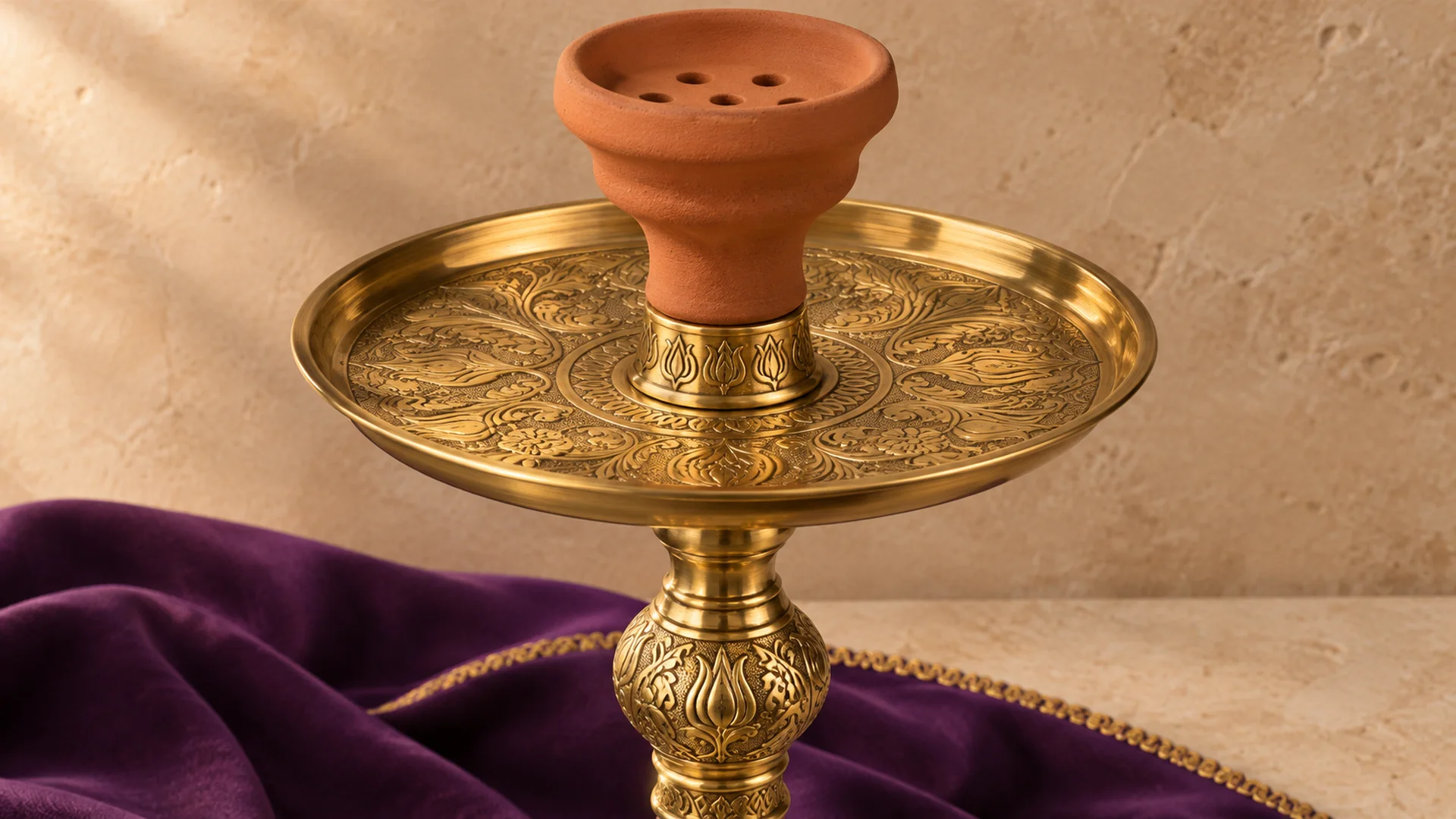
- Body (stem) This is the tall, usually engraved main stem of the set. It is the most visible part of a Kahveci set and is mostly associated with brass.
- Inner tube This is the tube that runs from the stem into the water in the base. The material of the outer stem doesn't prove the material of the inner tube; it must be confirmed separately.
- Bottle The smoke passes through the water. The base can be plain, patterned, cut or colored glass; the outer pattern and the inner surface need separate care.
- Bowl and heat management device This is the top section where the tobacco and charcoal sit. How well the bowl and the heat management device match in size directly affects the draw.
- Tray It collects ash and falling charcoal. On some models it comes with the stem; on others it is separate.
- Hose and mouthpiece It carries the smoke to your mouth. Unless the hose is stated to be washable, don't assume it can be cleaned with water.
- Grommets and connections They keep the connections between the base neck, the stem and the hose port airtight. Some models are push-fit, others are threaded.
You can also check our hookah parts article for part names and their functions. If you're planning on a replacement base or grommet, confirm the neck diameter, thread type and grommet size for your model; two bases that look alike may not have the same connection.
Brass material and engraved models
Brass is an alloy of copper and zinc; its color and mechanical properties can be adjusted by changing the proportions. Brasses with more copper are softer and more golden, while those with more zinc are harder and more silvery (Wikipedia, Brass). Because brass is relatively easy to cast and shape, it is often used for ornate stems.
For everyday use, it's enough to know three things about brass:
- Weight and stance Brass stems usually feel solid and heavy. This helps them stand steadily on the table, but calls for care when carrying and storing them.
- Color change Brass changes tone over time with moisture, chlorides and some other substances. A dark layer can also form from sulfur compounds in the air.
- Possible plating On some models the brass surface is plated, painted or gilded. A plated surface isn't cared for the same way as bare brass.
What stands out on engraved models is the surface of the stem: carving-like patterns, color and gilded details. The store's Engraved Brass Hookah Sets page brings this group together. However, the word “engraved” on its own doesn't mean handcrafted; how the pattern was applied should only be read from verified product information.
A set with “gold” or “gilded” in its name doesn't indicate the purity of the metal used, either. When choosing a color, check the variant name; the tone in the photo can look different depending on lighting and screen settings. For care, see the engraved brass care guide for protecting the gaps in the pattern and the decorated glass.
How it differs from Russian-style and steel sets
The three approaches meet different expectations. The table below summarizes general tendencies; a single model's design can differ from them, because some Kahveci models, for example, also have a threaded connection or a purge setup.
| Criterion | Kahveci (brass) | Russian-style set | Steel set |
|---|---|---|---|
| Appearance | Classic, engraved, decorative | Plain, modular, technical | Plain and modern |
| Parts layout | One-piece stem, depends on the model's manual | Mostly separate, removable parts | Varies by model |
| Surface care | Darkening and plating need attention | Depends on the material and plating | Usually less visible color change |
| Part replacement | Model name and connection size matter | Size standards vary by manufacturer | Varies by manufacturer |
This comparison is not a ranking of superiority. If looks come first for you, the Kahveci form may suit you better; if you value taking parts apart and replacing them piece by piece, a modular design may feel easier. For a detailed look at the differences in material and care, see our Russian-style hookah sets material and care guide and our steel vs. aluminum article is a useful reference.

Quick decision guide: who it suits and who it doesn't
Choosing a Kahveci set usually comes down to looks, space and how much care you're willing to do. The table below matches these three points to your needs. “Not suitable” doesn't mean it can't be used; it only means extra attention is needed.
| Situation | Assessment for a Kahveci set |
|---|---|
| If you want a classic, decorative table setup | Suitable; engraved or plain brass models serve this purpose |
| If you'll use it in a fixed spot at home | Suitable; allow for the height and the space the base takes up |
| If you plan to carry it or travel with it often | Be careful; the heavy stem and the glass base must be protected separately |
| If you don't want to do any surface care at all | May not be suitable; color change is a natural possibility with brass |
| If you want to keep the surface shiny at all times | Regular wiping and drying are needed; don't plan on scrubbing |
| If you want to take parts apart and replace them often | Depends on the model; read up on the connection system beforehand |
| If you'll use many identical sets in one venue | Suitable; the same model and the same spare parts setup make things easier |
If you're not sure about your decision, our article on choosing a hookah set offers a broader framework. The last step is still to read the model's description.
Care summary and buying checklist
A color change in brass is not always a sign of deterioration. The Canadian Conservation Institute distinguishes dark dulling on copper alloys as general tarnish, and green or blue-green products as a sign of more serious corrosion (CCI basic care note). The same institute's note on brass and copper treats cleaning and polishing as separate processes: polishing is abrasive, and surface detail can be lost as it is repeated.
For safety, remember two things. The charcoal and the heat management device get hot; handle parts only after they have fully cooled, move charcoal with tongs and use the equipment on a non-flammable surface. Don't leave the stem near a stove or charcoal, as heat can damage the surface and plating.
- Make sure the set has cooled down and take the parts apart as far as the model allows.
- Check the product notes to see whether the surface is plated.
- Wipe the outer stem with a soft, dry or slightly damp cloth; don't use a stiff brush in the gaps of the pattern.
- Clean the base, hose and inner tube separately according to their own care notes.
- Dry every part completely; store metal and glass so they don't knock against each other.
You can find a detailed checklist in our brass tarnish and care guide as well. When buying, this list will come in handy:
- Material breakdown Which part is listed as brass: the stem, the inner tube or the tray? Don't assume they're all brass.
- Surface description Is it bare brass, plated or gilded? Care depends on this.
- Base connection Push-fit or threaded? Are the neck diameter and grommet size listed?
- Overall height Does the measurement include the bowl and base? Will it fit the space where it will go?
- Box Contents Are the hose, mouthpiece, bowl and tray included in the package, or bought separately?
- Spare parts Can a base and grommet for the same model be found later?
- Transport and storage Do you have a place where the glass and metal can be stored separately?
Frequently asked questions
Are a Kahveci hookah and a brass hookah the same thing?
With most sellers they overlap heavily, but they aren't the same thing. Kahveci is a name that describes the look and the tradition; brass is the material. Check the product page to see which part is brass.
Can a Kahveci hookah be used at home?
Yes, if it suits your space, your care routine and your storage options. The name doesn't limit it to businesses. Overall height, the base and compatibility with your existing accessories are the real criteria.
If the brass darkens, is the set ruined?
Not always. A dark change in tone is expected with brass. A green or blue-green buildup, however, should be examined more carefully. When you're not sure, ask for support with a photo and the model information instead of scraping the surface or testing it with chemicals.
Should I polish the brass stem often?
There's no need. Polishing is an abrasive process and can reduce fine detail as it is repeated. Read the model's surface notes first, and don't use brass polish on a plated surface.
Is an engraved model more durable than a plain one?
You can't generalize like that. An engraved model carries decorative detail, and preserving that detail needs extra care during maintenance. For durability, look at the surface treatment and the manufacturer's notes.
Sources and scope
This article is general product information introducing Kahveci hookah sets; it makes no health or medical claims and does not encourage tobacco use. No independent dictionary definition was found for the Kahveci name; it was explained based on the store category and its use on sales pages. Each model's dimensions, surface and care notes should be confirmed separately on its product page.
Leave a Reply